
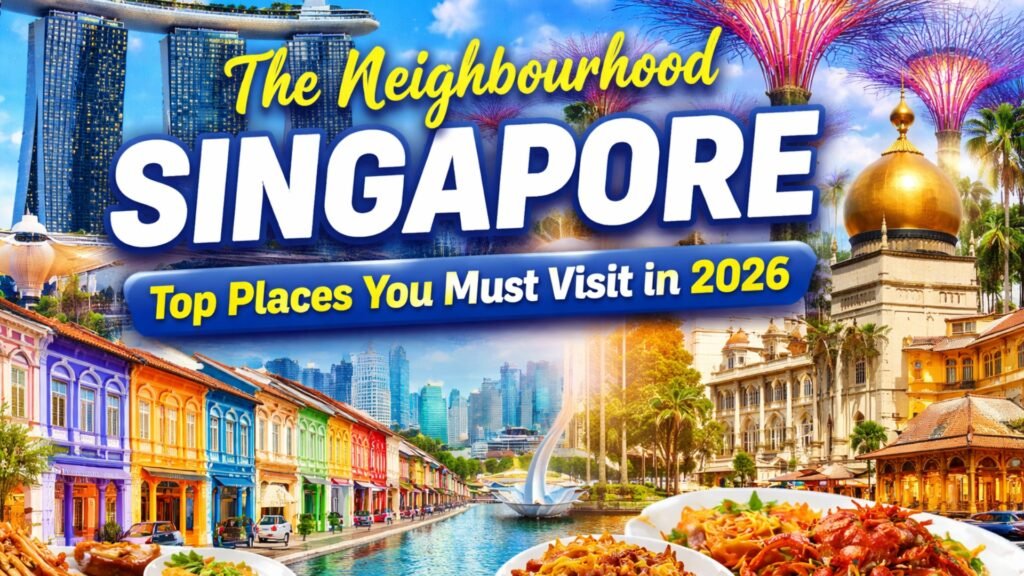
The Neighbourhood Singapore: Top Places You Must Visit in 2026
Okay so… I need to tell you something before we even start.
Singapore is not what you think it is. Seriously. Most people picture this ultra-clean, slightly boring, very expensive city where everyone follows the rules and nothing surprising ever happens. And well… yeah, some of that is true. Don’t chew gum. Don’t jaywalk. Donot even think about feeding the pigeons.
But here’s the thing nobody tells you — the neighbourhood Singapore is actually made up of dozens of mini-worlds, all squeezed onto one tiny island. And each one feels completely, shockingly different from the last.
I mean, imagine walking through a street that smells like marigolds and cardamom one minute, then turning a corner and suddenly you’re in a lantern-lit alley full of specialty coffee shops and vintage denim boutiques. That actually happens here. That’s Kampong Glam bleeding into Arab Street Singapore. It’s wild, honestly.
This guide — this whole Singapore travel guide — exists because most articles about Singapore just give you a list of hotel names and call it done. That’s not helpful. What you actually need is someone to walk you through every single corner of this city, tell you what it feels like to be there, help you figure out where to sleep without blowing your budget, and — most importantly — point you toward food so good it’ll make you want to move here permanently.
So. Let’s do this properly.
Best Neighborhoods in Singapore
Right. So first things first — you need a map in your head before we go any deeper.
Singapore is divided into these distinct Singapore districts and neighborhoods, each with its own personality, its own food, its own crowd. Understanding the layout of the neighbourhood Singapore offers is honestly the single best thing you can do before you book anything. Because where you stay changes everything — your commute, your vibe, your daily food budget, all of it.
Here’s the thing about Singapore areas to stay — there’s genuinely no bad choice. But there are wrong choices for your trip specifically. A first-timer who books a hotel in Jurong West thinking it’s cheaper is going to spend half their holiday on the MRT wondering where the city went. Don’t be that person. Use the table below. It’ll save you.
– $$ – $$ – $$
| Neighborhood | Best For | Vibe | Budget Range |
|---|---|---|---|
| Little India Singapore | Culture, temples, real food | Loud, colorful, electric | $ – $$ |
| Kampong Glam | History, Haji Lane, cafés | Artsy, royal heritage vibes | $$ |
| Chinatown Singapore | Hawker food, temples, nightlife | Layered, busy, warm | $ – $$$ |
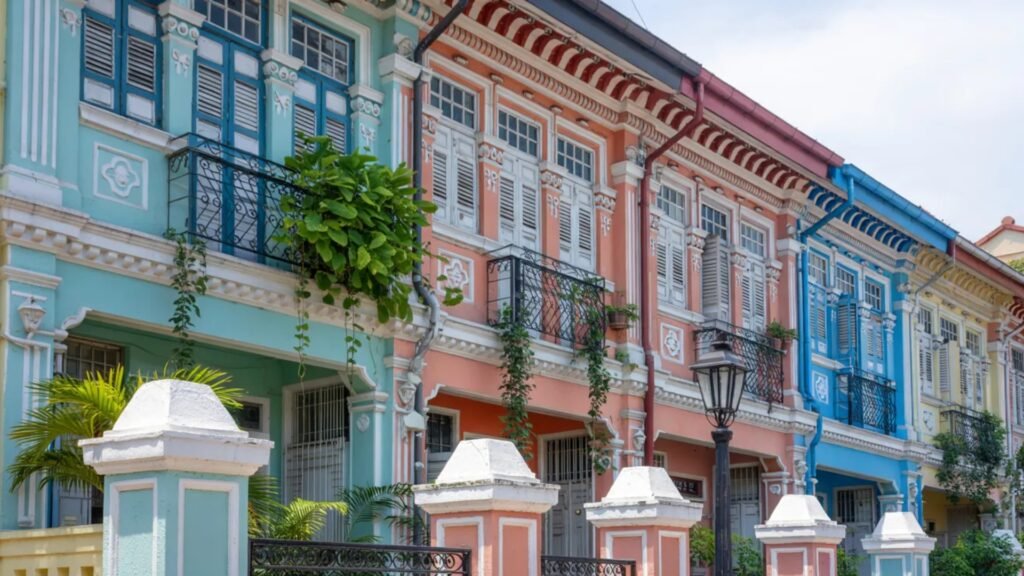
| Joo Chiat & Katong | Peranakan life, laksa, tiles | Relaxed, pastel, authentic | $$ |
| Holland Village | Expats, bars, Sunday brunch | Chic, cosmopolitan, breezy | |
| Marina Bay Singapore | Luxury, views, iconic photos | Sleek, modern, breathtaking | |
| Orchard Road Singapore | Shopping, luxury hotels | Upscale, polished | $$$ |
| Sentosa Island Singapore | Beach, resorts, families | Fun, resort-style |
Anyway — the point is, every single area in this Singapore neighborhoods list has something genuinely worth your time. We’re going through all of them. Properly.
Little India – Culture, Food & Vibrant Streets
Walk into Little India Singapore and honestly… give yourself a second.
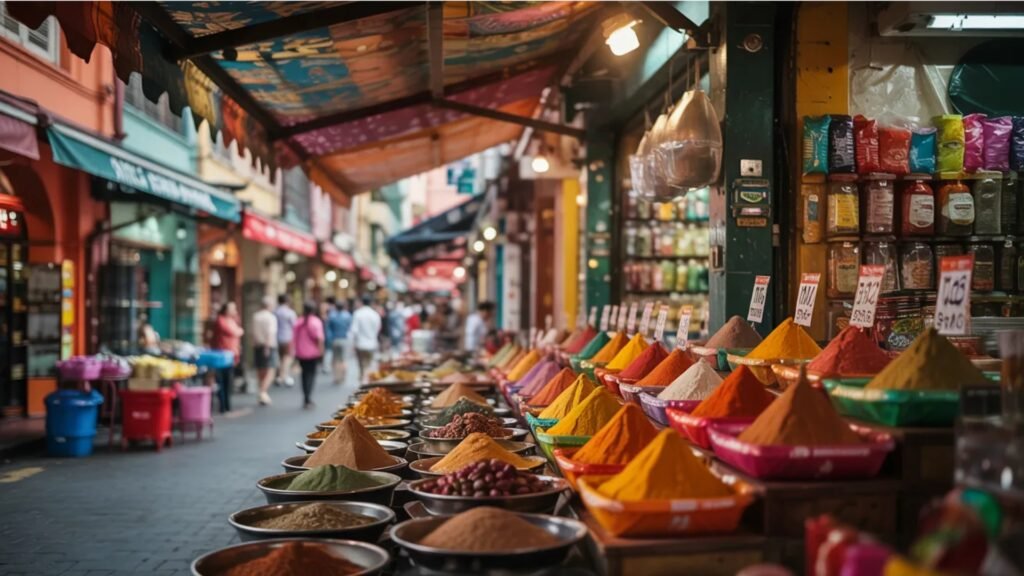
Because it hits you all at once. The smell of jasmine garlands and frying ghee. The flash of gold bangles through a shop window. Someone’s blasting old Tamil film songs from a speaker that’s probably older than you are. And the colors — oh man, the colors. Hot pink, turmeric yellow, deep crimson — everywhere, on everything, all at once.
This is one of the most genuinely alive places to visit in Singapore. And I don’t mean alive in a touristy, performative way. I mean people actually live here. They shop here. They worship here. and They argue about cricket here at 11pm outside a tea stall. It’s real, and that realness is becoming increasingly rare in modern Singapore.
What Makes Little India Unique
Well, a lot of things, actually.
Start with Serangoon Road — it’s been the spine of this neighborhood since the 1820s. The street has somehow survived 200 years of Singapore’s relentless modernization and still looks and feels like itself. The Sri Veeramakaliamman Temple sits right in the middle of all this, its towering gopuram — that’s the gate tower, covered in hundreds of hand-sculpted deities — rising above the shophouses like it’s always been there. Because it has. Since 1881, actually.
Then there’s Mustafa Centre. Okay so picture this — a massive, multi-floor mall that sells absolutely everything. Saffron. Smartphones. Saris. Samsonite luggage. Wedding jewelry. Cornflakes. All under one roof. Open 24 hours. People genuinely show up here at 3am to do their grocery shopping and it’s completely normal. It’s become this accidental landmark of multicultural Singapore that no amount of urban planning could have designed on purpose.
The street art on Kerbau Road is also — honestly? — some of the best in Southeast Asia. Free. Outdoors. Completely photogenic. Go early morning before the crowds.
Top Things to Do in Little India
Okay here’s your non-negotiable list. And I mean non-negotiable.
- Breakfast at Tekka Centre — Get there before 9am. Roti prata with dhal costs about $2. The teh tarik (pulled milk tea) is $1.20. It is, without any exaggeration, one of the best breakfasts you can eat anywhere in Asia for under $5.
- Sri Srinivasa Perumal Temple on Perumal Road — Larger, quieter, and architecturally extraordinary. The annual Thaipusam procession starts here — if your trip overlaps with it, rearrange everything to witness it.
- Kerbau Road walk — Slow down. Stop every ten steps. The tiled facades and colonial details on these shophouses are extraordinary.
- Deepavali light-up — October to November. The entire street transforms into this blazing, golden sea of decorative lights. It’s one of the most beautiful things Singapore does, period.
“Honestly, Little India at night during Deepavali made me cry a little. I wasn’t expecting it. Nothing quite prepares you for it.” — Lonely Planet Singapore Guide
For things to do in Singapore neighborhoods that don’t cost a cent — Little India leads the pack. Temples are free. Street art is free. Just walking and eating your way down Serangoon Road costs almost nothing and gives you everything.
Where to Stay in Little India
So here’s where it gets interesting for budget hotels in Singapore hunters.
Wanderlust Hotel on Dickson Road is this brilliant boutique option — design-forward, weird in the best way, each floor themed differently, and somehow still affordable at around $120–$150 a night. For the mid-range, Village Hotel Albert Court is solid — comfortable, central, and housed in a beautifully restored shophouse block.
Hostels in Singapore in this area are also genuinely good. Little India MRT and Farrer Park MRT are both right here on the North East Line. Which means you’re three stops from Chinatown Singapore, four from Bugis Singapore, and maybe 20 minutes from anywhere on the island. For backpacking Singapore tips — this area is the move. Cheap eats literally everywhere. Great MRT access. Hostels from $22 a night. You can’t really beat it.
Kampong Glam – History, Cafes & Arab Culture
Here’s the thing about Kampong Glam that most people don’t realize until they’re actually standing in it.
It used to be the royal seat of the Malay sultans. Like — there was an actual istana (palace) here. A sultan. A royal household. And then the British arrived and well… you know how that story goes. But here’s what’s remarkable — the neighborhood didn’t lose itself. It just evolved. And today it’s this genuinely extraordinary blend of Islamic heritage, royal history, hipster coffee culture, and Arab Street Singapore bazaar energy that somehow all coexists without feeling forced or weird.
Haji Lane is the shorthand most people use for the whole area. And fair enough — it’s the most photogenic street in Singapore, and possibly one of the most photographed in all of Southeast Asia travel destinations. Narrow. Colorful. Every wall is a mural. Every second shop sells something you’ve never seen before.
Why Visit Kampong Glam
Because the Sultan Mosque alone is worth it. Full stop.
Built in 1928, Masjid Sultan is Singapore’s most important mosque and — honestly — one of the most beautiful buildings in the entire country. The golden dome doesn’t just catch the light. It holds it, like it’s keeping it warm. Visitors of all backgrounds are welcome outside prayer times. Dress modestly. Take your time outside. Don’t rush the moment.
Then walk into Haji Lane properly. Don’t just Instagram the entrance and leave. Actually go in. Wander into the boutiques. Talk to the owners. Buy something handmade from a local designer who tells you the story behind it. These shops — independent, personal, genuinely creative — are the antithesis of the shopping mall culture that dominates so much of shopping in Singapore Orchard Road and beyond. It’s refreshing in a way that’s hard to articulate until you experience it.
Kampong Glam is also becoming one of the most interesting Singapore nightlife areas for a certain type of person. The kind who wants cocktails in a converted heritage shophouse, not a nightclub. The kind who’d rather listen to live jazz in a narrow alley than stand in a queue outside a rooftop bar.
Best Attractions & Hidden Gems
Okay so most guides will tell you Sultan Mosque, Haji Lane, done. But there’s a lot more here if you look slightly harder.
- Malay Heritage Centre — Inside the original sultan’s palace. Genuinely excellent museum. Entry is $6 (free on Fridays). Budget two hours minimum.
- Gedung Kuning (Yellow Mansion) — A beautifully restored former royal residence that’s now a Malay restaurant. The building alone is worth seeing.
- Bussorah Street — Runs directly to the mosque. Lined with cafés, gift shops, and fairy lights at night. Genuinely magical after dark.
- Blu Jaz Café on Bali Lane — Live jazz most weekends, excellent cocktails, and an atmosphere that’s as warm and eccentric as the neighborhood itself.
- Warong Nasi Pariaman on North Bridge Road — No menu. They tell you what’s available. The Nasi Padang here is extraordinary, and they’ve been doing it the same way since 1964.
- Aliwal Arts Centre — Singapore’s indie arts scene quietly thrives here. Check their calendar before you visit — there’s usually something interesting happening.
Hotels & Accommodation Options
The Sultan Hotel on Jalan Sultan is — well — it’s the obvious choice. Heritage building, beautifully restored, balancing colonial charm with modern comfort. Rooms run $150–$220 a night and it’s worth every dollar if you want to wake up genuinely inside the neighborhood rather than just near it.
For Singapore accommodation options that lean more social and contemporary, Lyf Bugis Singapore by Ascott is excellent for solo travelers and digital nomads — co-living style, flexible booking, great communal spaces. Bugis MRT is right there, on both the East West and Downtown Lines. And for genuine luxury hotels Singapore nearby, the InterContinental Singapore is one of the finest heritage luxury stays in the whole Singapore accommodation guide.
Chinatown – Heritage Meets Modern Singapore
Okay so here’s the thing about Chinatown Singapore that surprises almost everyone.
You expect old. You expect preserved. and You expect museum energy. And then you turn a corner and there’s a Michelin-starred hawker stall with a queue of 40 people next to a rooftop craft cocktail bar above a century-old temple. It’s not what you planned for. It’s so much better.
Chinatown Singapore does this thing that the best neighborhoods do — it holds its history visibly while also being very much alive in the present tense. The temples are ancient and active. The food is dirt cheap and world-class simultaneously. The streets are busy morning to midnight, every single day. And for any Singapore city guide trying to point people toward the soul of this place — Chinatown is always, always in the first three stops.
Top Attractions in Chinatown
Buddha Tooth Relic Temple on South Bridge Road is extraordinary and absolutely free to enter. Five stories of Tang dynasty-inspired architecture, a relic of the Buddha in a golden stupa on the fourth floor, a rooftop garden with views across the neighborhood. It’s one of the most impressive religious buildings in Southeast Asia and most tourists walk straight past it on their way to the souvenir stalls.
Across the road — literally across the road — is Sri Mariamman Temple, Singapore’s oldest Hindu temple, built in 1827. Two sacred buildings from completely different religious traditions, sharing a street corner in a Chinese neighborhood. That detail alone tells you everything you need to know about what multicultural Singapore actually looks like up close.
Chinatown Heritage Centre on Pagoda Street is worth two hours of your time. The recreated 1950s shophouse interiors — cramped cubicle living spaces where entire families shared a single room — are sobering, humanizing, and beautifully done.
Best Places to Eat
Right. This is the section people actually came for.
Maxwell Food Centre is legendary. Its the most famous hawker centre Singapore on earth, and Tian Tian Hainanese Chicken Rice at stall #10 has people forming queues before the shutter even goes up. The chicken is silky. The rice is fragrant and slightly oily in exactly the right way. The chili is non-negotiable. It costs about $5. It might genuinely be the best $5 meal of your life.
Then there’s Liao Fan Hong Kong Soya Sauce Chicken on Smith Street. Hawker Chan. First Michelin-starred street food stall in history. His soya sauce chicken over rice costs $3. Three dollars. For food that Michelin inspectors queued up to eat. That’s food in Singapore neighborhoods operating at a level that nowhere else on earth can match.
| Dish | Where | Price |
|---|---|---|
| Hainanese Chicken Rice | Maxwell Food Centre (Tian Tian, Stall #10) | ~$5 |
| Michelin Soya Sauce Chicken | Liao Fan, 335 Smith Street | ~$3 |
| Char Kway Teow | Chinatown Complex Food Centre | ~$4 |
| Hokkien Mee | Hong Heng Fried Sotong Prawn Mee | ~$5 |
| Dim Sum | Yum Cha Restaurant, Teck Lim Road | ~$15–20 |
Budget to Luxury Stays
Budget hotels in Singapore in Chinatown start genuinely low. Wink Hostel on Mosque Street is clean, design-led, social, and runs from about $25 for a dorm bunk. It’s one of the best hostels in Singapore anywhere on the island.
Mid-range, the Dorsett Singapore on New Bridge Road is the reliable choice — solid rooms, great location, around $150 a night. For luxury hotels Singapore options nearby, Amara Singapore delivers a rooftop pool and sleek modern interiors from about $280 upward. Everything here sits within walking distance of Chinatown MRT on the North East and Downtown Lines. For the cheapest area to stay in Singapore that also happens to be central, cultural, and surrounded by world-class food — Chinatown Singapore wins every single time.
Joo Chiat & Katong – Colorful Streets & Local Life
Here’s a neighborhood that doesn’t try to impress you.
Joo Chiat just… exists. In the best possible way. Pastel shophouse terraces line streets that predate Singapore’s independence. Old uncles cycle slowly past on bicycles that look like they’re held together by nostalgia. The smell of laksa drifts from windows that have been open since before you woke up. There are no skyscrapers here. No infinity pools. No Instagram activation zones.
And honestly? That’s exactly why it’s one of the best entries in any honest Singapore city guide.
What to See in Joo Chiat
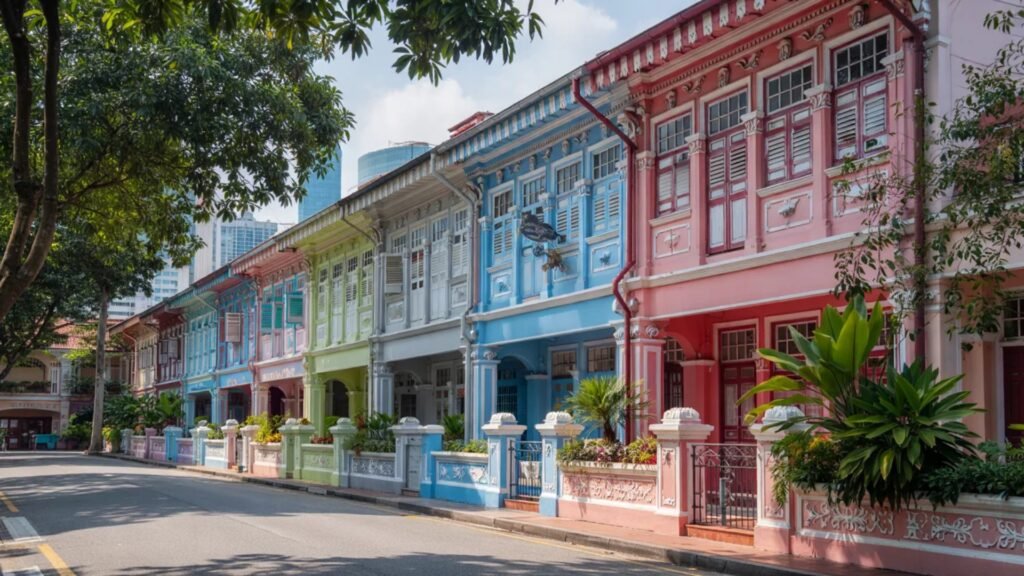
Joo Chiat Road itself is the main attraction. The terrace houses here are — honestly — the most beautiful in Singapore. Mint green. Dusty coral. Sky blue. Deep turmeric yellow. All trimmed with intricate Peranakan ceramic tiles that tell stories in their patterns if you look closely enough. Walk slowly here. The details reward attention in a way that rushed sightseeing completely misses.
Katong Antique House is technically a private collection, but owner Peter Wee opens by appointment — and it’s worth every effort to arrange it. His assemblage of Peranakan porcelain, furniture, and textiles is genuinely world-class. Down near East Coast Park, cycling paths run along the waterfront — rent a bike from SG Bike for $0.50 per 30 minutes and pedal your way toward a seafood dinner as the sun goes down. For things to do in Singapore neighborhoods that feel genuinely off the tourist trail, Joo Chiat delivers better than almost anywhere.
Food & Cultural Experiences
Okay. Katong laksa.
This might be the single most argued-about dish in all of Singapore. And Singaporeans argue about food the way other countries argue about politics — passionately, personally, and with zero intention of changing their minds. The broth is thick and rich and deeply coconutty. The chili hits quietly then builds. The noodles are cut short, which means you eat it with a spoon — no chopsticks needed or wanted. The battle between 328 Katong Laksa and Janggut Laksa for neighborhood supremacy has been running for decades. Go to both. Pick a side. Defend it.
Kim Choo Kueh Chang on East Coast Road has been making Nonya dumplings and traditional Peranakan kueh since 1945. Bengawan Solo is Singapore’s most beloved bakery brand — their pandan cake is the thing you buy at the airport on the way home and immediately regret not buying two of. Peranakan food is one of Singapore’s most distinct culinary traditions — a fusion born from centuries of intermarriage between Chinese settlers and the Malay community — and Joo Chiat is where it tastes most alive, most personal, most real.
Where to Stay
Village Hotel Katong is the neighborhood standout — a Peranakan-inspired design hotel near the East Coast waterfront that manages to feel genuinely local rather than corporate-local. Rooms are comfortable. The color palette is warm and layered. The breakfast is excellent.
Singapore accommodation options here lean heavily toward smaller guesthouses and boutique properties. No massive chains. No convention center lobbies. Short-term rental apartments along East Coast Road are popular with families and longer-stay visitors — you get a kitchen, a local market downstairs, and a real sense of what actually living in Singapore feels like. It’s honestly one of the best best places to stay in Singapore for families choices anywhere on the island, especially for longer visits.
Holland Village – Nightlife & Expat Vibes
Holland Village hums. That’s the word for it. Not buzzes. Not roars. It hums — this low, constant, warm frequency of outdoor tables and clinking glasses and conversations in about twelve different languages happening simultaneously at 8pm on a Thursday.
This is Singapore’s expat heartland. It’s been drawing international residents, diplomats, academics, and globe-trotters since the 1970s, and the neighborhood has developed this lovely, lived-in confidence because of it. Holland V — as literally everyone calls it — knows exactly what it is. And it’s very good at being that thing.
For best neighborhoods in Singapore for nightlife that skews toward good cocktails and live music over pounding bass lines — Holland Village is your answer.
Things to Do in Holland Village
Holland Road Shopping Centre is the neighborhood’s eccentric heart. It’s old, slightly scruffy around the edges, and completely full of things you’d never find in a modern mall. Local artists sell their work here. Vintage collectors rummage through second-floor stalls. Antique furniture dealers keep odd hours and odder stock. It’s the anti-ION Orchard. And it’s wonderful.
Chip Bee Gardens, just behind the main strip, is worth a slow afternoon wander — black-and-white colonial bungalows half-hidden behind enormous rain trees, on streets so quiet they feel like they belong to another city entirely. The Sunday flea market along Lorong Mambong draws a good mixed crowd of expats and Singaporeans hunting for vintage finds, artisan food, and handmade goods. Holland Village MRT on the Circle Line makes getting here easy from anywhere on the island — and how to get around Singapore doesn’t get more straightforward than this.
Best Bars & Cafes
Wala Wala Café Bar has been the soul of Holland Village since 1994. Open-air. Two floors. Live bands most nights. A crowd that genuinely ranges from 22-year-old graduates on their first proper salary to 65-year-old regulars who’ve been coming since Wala Wala was the only bar worth visiting in this part of Singapore. Tables fill up fast on Thursday evenings. Arrive by 7pm or accept that you’re standing — and you’ll still have a brilliant time.
Brewed By Us is the craft beer pick — a garden bar with rotating taps, excellent bar bites, and the kind of laid-back garden atmosphere that makes two beers quietly become four. Como Cuisine does a refined alfresco brunch on weekends that’s worth planning your morning around. The strip along Lorong Liput is the Singapore nightlife areas bar-crawl destination — walkable, safe, reliably busy until well after midnight on weekends, and never so crowded it stops being enjoyable.
Accommodation Guide
Holland Village doesn’t have a huge hotel scene — which is honestly part of its charm. This is a residential neighborhood first, entertainment strip second.
One Rochester offers serviced apartments ideal for longer stays — well-furnished, spacious, genuinely comfortable for anyone spending more than a few nights. Most shorter-stay visitors base themselves at Buona Vista or Commonwealth MRT and walk across. The 10-minute stroll through quiet residential streets is actually pleasant. Singapore accommodation options in this area skew toward aparthotels and short-term rentals. If you’re spending 5+ days in Singapore and want to feel like you actually live here rather than visiting it — Holland V is where you do that.
Where to Stay in Singapore (Area Comparison Guide)
Okay so this is the section people actually bookmark.
Because choosing where to stay in Singapore for first-time visitors — or for repeat visitors, for families, for budget travelers, for people who want to splash out on something memorable — is genuinely the most important planning decision you’ll make for this trip. It shapes your commute. Your food. Your daily energy levels. and Your entire experience of the city.
This part of the Singapore accommodation guide cuts through all the noise. No vague suggestions. No “it depends on your preferences” non-answers. Just clear, direct recommendations based on what you’re actually here to do.
Best Area for First-Time Visitors
Marina Bay Singapore or Bugis Singapore. Those are your two answers. Pick one.
Marina Bay puts you within walking distance of the Merlion, Gardens by the Bay, Marina Bay Sands, and the waterfront promenade. Everything you’ve seen in photos of Singapore is within 20 minutes on foot. Bugis Singapore adds cultural depth — you’re on the doorstep of Kampong Glam and a short MRT hop from Little India Singapore, while still being completely central.
The MRT advantage here is significant. Bugis MRT sits on both the East West and Downtown Lines — two of the most useful interchange stations on the whole network. For where to stay in Singapore for first-time visitors, centrality and MRT access are your two non-negotiables. Both areas deliver both.
Best Area for Budget Travelers
Little India Singapore and Chinatown Singapore. Non-negotiable.
Hostels in Singapore in both neighborhoods start from $20–$25 a night for a dorm bunk. Private rooms in budget hotels run $60–$90. And you’re surrounded by the best-value food on the island — hawker centre Singapore meals for $3–$6 all day. Backpacking Singapore tips from every experienced traveler in the world point to the same conclusion: base yourself here, get an EZ-Link card from any MRT station, and your daily transport costs across the whole island average under $5.
For the cheapest area to stay in Singapore that doesn’t sacrifice access to great experiences — these two neighborhoods genuinely lead.
Best Area for Luxury Travelers
Marina Bay Singapore, Orchard Road Singapore, Sentosa Island Singapore. Pick based on your priorities.
Marina Bay Sands is the icon — that infinity pool 57 floors up with the full Singapore skyline reflected in the water behind you is one of the most photographed hotel images on earth. It earns it. Orchard Road Singapore gives you the Shangri-La, the Four Seasons, the Mandarin Orchard — high-end boutiques, Michelin-starred restaurants, and the kind of service that makes every interaction feel effortless.
And Capella Singapore on Sentosa Island Singapore is — well — it’s genuinely world-class. Colonial architecture. Lush tropical grounds. A spa that people specifically fly to Singapore to experience. Luxury hotels Singapore pricing in these areas runs $400 to $1,500+ per night, and demand is high year-round.
| Traveler Type | Best Area | Sample Hotel | Avg. Nightly Rate |
|---|---|---|---|
| First-time visitor | Marina Bay / Bugis | M Social Singapore | $180–$250 |
| Budget traveler | Little India / Chinatown | Wink Hostel | $25–$80 |
| Luxury seeker | Marina Bay / Sentosa | Capella Singapore | $600–$1,500+ |
| Culture lover | Kampong Glam | The Sultan Hotel | $150–$220 |
| Family traveler | Sentosa / East Coast | Village Hotel Katong | $140–$200 |
| Long-stay / Expat | Holland Village | One Rochester | $120–$180 |
| Food obsessive | Chinatown / Joo Chiat | Dorsett Singapore | $130–$200 |
Singapore Neighborhood Map & Travel Tips
Right. Practical stuff. This matters more than most people think.
Singapore is tiny — 50 kilometers from east to west at its widest. You’d think getting around was effortless. And mostly it is. But knowing which card to buy, which app to use, and which neighborhoods to visit on which days still makes a real difference to how much energy you have left when evening comes. These Singapore travel tips are the ones that actually help.
How to Get Around Singapore
The Singapore MRT guide is not complicated. Six main lines — Red (North South), Green (East West), Purple (North East), Yellow (Circle), Blue (Downtown), Brown (Thomson-East Coast). Almost every neighborhood in this guide sits on at least one. Fares run between $0.83 and $2.50 per trip, calculated by distance. The system runs 5:30am to midnight daily.
Start by buying an EZ-Link card at any MRT station. Costs $12 upfront (including $7 stored value). Works on every train and bus across the island. Top it up at any 7-Eleven. That’s your Singapore public transport foundation sorted.
For Grab vs Uber Singapore — Grab dominates. Uber left Southeast Asia in 2018. Grab is reliable, fairly priced, and used by literally everyone from tourists to cabinet members. For cycling — the SG Bike app lets you unlock shared bikes for $0.50 per 30 minutes. Essential for Joo Chiat, East Coast Park, and anywhere the MRT doesn’t quite reach.
Getting Between Neighborhoods — Quick MRT Reference:
Little India → Chinatown: NE Line, 3 stops, ~7 minutes
Kampong Glam → Holland Village: Bugis to Buona Vista, ~20 minutes
Joo Chiat → Marina Bay: Paya Lebar + transfer, ~25 minutes
Orchard Road → Sentosa: ~30 minutes via MRT + Sentosa Express
Best Time to Visit Each Area
Little India Singapore is electric during Deepavali (October–November). The street light-up is extraordinary. Go in the evening when everything glows. Chinatown Singapore peaks during Chinese New Year (late January or February) — lanterns, bazaars, lion dances spilling into traffic. Plan around it if you can.
Kampong Glam is exceptional during Ramadan evenings — the nearby Geylang Serai bazaar fills every night of the holy month with food stalls, performances, and a warm, festive atmosphere that’s unlike anything else in the Singapore tourist areas calendar. Holland Village is best on a weekday evening before the weekend crowd arrives. Joo Chiat is best on any quiet Saturday morning — the light on those pastel shophouses before 9am is genuinely beautiful.
For broader Singapore travel tips on timing — the weather is honestly similar year-round. Hot. Humid. Rain possible any month. Pack light clothes and a compact umbrella. That’s it. That’s the whole weather section.
Suggested 3-Day Singapore Itinerary by Neighborhood
Three days. Properly used. You’ll leave feeling like you’ve seen ten different cities.
The key to a good Singapore travel itinerary 3 days is grouping neighborhoods by geography and theme — not randomly hopping around the map. Cultural districts together. Modern city together. Slow and local for when your feet need a break. This plan uses the MRT efficiently, balances free and paid attractions, and builds in proper time for eating — which in Singapore is not optional, it’s the whole point.
Day 1 – Cultural Districts
Morning starts in Little India Singapore. Get to Tekka Centre by 8am — roti prata and teh tarik for under $4. Walk to Sri Veeramakaliamman Temple. Then drift down Kerbau Road slowly. By 10am, hop the MRT two stops to Bugis Singapore and walk into Kampong Glam.
Afternoon: Haji Lane shops, Sultan Mosque, Bussorah Street café for lunch — Arab Street Singapore restaurants do excellent Middle Eastern set lunches around $15. Then south to Chinatown Singapore for late afternoon. Dinner at Maxwell Food Centre — Tian Tian chicken rice, full stop. Evening stroll through Pagoda Street night market. Three of Singapore’s most cultural neighborhoods Singapore has — done in one day, efficiently, affordably, without feeling rushed.
Day 2 – City & Shopping
Start at Gardens by the Bay at 9am. The Supertree Grove at opening time, with morning light, is free and extraordinary. Walk across to Marina Bay Singapore waterfront for the Merlion (yes, it’s a tourist cliché — it’s also genuinely lovely). Marina Bay Sands observation deck opens at 11am — $32 for adults, worth every cent for the 360-degree skyline view.
After lunch near the waterfront, head up to Orchard Road Singapore for the afternoon. Shopping in Singapore Orchard Road is ION Orchard, Takashimaya, 313@Somerset, and Paragon all within a 10-minute walk of each other. By evening, Clarke Quay Singapore — riverside restaurants, rooftop bars, bumboat rides on the Singapore River. The waterfront after 7pm is genuinely beautiful, and Singapore nightlife areas don’t get more iconic than this stretch.
Day 3 – Leisure & Hidden Gems
Slow morning in Joo Chiat — Katong laksa breakfast at 328 Katong Laksa before the queues build, then a long wander down Joo Chiat Road. Stop at Kim Choo Kueh Chang. Buy Peranakan snacks. Walk without a plan.
By midday, Holland Village — long brunch at Wala Wala or Como Cuisine. Browse Holland Road Shopping Centre. Wander Chip Bee Gardens. Take the whole afternoon gently. Late afternoon: head to Sentosa Island Singapore. The cable car ride over is $39 return — the harbor views are spectacular. Palawan Beach for a swim. Siloso Beach for sunset drinks. Then back to Clarke Quay Singapore or the Marina Bay waterfront for a final look at the skyline. That’s your three days. Done properly.
Final Thoughts on Singapore Neighborhoods
Here’s what I want you to take away from all of this.
Singapore is not a one-neighborhood city. It’s not even a five-neighborhood city. It’s this endlessly layered, dense, beautifully contradictory place where Little India Singapore, Kampong Glam, Chinatown Singapore, Joo Chiat, and Holland Village can all exist within 20 minutes of each other — each one still genuinely itself, still genuinely alive.
The neighbourhood Singapore offers isn’t singular. It’s plural. It’s dozens of different worlds on one small island, held together by the cleanest city in the world infrastructure that quietly makes everything work. This Singapore city guide exists because Singapore rewards those who explore it by neighborhood — slowly, curiously, hungrily. Not those who rush between landmarks ticking boxes.
Save this. Share it. Come back to it when you’re planning. And when you land at Changi — which is, by the way, consistently voted the best airport on earth, and for very good reason — take a breath, grab your EZ-Link card, and pick a neighborhood. Any one from this Singapore neighborhoods list. Start there. See where it takes you.
You won’t regret a single step.
Frequently Asked Questions (FAQs)
Which is the best neighborhood in Singapore?
Well… honestly, it depends. And that’s not a cop-out — it’s genuinely true.
For cultural neighborhoods Singapore experiences, Little India Singapore and Kampong Glam are both exceptional and almost nobody regrets spending significant time in either. first-timers who want iconic views and maximum convenience, Marina Bay Singapore is the clear answer. Singapore neighborhoods for food lovers, Chinatown Singapore and Joo Chiat are in a different league. and local life and authenticity, Joo Chiat specifically is the most genuinely Singaporean neighborhood still standing. Use the full Singapore neighborhoods list in this guide and match each area to your own travel style. That’s how you find your answer.
Where should tourists stay in Singapore?
For where to stay in Singapore for first-time visitors — Marina Bay Singapore or Bugis Singapore for centrality and MRT access. Chinatown Singapore or Little India Singapore for culture and budget. Orchard Road Singapore or Sentosa Island Singapore for luxury hotels Singapore. Joo Chiat or Holland Village for local experience. The accommodation comparison table in the Where to Stay section above matches every traveler type to the right area — use it.
Is Singapore expensive for travelers?
Singapore has a reputation as an expensive travel destination. Some of it is earned. Luxury hotels Singapore start at $400+. Cocktails at rooftop bars run $20–$25 each. Fine dining is genuinely expensive by any global standard.
But — and this is the part that surprises almost every first-timer — Singapore also has one of the most remarkable budget food systems on earth. Hawker centre Singapore meals across every single neighborhood cost $3–$6. A full day on Singapore public transport via MRT and bus costs under $5. Most temples, parks, waterfront walks, and street markets are completely free.
| Budget Type | Daily Estimate | What It Covers |
|---|---|---|
| Backpacker | $60–$90/day | Hostel dorm, hawker meals, MRT, free sights |
| Mid-range | $150–$250/day | Budget hotel, mix of hawker + restaurant meals |
| Comfortable | $250–$400/day | 3-star hotel, restaurants, paid attractions |
| Luxury | $500–$1,500+/day | 5-star hotel, fine dining, premium everything |
The reality is that Southeast Asia travel budget strategies work in Singapore — if you eat where locals eat and choose accommodation strategically. You can genuinely do this city justice on $80 a day. Or spend $1,500 and feel like royalty. Most visitors land somewhere happily between those two extremes, and all of them — without a single exception — leave wishing they’d booked one more night.