
Singapore Travel Lane 2026: Complete Guide to Entry Rules, Requirements & How to Apply
you’re thinking about heading to Singapore? Yeah, I get it. It’s an amazing place. But honestly, the entry process can feel overwhelming. You’re probably wondering—is the Singapore Travel Lane still available? What do I actually need? How do I even apply? Well, you’re in the right spot. I’ve compiled everything you need to know about traveling to Singapore in 2026. Whether you’re a first-timer or you’ve visited before, things change pretty quickly. The Singapore Travel Lane makes entering the country way easier than you’d think. Let me walk you through it.
What is the Singapore Travel Lane?
You know, a lot of travelers still don’t really understand what the Singapore Travel Lane actually is. Basically, it’s this expedited entry system that Singapore created to get vaccinated travelers through immigration super fast. Instead of going through the regular visa process—which can take forever—the Singapore Travel Lane gets you approved quickly without long quarantine periods. Think of it like a VIP fast-track system. You still go through immigration, sure, but everything moves way quicker.
The Singapore Travel Lane system is managed by Singapore’s Immigration & Checkpoints Authority (ICA). They created this to balance keeping Singapore safe while also welcoming tourists back. So it’s not like they’re just opening the doors to everyone. There’s definitely screening involved. But it’s way more efficient than the traditional visa route. Honestly? If you qualify for the Singapore Travel Lane, you’d be pretty silly not to use it.
Overview of Singapore Travel Lane (VTL Explained)
The Vaccinated Travel Lane Singapore was introduced to streamline entry approval Singapore for eligible travelers. Basically, the program recognizes that vaccinated travelers present lower health risks. So the system fast-tracks their entry. You don’t need to spend days in quarantine. You don’t need to provide tons of extra documentation. The Singapore entry requirements become much simpler when you use this lane.
Here’s the thing—and I mean this genuinely—the Singapore Travel Lane fundamentally changed how tourism works here. Before this system, people were honestly scared to travel. Quarantine rules were strict. Testing was mandatory. But now? Well… it’s completely different. You can arrive, clear immigration in under an hour sometimes, and start exploring Singapore. The Singapore Travel Lane basically tells you that Singapore is open. It’s ready. It wants tourists back.
Who Can Use the Travel Lane in 2026?
Alright, so not everyone can use the Singapore Travel Lane. I know that might be disappointing, but stay with me. You need to be vaccinated with approved vaccines. We’re talking Pfizer, Moderna, AstraZeneca, Johnson & Johnson, Sinopharm, and Sinovac. You also need to be a citizen of an approved country. Yes, some countries are approved. Others aren’t. It’s not fair, but that’s how it works.
You also need to be in good health. Like, you can’t have COVID symptoms. You need to have travel insurance. And your passport? It needs to be valid. Most countries actually allow citizens to use the Singapore Travel Lane, but certain restrictions apply depending on where you’re from. Actually, most nationalities are approved now. But borders do shift. So you should always check the official ICA website before booking anything.
Types of Singapore Travel Lanes Available
So here’s what most people don’t realize—there are actually different types of Singapore Travel Lane options. You’ve got air entries. You’ve got land entries. Then there’s sea entries too. Each one has slightly different requirements, honestly. The air entry—coming through Changi Airport—is the most popular. It’s also the fastest. Land entries through Malaysia take a bit longer because you’re crossing borders differently. And sea entries? Well, those are less common.
Within those main categories, you also get variations based on your vaccination status and where you’re arriving from. Some travelers qualify for a faster track. Others need extra documentation. The Singapore Travel Lane system is flexible that way. You might qualify for one type but not another, depending on your situation. Actually, most people use the air route through Changi Airport. It’s just simpler that way.
Singapore Travel Lane Requirements (2026 Update)
Okay, here’s where things get real. The Singapore entry requirements aren’t complicated, but they’re specific. You need the right documents. You need the right vaccinations. You need health clearance. Miss even one thing, and your application gets rejected. I’ve seen it happen. Someone forgot one document. Entire trip cancelled. Don’t be that person.
The requirements change pretty regularly, though. Singapore adjusts rules based on global COVID situations. So what I’m telling you in 2026 might shift by next year. That’s why you always, always need to double-check the official ICA website before submitting anything. Seriously. Don’t just trust one source. Check multiple sources. Better safe than sorry, right?
Vaccination Requirements for Entry
This is crucial. For the Singapore Travel Lane, you absolutely need to be fully vaccinated. We’re talking at least two doses of an approved vaccine. Singapore recognizes these vaccines: Pfizer-BioNTech, Moderna, Oxford-AstraZeneca, Johnson & Johnson, Sinopharm, and Sinovac. Those are the big ones. If you got vaccinated with something else—like a local vaccine from another country that isn’t on this list—you might have issues.
Here’s the thing though. If you had COVID recently, you might qualify for exemptions. Like, if you recovered from COVID within the last six months, some of that protection counts. But you still need at least one vaccine dose even then. The vaccinated travel singapore policy is pretty strict about this. Actually, Singapore’s basically saying “we know you’re protected, so come on in.” But they’re measuring protection their way, not your way. Make sense? Oh, and booster shots? Well… they’re not mandatory for entry right now. But that could change. Seriously, check closer to your travel date.
Passport & Visa Rules
Your passport needs to be valid for at least six months beyond your intended stay. This is huge. I’ve met people at Changi Airport who got turned away because their passport was expiring soon. Super frustrating for them. Don’t let that be you.
Now, visa requirements depend entirely on your nationality. Some countries get visa-free visa-free travel singapore for up to 90 days. That includes most Commonwealth countries, plus the USA, Japan, and many others. If you’re from one of those countries? You don’t need a visa at all. You just need the Singapore Travel Lane approval. Other nationalities need a standard tourist visa, which you apply for separately. But honestly, if you’re using the Singapore Travel Lane, the entire process becomes so much simpler. The travel lane basically replaces the traditional visa process for eligible travelers.
COVID-19 or Health Documentation (If Required)
Alright, so this is where things got confusing for a lot of people. In 2024 and 2025, Singapore didn’t require COVID tests for entry. But things evolve, right? In 2026, you might still not need a test. But Singapore reserves the right to implement testing if new variants emerge or situations change. Honestly, I wouldn’t be surprised if testing becomes mandatory again at some point. That’s just how global health works.
What you definitely need is a health declaration. You fill out the Health Declaration Form Singapore before arrival. Basically, you’re telling Singapore “I don’t have COVID symptoms, I’ve been nowhere sketchy, I’m good to travel.” If you actually had COVID recently, you still declare it. Singapore’s not trying to trick you. They just want to know. You also need to download the Singapore arrival card digitally. The SG Arrival Card takes literally five minutes to complete. Do it before you land. Seriously.
Travel Insurance Requirements
This is non-negotiable. You need travel insurance Singapore. Not optional. Required. Singapore wants to know that if something goes wrong—you get sick, you have an accident, whatever—you’ve got coverage. The insurance minimum is typically around SGD 30,000 (about USD 22,000). That’s not as expensive as you might think if you shop around.
Honestly, I’d recommend getting better coverage anyway. Travel insurance is cheap when you think about it. What if your flight gets cancelled? What if your luggage gets lost? What if you get seriously ill? Yeah, okay, the entry requirement is just the basic coverage. But get more. Future you will thank present you. There are companies that specialize in travel insurance Singapore. Compare rates. Get quotes. Take maybe 30 minutes and find something decent. It’s worth it.
How to Apply for Singapore Travel Lane
So you’ve decided the Singapore Travel Lane is for you. Cool. Now comes the application process. It’s actually not scary. I promise. You’re going to go online. You’re going to fill out some forms. Youre going to submit documents. Then you wait. It’s straightforward, actually.
The entire process happens on the ICA website. They have a specific portal for Singapore travel approval. You create an account. You fill out your information. and upload your documents. Then you wait for approval. Most people get approved within 5-7 business days. Some get approved in 24 hours. Some take longer. Just depends on the system’s load and your specific situation. Plan ahead. Don’t apply the day before you fly.
Step-by-Step Application Process
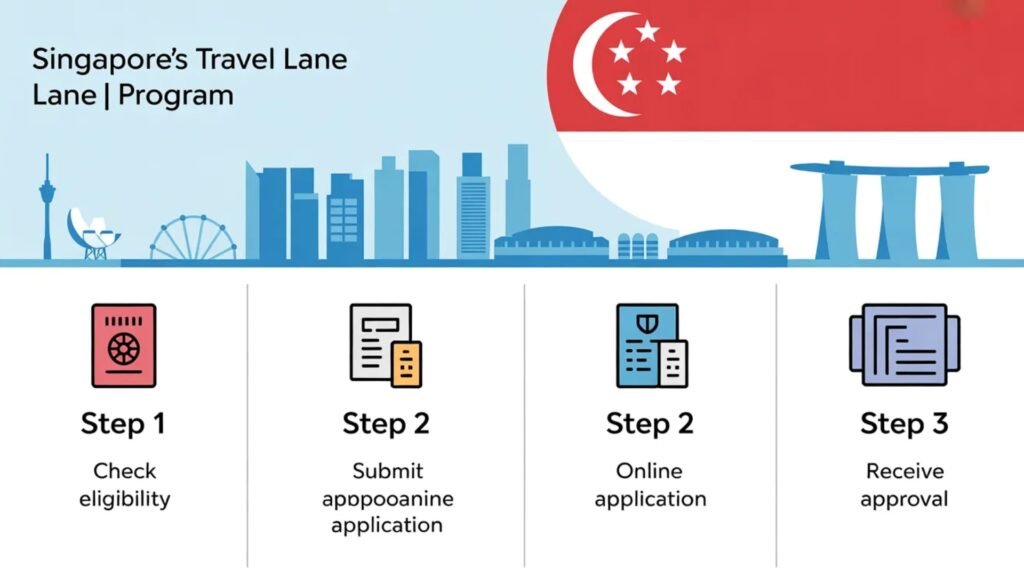
Alright, let me walk you through this. First, you go to the ICA website. You look for the Singapore Travel Lane application portal. Create a username and password. Then you start filling out the form. Basic stuff at first—name, passport number, where you’re from. You know, normal questions.
Then it gets into your vaccination status. You provide vaccine details. When you got vaccinated. Which vaccine. All that. Then you declare your accommodation in Singapore. Where are you staying? That’s important because if there’s an issue, Singapore needs to know where to find you. Next, you upload your documents. Here’s where people mess up sometimes. You need clear, readable scans. Not blurry photos. Actual scans. Then you submit. And then—this is key—you watch your email. ICA will send you updates. Approval comes via email. Some people miss it because it goes to spam. Check spam. Seriously.
Required Documents for Approval
Okay, this is critical. Here’s what you absolutely need to have ready before you even start the application. Your passport scan. Your vaccination certificate. This has to be official. Like, from your government or health ministry. Not some screenshot you took. An official document. You also need proof of your accommodation. A hotel booking, an Airbnb confirmation, something showing where you’ll stay.
Then there’s your travel insurance Singapore policy document. Insurance proof is required. You also need a clear headshot photo. Like, for an ID card. Your email address, which obviously you have. And that’s basically it. Oh, one more thing—if you got vaccinated recently or had COVID recently, you might need additional documentation. Like a doctor’s letter or test results. But the basic stuff I mentioned? That’s your core documentation.
| Document | Format | Details |
|---|---|---|
| Passport | Scan | Must be clear and readable |
| Vaccination Certificate | Official document | From government health ministry |
| Accommodation Proof | Booking confirmation | Hotel or accommodation reservation |
| Travel Insurance | Policy document | Must meet minimum coverage |
| Passport Photo | Digital image | Clear headshot photo |
| Health Declaration | Online form | Completed before arrival |
Processing Time & Approval Tips
Most applications get processed within 5-7 business days. That’s the standard. But here’s the thing—if you apply during peak travel season, it might take longer. Singapore sees millions of tourists. During peak months, the system gets busy. That’s just reality. So apply early. Like, at least two weeks before your trip. Actually, three weeks is better.
What’s funny is that some people get approved in 24 hours. I’ve seen it happen. I think it depends on when the system processes your application and whether there are any flags that need checking. If everything’s clean and clear, boom—fast approval. If something seems off, they might ask for additional documents. That’s when things slow down. So make sure your documents are perfect. No blurry scans. No missing information. Double-check everything before submitting. Honestly, spending an extra hour verifying documents saves you from a delayed application.
One insider tip? Submit your application on a weekday morning. Not Friday. Not late at night. Weekday morning means it gets processed during business hours. This probably doesn’t matter scientifically, but psychologically? It feels better. And honestly, whatever gets you comfortable submitting your application works. Just don’t overthink it. Submit it. Then wait patiently.
Countries Eligible for Singapore Travel Lane
So here’s the thing about Singapore travel restrictions—they’re not as strict as they used to be. Most countries are now eligible for the Singapore Travel Lane. But “most” doesn’t mean “all.” Some countries still have additional requirements. And occasionally, Singapore adds new restrictions if there’s a disease outbreak or political situation that affects a country.
The eligibility list changes. Like, actually changes. So when you’re reading this article, the list might’ve shifted since I wrote it. That’s why you always—and I really mean always—check the official ICA website for the most current information. Don’t just trust this article, even though I’m giving you good stuff. Check official sources. Singapore’s official immigration rules are posted online.
List of Approved Countries (Updated 2026)
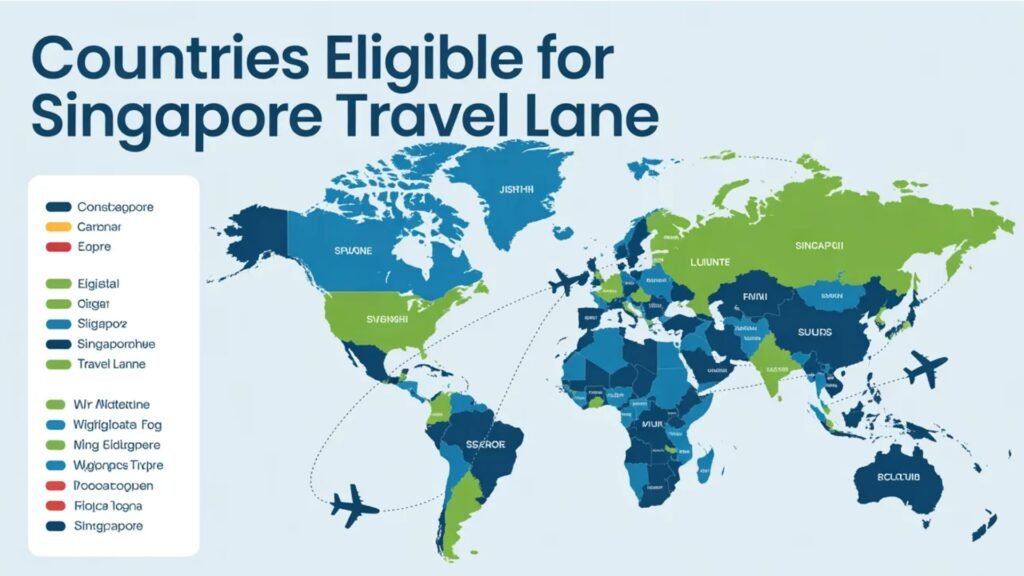
Basically, if you’re from a developed nation, you’re probably fine. Europe? Good. USA? Good. Australia? Good. Japan? Absolutely. Most of Southeast Asia? Yeah. Most of the Commonwealth? Yes. Middle Eastern countries? Generally yes. African countries? It depends, but many are approved. Latin America? Most of it, actually. China? Yes. India? Yes. Russia? Complicated situation right now, but technically no new restrictions on travel to Singapore. Actually, most countries are approved.
The few that have additional restrictions or requirements are typically countries where there’s been a health situation or they’re not in diplomatic good standing with Singapore. But honestly, unless you’re from a very specific country, you’re almost certainly eligible. And if you’re reading this in English from a developed country? You’re definitely approved. If you’re unsure about your specific country, just go to the ICA website and check. It takes two minutes.
Travel Restrictions by Country
Some countries need additional documentation. Like, if you’re from a country where there’s been recent disease outbreaks, Singapore might ask for extra health certificates. Or if you’re traveling from a country that was highly impacted by COVID, they might require a recent negative test. But these requirements change based on current global health situations. In 2026, these extra requirements might not apply at all. Or they might.
The point is, your country might have specific travel to singapore from [country] requirements that are different from other countries. So yes, check your country specifically. Don’t assume your neighbor’s requirements are the same as yours. Even if you’re from neighboring countries, requirements can differ. It’s annoying, but that’s how it works. Singapore’s basically saying “we trust most people, but we’re keeping an eye on specific situations.”
Transit Rules for Non-Eligible Countries
Okay, so what if your country isn’t on the approved list? What if you’re stuck? Don’t panic. There are workarounds. The main one? You can still enter Singapore using a standard tourist visa. It’s slower. It requires more documentation. But it works. You just won’t get the streamlined Singapore Travel Lane experience. You’ll go through regular immigration channels.
Or—here’s another option—if you’re transiting through Singapore to get somewhere else, you might not even need a visa depending on your nationality and transit time. If you’re staying less than 96 hours and just changing planes, you might get visa-free entry. But again, check the ICA website because this varies. The point is, being ineligible for the Singapore Travel Lane doesn’t mean you can’t visit. It just means the process takes longer.
Singapore Travel Lane Rules on Arrival
Alright, so you’ve been approved. You’ve got your documents. You’re on the plane. Now what? Well, the real test happens when you actually land at Changi Airport. This is where things get real. The immigration process is smooth if you’ve done everything right. But if something’s off, they’ll catch it.
Changi Airport is actually pretty efficient. Like, seriously. It’s one of the better airports in the world for processing travelers. But there are still rules. There are still procedures. You need to follow them. The good news? If you used the Singapore Travel Lane, the process is specifically designed to be fast.
Immigration Process at Changi Airport
So you land at Changi Airport Singapore. You go through the customs area. You see the immigration desks. There are actually dedicated lanes for Singapore Travel Lane travelers. That’s the whole point, right? You go to those lanes. You don’t queue with the regular tourists. and You scan your passport. show your Singapore travel approval letter.
The immigration officer asks you standard questions. Why are you here? How long are you staying? Where are you staying? These are basic questions. Just answer honestly. Your pre-approval means they trust you more than regular tourists. So the process is quicker. Actual average time? Maybe 5-10 minutes from when you step up to the desk. Compare that to regular immigration which can be 45 minutes to an hour. That’s the power of the Singapore Travel Lane.
Now, here’s a tip. Have your documents ready. Don’t search through your bag while standing at the desk. Have your passport out. Have your approval letter accessible. and accommodation details ready. Seriously, those few minutes of preparation save time. And when you’re exhausted from a flight, those few minutes feel like hours. So prep ahead.
Testing & Health Checks on Arrival
Here’s what you need to know about health procedures at Changi Airport. When you land, you go through thermal screening. That’s not a test. It’s just checking your temperature. Takes three seconds. If you pass the thermal screen—and if you’re healthy, you will—you move on. That’s it. They’re not testing everyone anymore. They just want to make sure you don’t have a fever.
If you do have a fever or show symptoms, then they might do a rapid test. But honestly, if you’re symptomatic, you probably shouldn’t be traveling anyway. You’re just spreading stuff around. But if Singapore’s situation changes and they start requiring tests again, you’ll see that reflected on their website. So close to your travel date, check the ICA website one more time. One more time. Seriously. Last-minute changes happen.
Quarantine Rules (If Applicable)
So the big question everyone asks is “do I need to quarantine?” The answer in 2026 for Singapore Travel Lane users? Probably no. You shouldn’t need to isolate. That’s the whole advantage of the Singapore Travel Lane. No quarantine means you can start exploring Singapore the day you arrive.
But—and this is a big but—if you test positive for COVID after arrival, then yes, you need to isolate. Singapore requires infected travelers to isolate for at least five days. You might need to stay in your accommodation. You might be offered a government facility. But if you don’t have COVID? You’re free. You can explore the city. You can do your thing. The Singapore quarantine rules are flexible but specific. Don’t have COVID, don’t isolate. Simple as that.
| Situation | Requirement | Duration |
|---|---|---|
| Arrive healthy, test negative | No quarantine | N/A |
| Develop symptoms during stay | Isolation recommended | 5+ days |
| Test positive on arrival | Isolation required | 5-10 days minimum |
| Transit under 96 hours | No quarantine | N/A |
Benefits of Using Singapore Travel Lane
So why should you use the Singapore Travel Lane instead of a regular visa? Honestly, there are so many reasons. It’s faster. It’s easier. a nd it designes for exactly this purpose—getting vaccinated travelers into Singapore smoothly. If you qualify, you’d be missing out by not using it.
The entire system exists because Singapore realized that vaccinated travelers pose low health risks. So they created a streamlined process. You get to benefit from that streamline. Smart, right? The country gets tourism revenue. You get easy entry. Everyone wins.
Quarantine-Free Travel Explained
This is huge. You arrive in Singapore without needing to spend time in isolation. You land at Changi Airport. then You clear immigration in under 10 minutes. and You get your luggage. You’re done. You can go straight to your hotel. You can go explore. That day.
Compare that to someone entering with a standard visa who might face quarantine requirements. Yeah, quarantine requirements aren’t as strict as they used to be, but they’re still a pain. You’re losing at least a few days of your vacation. With the Singapore Travel Lane? You’re not. You’re in Singapore. You aare experiencing Singapore. That’s the deal.
The quarantine-free aspect is literally the selling point. Singapore’s saying “we trust you’re vaccinated, we trust you’re healthy, so enjoy your trip.” It’s respectful. It’s practical. And honestly, it’s why so many people use it. Why would you choose a slower, more restrictive entry method if a faster one is available?
Faster Immigration & Entry Process
I mentioned this before, but it deserves emphasis. The immigration process for Singapore Travel Lane users is built to be fast. You’ve got dedicated lanes. You’ve got pre-approval. Officers process you quicker because they already know you’ve been screened. It’s not mystery processing. It’s streamlined.
This is especially amazing during peak hours. Like, if you arrive during rush time when lots of flights land simultaneously, you’re not stuck waiting an hour. Singapore Travel Lane users get through much faster. It’s genuinely impressive. Actually, some travelers I’ve talked to said they went through immigration faster than they expected. Like, they were mentally prepared for 30 minutes and cleared in five. That’s how efficient the system is when you use the right lane.
Safe Travel Experience
Here’s what people sometimes forget—the Singapore Travel Lane isn’t just convenient for you. It’s also a safety mechanism for Singapore. The country implemented this system because they wanted to balance tourism with public health. By requiring vaccination, health declarations, and travel insurance, they’re protecting their population and also protecting you.
Think about it. When you arrive through the Singapore Travel Lane, you’re part of a vetted group. Other travelers in the country went through the same screening. That’s safer for everyone. Disease spread is lower. Healthcare systems aren’t overwhelmed. It’s just overall better. So when you use this lane, you’re not just making your trip easier. You’re contributing to a safer travel environment. That’s actually meaningful.
Common Mistakes to Avoid
Alright, I’m going to be real with you. People mess up the Singapore Travel Lane application process. A lot. I’ve seen people get rejected. I’ve seen people miss flights. I have seen people waste money. And honestly? Most of the time, the mistakes are preventable. So let me walk you through the stuff to avoid.
These aren’t hypothetical mistakes. These are things that actually happen. So read carefully. Learn from others’ problems. Don’t be the person who messes up.
Submitting Wrong Documents
This is the number one issue. Someone submits a blurry scan of their vaccination certificate. Or they upload a photograph instead of an official document. Or they submit an expired passport. The ICA system rejects these applications immediately. Then the person panics. They have to reapply. They lose time.
Here’s what you need to do instead. Get clear, official scans. Use a document scanner app if you don’t have a physical scanner. Make sure the document is fully visible. Make sure it’s readable. If there’s any doubt, rescan it. Check the file size. Make sure it uploaded properly. Seriously, spend an extra 10 minutes getting this right. It saves you days of stress later.
The thing is, the system is pretty strict about document quality because they’re processing thousands of applications. They can’t have fuzzy scans where they’re trying to decipher information. So be professional about your documents. Treat them like they matter. Because they do.
Not Checking Travel Lane Eligibility First
Some people just assume they’re eligible and apply. Then they get rejected because their country isn’t on the approved list. Or their vaccination certificate isn’t from an approved source. Or something else doesn’t match requirements.
Check eligibility first. Seriously. Go to the ICA website. Look up your country. Look up your vaccination source. see your travel insurance provider. Make sure everything’s eligible. It takes 10 minutes. It saves you from wasting an hour on an application that’s going to be rejected anyway. I’m not exaggerating. Check first. Apply second.
And here’s the thing—eligibility can change. You might’ve been eligible last year. This year, something changed. Or maybe the approved vaccines list changed. So even if you traveled to Singapore before using the Singapore Travel Lane, verify again. The landscape shifts. Stay current.
Last-Minute Application Issues
Okay, so you’ve booked your flight. It’s in two weeks. Now you’re applying for the Singapore Travel Lane. This is risky. I mean, it might work out. But it’s risky. During those two weeks, if your application gets stuck in a review queue—which happens sometimes—you might not get approval before your flight.
Apply at least three weeks before travel. More is better. I know people who apply a month ahead. Is that paranoid? Maybe. But they’re never stressed. Their approval comes through with time to spare. And if something’s wrong, they have time to fix it. So yeah, apply early. Plan ahead. Give the system breathing room.
Actually, here’s something that bites people. They apply and then immediately book their flights. No. Apply first. Get approved. Then book. Because if approval takes longer than expected, you’ve just wasted money on non-refundable flights.
Singapore Travel Lane vs Tourist Visa – Key Differences
So you’re probably wondering “wait, what’s the difference between the Singapore Travel Lane and a regular tourist visa?” Good question. They’re not the same thing. They’re actually pretty different. Let me break it down because this matters for your decision-making.
Basically, the Singapore Travel Lane is faster and easier if you qualify. A tourist visa is the traditional route that works for anyone. The choice depends on your situation. Let’s see which one makes sense for you.
Travel Lane vs Regular Entry
The Singapore Travel Lane requires pre-approval online. Takes about a week. Costs a fee (usually around SGD 20). You need to be vaccinated. You can’t have recent COVID. The process is digital. Everything happens before you arrive. Then you use dedicated immigration lanes at Changi Airport. Immigration takes 5-10 minutes.
A regular tourist visa, on the other hand, doesn’t require pre-approval. You can apply at an embassy or online through a visa application service. Takes longer—sometimes weeks. Costs more—usually SGD 30-40 or more. You don’t necessarily need proof of vaccination, though some restrictions apply. You go through standard immigration lanes at the airport. Takes 30-45 minutes usually. You might face quarantine requirements depending on the situation.
So basically, the Singapore Travel Lane is faster and cheaper and easier if you qualify. A tourist visa is more universal—almost everyone can get one. But it’s slower and pricier.
Which Option is Better for You?
If you’re vaccinated and you have travel insurance and your documents are in order? The Singapore Travel Lane is obviously better. It’s faster. It’s easier. It is cheaper. Use it.
If you’re not vaccinated or you don’t qualify for some reason? Well, you can’t use the Singapore Travel Lane. You’d need a tourist visa. Or you’d need to see if there are exemptions or alternative entry methods. But for the vast majority of travelers who are vaccinated and have their stuff together? The Singapore Travel Lane is the way to go. It’s just smarter.
FAQs About Singapore Travel Lane
Alright, let me answer the questions people actually ask. These aren’t theoretical questions. These are things I’ve genuinely heard from travelers. So if you’re confused about something, you’re probably not alone.
Is Singapore Travel Lane Still Available in 2026?
Yeah, it is. As of 2026, the Singapore Travel Lane is still active and operational. Singapore keeps running it because it works well. It’s efficient. Travelers like it. The government likes it. So unless something major changes—like another global pandemic or something—it’s sticking around.
But here’s the thing. Programs change. Requirements change. Eligibility criteria shift. So while the Singapore Travel Lane is definitely available right now, I can’t promise it’ll be available in exactly the same form five years from now. But in 2026? Yes. It’s here. It’s available. Use it if you qualify.
Do I Need PCR Test for Singapore?
Not typically. As of 2026, Singapore travel updates indicate that PCR tests aren’t mandatory for entry. You just need the health declaration. Thermal screening at the airport. That’s it.
But—and this is important—if you’ve had COVID symptoms or you’re actually sick, you probably shouldn’t be traveling. That’s not a rule. That’s just common sense and decency. And if Singapore’s health situation changes, they might bring testing back. But right now, no mandatory PCR.
Can Unvaccinated Travelers Enter Singapore?
Technically, yes. You can enter Singapore without vaccination. But you can’t use the Singapore Travel Lane. You’d need a regular tourist visa. You’d go through standard immigration. Probably face quarantine requirements. It’s just way more complicated.
So if you’re unvaccinated, you’re not blocked from entering Singapore. You just won’t get the streamlined experience. You’ll have the slower, more restrictive experience. Which, honestly, seems like a hassle. But it’s possible if you really want to visit.
How Long Can I Stay Using Travel Lane?
Most tourist entries to Singapore are approved for stays of up to 90 days. The Singapore Travel Lane doesn’t restrict length of stay beyond normal visa-free duration. So if you’re from a country that gets 90 days visa-free, you get 90 days with the Singapore Travel Lane. If your country gets 30 days, you get 30 days.
You can extend your stay if you apply while you’re in Singapore. Extensions take time and money. But it’s doable. The point is, the initial Singapore Travel Lane approval doesn’t limit you beyond the normal tourist duration. So plan accordingly.
| Question | Answer | Duration |
|---|---|---|
| PCR test required? | No (as of 2026) | N/A |
| Vaccination required? | Yes, for Travel Lane | 2+ doses |
| Quarantine needed? | No, if healthy | N/A |
| Max initial stay | 90 days (visa-free) | Varies by nationality |
| Can unvaccinated enter? | Yes, with tourist visa | Slower process |
Singapore Travel Lane Rules on Arrival – Detailed Process
So you’ve landed at Changi Airport. Your heart’s probably pounding a bit. “Is everything going to be okay? Did I do this right?” Yes. You did. Everything’s fine. Let me walk you through exactly what happens next.
The process is actually pretty straightforward. You follow signs. You go to the right lane. and You answer a few questions. You’re in Singapore. Seriously, that’s it. But let me break down each step so there’s no surprises.
Immigration Process at Changi Airport – Step by Step
Alright, you’re exiting the plane. You follow the signs toward immigration. The airport is pretty clear about directing you. At Changi Airport, there are dedicated lanes for different types of travelers. You’re looking for the Singapore Travel Lane lane. Sometimes it says “Fast Track.” Sometimes it says “Pre-Approved Travelers.” Look for signs indicating expedited processing.
You get in that line. It moves fast. When you reach the desk, you’ve got your passport in hand. You’ve got your Singapore travel approval letter printed or on your phone. You show these to the officer. The officer scans your passport. They check the system. Your pre-approval pops up. They ask basic questions. “What’s the purpose of your visit?” “How long are you staying?” “Where are you staying?”
You answer honestly. “Tourism.” “10 days.” “Marina Bay Hotel.” Whatever the truth is. The officer stamps your passport. “Welcome to Singapore.” And you’re done. You exit through the immigration gate. You go pick up your luggage. You’re officially in Singapore. The whole thing? Maybe 5-10 minutes max if there’s no queue. If there’s a queue, maybe 15 minutes. But it’s genuinely efficient.
Testing & Health Checks on Arrival – What Happens
Okay, so health checks. You’re going through the airport. You probably see thermal imaging cameras. That’s checking your temperature as you walk through. They’re looking for fevers. If you’re normal temperature? You pass automatically. No interaction. It’s just technology monitoring. Takes zero effort from you.
If you’re flagged with a high temperature or you look symptomatic, an officer might approach you. They’d do a rapid test. Takes five minutes. If negative, you continue. If positive, you’d go to a isolation area and work with health authorities. But honestly, if you’re sick enough to test positive for COVID, you probably knew that before boarding the plane. So just—don’t travel if you’re sick. It’s not complicated.
Quarantine Rules (If Applicable) – Understanding Isolation
Here’s the reality of Singapore quarantine rules. If you’re healthy, there’s no quarantine. That’s the whole point of the Singapore Travel Lane. You enter. You’re free to explore.
But if—and this is a big if—you test positive for COVID during your stay (maybe you get sick a few days after arrival), then yes, you’d need to isolate. Singapore requires about 5 days minimum isolation. You’d stay in your accommodation. You’d be monitored. You would eventually be cleared to continue your trip once you test negative. But this is only if you actually get COVID. If you don’t get it, quarantine doesn’t apply.
And here’s something interesting. Singapore’s actually quite practical about this. They understand people come from all over the world. Viruses happen. So they have clear protocols for managing it. It’s not punitive. It’s just public health.
Benefits of Using Singapore Travel Lane – Why It Matters
Why would you go through all this application process? Why apply for the Singapore Travel Lane instead of just showing up with a regular visa? Because it’s so much better. Seriously. It’s not just convenience. It’s respect.and It is recognition that you’ve done the responsible thing by getting vaccinated.
Singapore’s basically giving you a reward for being responsible. The reward? Faster entry. Easier process. Less time wasted. More time to actually enjoy your trip. That’s a pretty good trade.
Quarantine-Free Travel Explained – Freedom
This is the biggest advantage. You land in Singapore and you’re immediately free. No isolation. No waiting. and Not sitting in a hotel room for five days frustrated. You can go out that same day. You can explore. and also You can eat at hawker stalls. You can visit Gardens by the Bay. You can do Singapore.
For people on vacation, this is huge. Your vacation time is limited. You don’t want to waste it in isolation. The Singapore Travel Lane ensures you don’t. You get maximum experience from your limited time. That’s genuinely valuable. Actually, think about it—if you only have 10 days in Singapore and you had to quarantine 5 days, you’ve wasted half your trip. With the Singapore Travel Lane, you get the full 10 days to explore.
Faster Immigration & Entry Process – Time Savings
The speed is real. Like, genuinely impressive. You’re not waiting an hour at immigration. You’re not queued with hundreds of other tourists. You’re in a dedicated lane. You’re processed quickly. You’re moving on.
This matters because you’re probably exhausted from flying. You’ve been in a plane for 6+ hours maybe. Your body’s confused about time zones. You just want to get to your hotel and rest or start exploring. The Singapore Travel Lane gets you there faster. That’s not just convenience. That’s your well-being as a traveler.
Safe Travel Experience – Health & Wellness
When you use the Singapore Travel Lane, you’re entering as part of a screened group. Everyone’s been vaccinated. Everyone’s got travel insurance. Everyone’s had health checks. The population of travelers is more health-conscious. That means lower disease transmission. It means you’re actually safer.
Singapore’s healthcare system is also excellent, but you don’t want to need it. Prevention is better than treatment. The Singapore Travel Lane helps with prevention. It creates a safer environment for everyone. Plus, knowing everyone around you has had the same screening? That’s peace of mind. That’s valuable.
Singapore Travel Planning Tips & Practical Advice
Alright, so you’re planning to use the Singapore Travel Lane. Good choice. But there’s more to the trip than just entry, right? You need to plan where to stay. What to do. What to budget. Let me give you some practical advice that’ll make your whole trip better.
Best Time to Visit Singapore
Singapore’s hot and humid year-round. Like, always. There’s no “cool” season where it’s actually comfortable. It’s tropical. It’s wet. But some times are better than others.
Avoid the monsoon seasons if you can. The southwest monsoon (May to September) and the northeast monsoon (December to March) bring heavy rains. November to January is actually the driest period. January to March is also pretty decent. These periods get crowded with tourists though. Hotels are pricier. Flights are pricier. But the weather’s better.
If you don’t mind occasional rain, September to October or April to May are cheaper. Fewer tourists. Better hotel rates. Rain happens, but you work around it. Actually, tropical rain is usually short and intense, not all-day drizzle. So it’s manageable.
Singapore Budget Travel – Cost-Saving Tips
Alright, so Singapore’s expensive. It just is. But you can manage it. First, eat at hawker centers instead of restaurants. Seriously. The food is incredible and costs SGD 3-5 per meal. That’s like USD 2-4. Restaurant meals run SGD 20+. So hawker centers save serious money.
Use the MRT (Mass Rapid Transit). It’s cheap and efficient. Single trips cost SGD 0.83-3.50 depending on distance. A day pass is about SGD 12. Compare that to taxis or Grab, which run SGD 5-15+ per ride. The MRT is definitely cheaper.
Visit free attractions. Marina Bay is free to walk around. Changi Airport itself has free attractions (seriously, there are gardens and attractions inside the airport). Gardens by the Bay has free entry to the outdoor gardens. Only the domes cost money. National Museum has free entry certain hours. Do research.
Stay in hostels or budget hotels. Katong, Joo Chiat, or Geylang have cheaper accommodations than the CBD. You’re further from the city center, but trains get you there quickly and cheaply. Factor in 3-5 minutes extra travel time, but save SGD 50-100 per night on accommodation.
Actually, here’s something people don’t realize. Flying into Changi Airport is convenient, but there’s also budget flights from neighboring countries. If you’re doing a Southeast Asia trip, sometimes flying from Thailand or Malaysia is cheaper. Just something to consider.
Essential Travel Checklist – Before You Go
Alright, so you’re ready to book. Before you actually purchase flights, here’s your checklist:
Make sure your passport is valid for at least six months beyond your return date. Apply for the Singapore Travel Lane at least three weeks before travel. Get your travel insurance Singapore policy sorted. Book your accommodation. Book your flights. Download the SG Arrival Card app or know you’ll fill it online before landing. Notify your bank you’re traveling (so they don’t block your cards). Get some Singapore dollars or know where to exchange at the airport. Actually, just use your card at ATMs—exchange rates are better than airport exchanges.
Check if you need any vaccinations for your health (beyond COVID—maybe you need Yellow Fever or something depending on where you’re from). Create photocopies of your important documents and store them separately. Buy a portable phone charger because you’ll need it. And honestly, do this way ahead. Don’t do all this the day before you fly.
Real Traveler Experiences – What People Actually Say
So I’ve been talking about the Singapore Travel Lane theoretically. But what do actual travelers say? Let me share some real experiences.
Sarah from Australia: “I was nervous about the application process, but honestly, it took me 15 minutes. I got approved in two days. Immigration was so fast I almost didn’t believe it. I expected chaos. It was smooth. Would definitely use the Singapore Travel Lane again.”
James from the UK: “The pre-approval meant I could skip the long queues. While other tourists were waiting 45 minutes, I was through in 5 minutes. That five minutes I saved? I used it to get breakfast at the airport. Small thing, but it set a good tone for my trip.”
Priya from India: “Having travel insurance Singapore included was a bit annoying at first—like, one more thing to arrange—but honestly, it gave me peace of mind the entire trip. I didn’t use it, but knowing I was covered made me less anxious. Worth it.”
These are real people with real experiences. The Singapore Travel Lane actually works as advertised. It’s not some theoretical system. People use it successfully every day.
Understanding Singapore Immigration Rules & Regulations
Okay, so beyond just the Singapore Travel Lane, there are broader Singapore immigration rules you should understand. The country takes immigration seriously. That’s not surprising—most countries do. Singapore just does it efficiently.
The ICA is the agency managing everything. They’re professional. They’re thorough. They’re not trying to trick you. They just want to know who’s coming and going. If you’re honest and follow the rules, you’re fine. If you try to deceive them or break rules, that’s when problems start.
General Entry Policies
Singapore allows tourists 90 days or less depending on nationality (some nationalities get 30 days, others 90). You can’t work without a work permit. You can’t overstay your allowed period without serious consequences. You need to be respectful of local laws and customs.
Singapore has strict laws against drugs. Like, seriously strict. People get caned for trafficking. People get executed for serious trafficking. I’m not trying to scare you—you’re probably not a drug person anyway—but just know it’s serious. Don’t even think about bringing anything illegal. The consequences are disproportionate to what you might face in your home country.
Respectful behavior is important too. Singapore’s diverse but also quite formal. Dress decently in religious sites. Be quiet on public transport. Follow rules. It’s not harsh—it’s just respectful. Most travelers have zero issues because they just behave normally.
What Happens If You Overstay
This is a big one. If you overstay your allowed period even by one day, Singapore issues a fine. A significant fine. Like SGD 500+ for even a small overstay. If you overstay significantly, you can get banned from re-entry for years. Some people have been banned for 10+ years for serious overstays.
So don’t test this. Know when your stay ends. If you need more time, apply for an extension while you’re still in Singapore. It’s not that complicated. Just do it properly. The government’s not trying to trap you. They just want you to follow the rules they’ve set.
Singapore Travel Updates & Current Information (2026)
Since things change, I want to emphasize—check the official ICA website before finalizing your plans. As of my latest information in 2026, the Singapore Travel Lane is operational. Vaccination requirements stand as described. Testing is not mandatory. Quarantine isn’t required for healthy arrivals.
But things shift. New variants emerge. Political situations change. Economic situations change. Singapore adjusts policies accordingly. So my information is accurate as of now, but “now” is constantly shifting. What’s true today might be different next month. That’s just reality. So stay updated.
The easiest way to stay updated? Subscribe to ICA updates. Or check their website monthly leading up to your trip. Seriously. It takes five minutes. But it ensures you’re not surprised.
Final Tips for Using Singapore Travel Lane Successfully
Alright, let me leave you with final thoughts. The Singapore Travel Lane is genuinely a good system. It works. It’s fair. It’s efficient. If you qualify, use it. You’ll have a better entry experience. You’ll get more out of your trip. You’ll spend less time stressed about logistics and more time enjoying Singapore.
My biggest piece of advice? Plan ahead. Don’t leave things to the last minute. Apply three weeks early. Book your accommodation two weeks early. Get your insurance a week early. This gives you buffer room if anything goes wrong. And when it comes to international travel, buffers are your friend.
Be honest in all your applications and declarations. Singapore’s not trying to be difficult. They just want accurate information. Provide it. You’re golden.
Enjoy Singapore. It’s an amazing city. The food’s incredible. The technology is impressive. The people are generally friendly. The weather’s hot but bearable. And with the Singapore Travel Lane, you’ll get to experience it faster and easier than you might have expected.
Frequently Asked Questions – Detailed Answers
Q: Is the Singapore Travel Lane accepting new applicants in 2026?
A: Yes, absolutely. The Singapore Travel Lane is actively accepting applications. There’s no limit on how many people can use it. If you’re eligible and you apply, you’ll get processed. The system is designed to handle volume, so don’t worry about it being oversubscribed.
Q: What happens if my application gets rejected?
A: The ICA will tell you why. Usually it’s because of missing documents or ineligibility. You can fix the documents and reapply. Or if it’s an eligibility issue, you can apply for a regular tourist visa instead. Rejection isn’t the end of the world. It’s usually just a fix-it situation.
Q: Can I use the Singapore Travel Lane for multiple entries?
A: The approval is typically for a single entry. If you want to leave and come back, you’d need to reapply. But seriously, if you’re leaving and coming back multiple times in a short period, probably better to get a multi-entry visa instead. Check with the ICA for that.
Q: What if my vaccination certificate is from a country not recognized by Singapore?
A: Check the ICA website for which countries’ certificates they recognize. Most countries are recognized. If yours isn’t, you might need additional documentation. Contact the ICA directly. They’re actually helpful if you reach out.
Q: How much does the Singapore Travel Lane application cost?
A: Typically SGD 20, which is about USD 15. Super affordable. The main cost is the travel insurance you’re required to have, which might run SGD 50-200 depending on coverage level.
Conclusion – Your Singapore Adventure Awaits
So here’s the bottom line. The Singapore Travel Lane exists to make your entry into Singapore easier. It works. It’s efficient. It’s fair. If you qualify, you’re genuinely lucky. Use it. Apply early. Prepare your documents. Follow the process. You’ll be fine.
Singapore’s an incredible destination. The Singapore Travel Lane means you get there faster and start exploring quicker. Your vacation time isn’t wasted on quarantine or long immigration processes. You’re in the city exploring and experiencing.
Don’t overthink it. Don’t procrastinate on it. Just do it. Apply. Get approved. Travel. Enjoy.
Singapore’s waiting for you.