
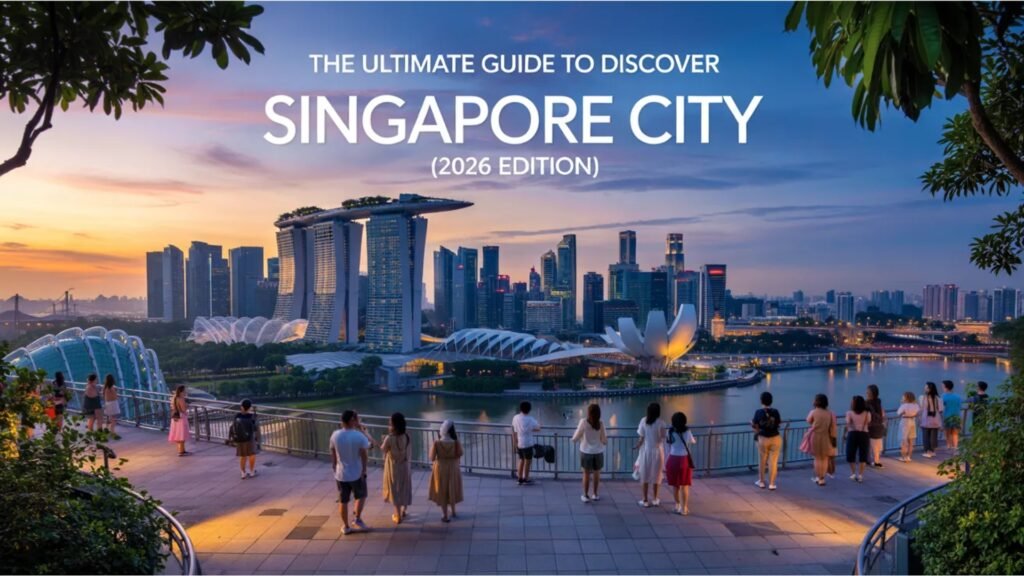
The Ultimate Guide to Discover Singapore City (2026 Edition) | Travel Tips, Hotels & More
“To visit Singapore is to witness a city that has genuinely figured something out — a place where ambition, beauty, and order coexist without apology.” — Lonely Planet
You just walked off a 19-hour flight. Everything hurts, you smell like recycled cabin air, and you’re running on whatever sad granola bar they handed out somewhere over the Pacific. Then the airport doors slide open and — wait, is that an indoor waterfall? There are orchids everywhere. The floor is cleaner than your kitchen counter back home. That’s your first ten minutes in Singapore, and somehow it just keeps going from there.
This tiny island nation — 278 square miles, roughly the size of Chicago — manages to pack in more interesting, strange, beautiful, and flat-out delicious things than most countries do across hundreds of thousands of square kilometers. Whether you’ve never left the US or you’ve got a passport that looks like a flip book, when you discover Singapore, you’re walking into something genuinely unlike anywhere else. This guide covers the whole picture — Singapore visa requirements, where to sleep without going broke, what to eat (this part matters a lot), how to get around, and the honest reality of what it actually costs.
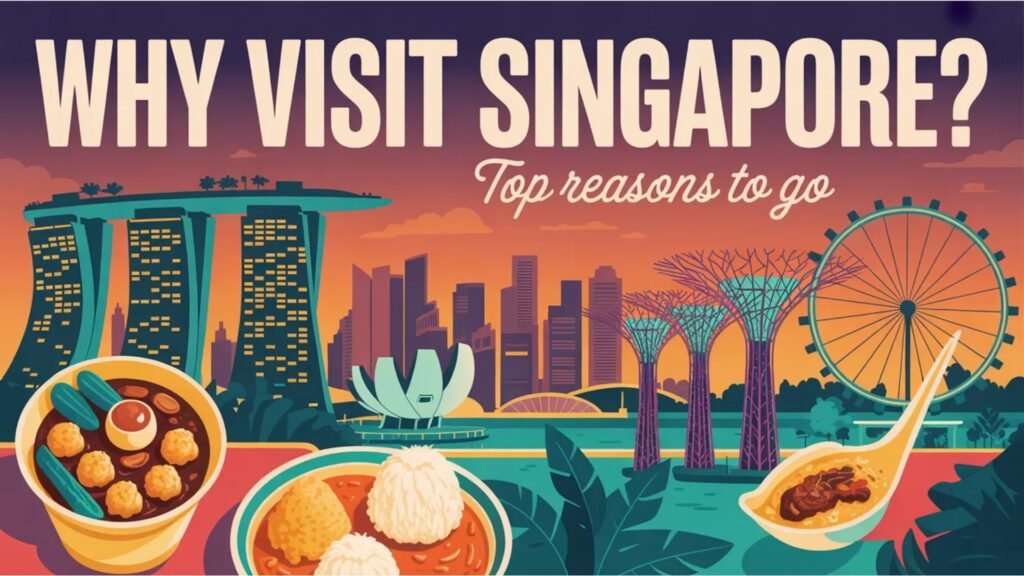
Why Visit Singapore? Top Reasons to Go
Here’s something funny about Singapore tourism — people show up expecting a sort of shiny, upscale layover city. Clean, efficient, maybe a bit corporate. Then they leave completely hooked, already searching flights for a second trip. That gap between expectation and reality is exactly what makes this place special.
The modern skyline is legitimately jaw-dropping. Not “nice for Southeast Asia” jaw-dropping — globally impressive by any standard. The food is extraordinary and, this is the part that gets Americans, genuinely cheap. Streets are cleaner than most US airports. English is everywhere, which removes a whole category of travel stress. And the city runs with a precision that will, temporarily, make you annoyed at every other place you’ve ever lived.
What really sticks is the variety. Actual variety — not the kind where three things are technically different but feel basically the same. You can genuinely start your morning eating a $3 bowl of Hainanese chicken rice at a plastic table, wander through a 700-year-old Hindu temple before noon, spend an afternoon in a UNESCO-listed rainforest, and end up watching the Marina Bay skyline light up with a cocktail in your hand by 8 PM — all without leaving a five-mile radius. That’s just a normal Tuesday here.
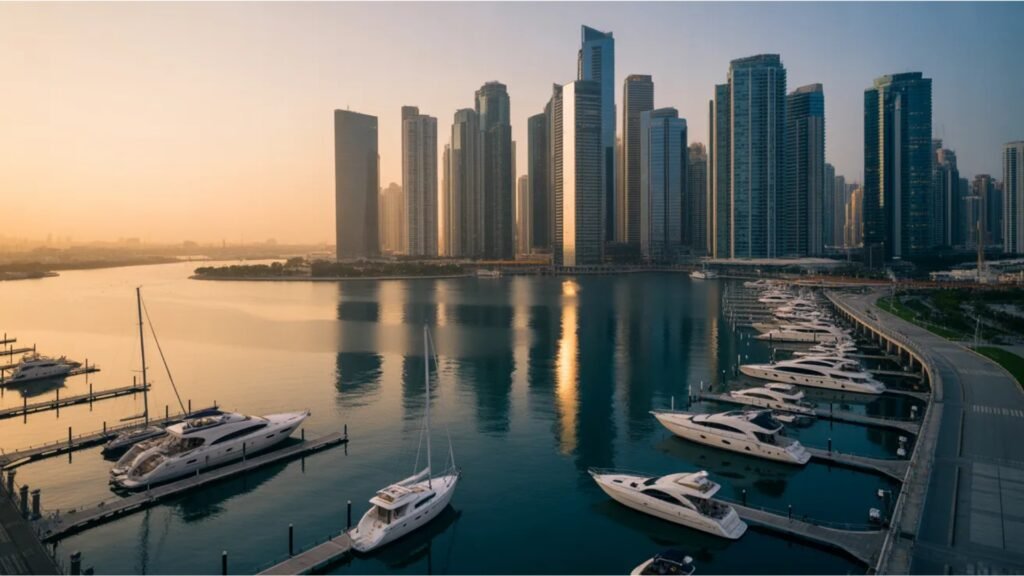
Modern Skyline & Marina Bay
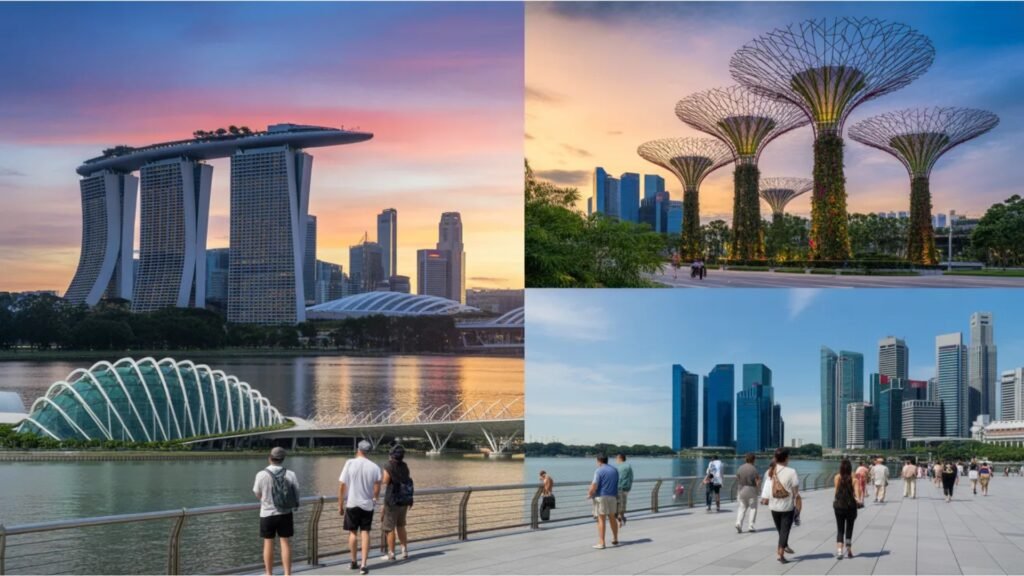
Marina Bay is Singapore’s showpiece, and it knows it, and it doesn’t really apologize for that. Marina Bay Sands — those three towers with what looks like a surfboard sitting across the top — sits right at the water’s edge like it’s daring you to look away. At night, the whole thing reflects off the bay and the effect is genuinely, almost embarrassingly cinematic.
The Gardens by the Bay light show runs every night at 7:45 PM and 8:45 PM. These massive Supertrees start glowing, music plays, and a few hundred tourists and locals just stand there with their phones raised. It’s free. It’s spectacular. Go twice — once when you first arrive because you’ll be too overwhelmed to absorb it properly, and once later when you can actually slow down.
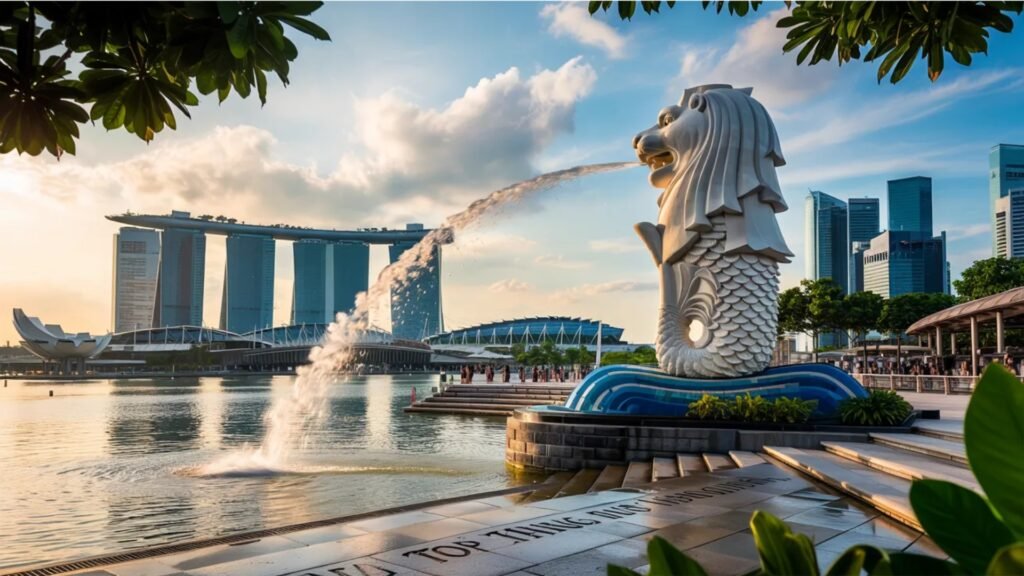
If you want the full overhead view, the Singapore Flyer observation wheel sits 165 meters up. On a clear day you can see Malaysia in one direction and parts of Indonesia in the other. Down at Merlion Park just after sunset, when the light goes gold and the bay glows — that’s one of those travel moments that’s actually better than the photos promised. That almost never happens.
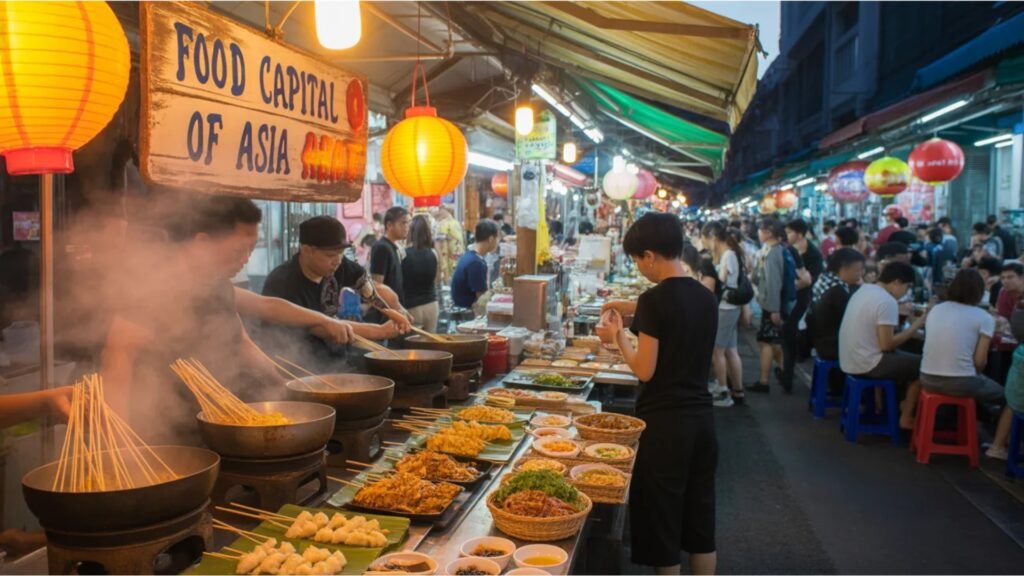
Food Capital of Asia
Real talk. Singapore food might be the actual reason to come here. Not the skyline. Not the theme parks. The food.
UNESCO put Singapore’s hawker centers on its Intangible Cultural Heritage list in 2020 — same list as Neapolitan pizza and Belgian beer. That’s not a tourism board stat, that’s the actual United Nations saying this matters. And the best food in Singapore doesn’t live behind a dress code or a reservation system. It lives at plastic tables under fluorescent lights where someone has spent literally decades perfecting one dish.
Hawker Chan in Chinatown Complex once held a Michelin star. The soy sauce chicken rice costs SGD 3.80. About $2.20 American. Let that land.
The range of local dishes is hard to get your head around before you arrive. Laksa is a coconut milk noodle soup that sneaks up on you with heat — the city’s unofficial favorite breakfast. Chilli crab is the celebratory order: Sri Lankan mud crab in a thick sweet-savory sauce, eaten messily with fried mantou buns, and absolutely worth the napkin situation. If you’ve ever paid $18 for mediocre pad thai in Manhattan, Singapore’s price-to-quality ratio is going to feel almost offensive.
Clean & Safe City
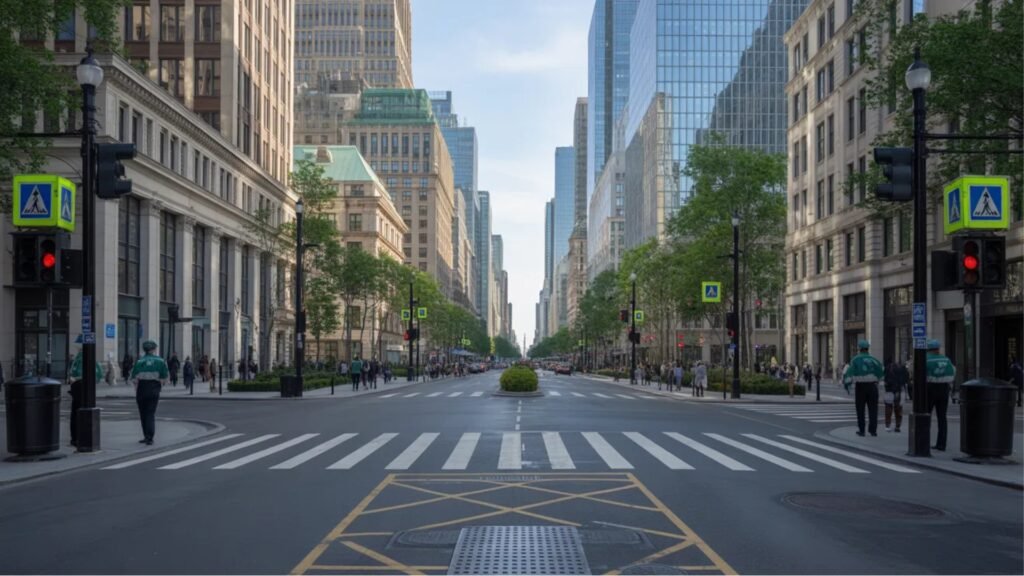
Singapore consistently lands in the top five of the Global Peace Index. Not as a technicality — it genuinely earns it. Walking home alone at 2 AM doesn’t carry the low-grade risk calculation that comes with doing the same thing in most major American cities. The multicultural society — roughly 74% Chinese, 13% Malay, 9% Indian, and 4% other — moves through shared space with a social consideration that surprises visitors from places where that’s not the norm.
The cleanliness is structural, not performative. Anti-littering laws have been in place since 1968 and they’ve stuck. MRT stations are spotless — genuinely cleaner than most hospital lobbies stateside. Hawker centers get government hygiene grades posted publicly. Even the public bathrooms are good. If you’ve traveled through any part of Southeast Asia, you know that’s not something to take lightly.

Mix of Culture + Nature
Here’s the trick Singapore pulls off that most cities don’t: it feels ancient and futuristic at the same time, and neither undercuts the other. Chinatown, Little India, Kampong Glam — these aren’t heritage zones preserved behind glass. They’re living neighborhoods where a 150-year-old Tamil temple sits two streets from a rooftop bar and nobody thinks that’s strange.
The Singapore Botanic Gardens — a UNESCO World Heritage Site — is 82 hectares of green sitting right in the middle of the city. Nature here isn’t a day trip or a weekend escape. It’s woven into the urban fabric in a way most cities don’t even attempt.
The wildlife parks — Night Safari, Singapore Zoo, River Wonders, Bird Paradise — consistently rank among the finest zoological experiences on the planet. The Night Safari specifically is something you don’t forget. A tram through 40 hectares of nighttime jungle, leopards moving in the dark a few meters from your seat. Kids lose their minds. Adults, honestly, do too.
How to Plan Your Trip to Singapore
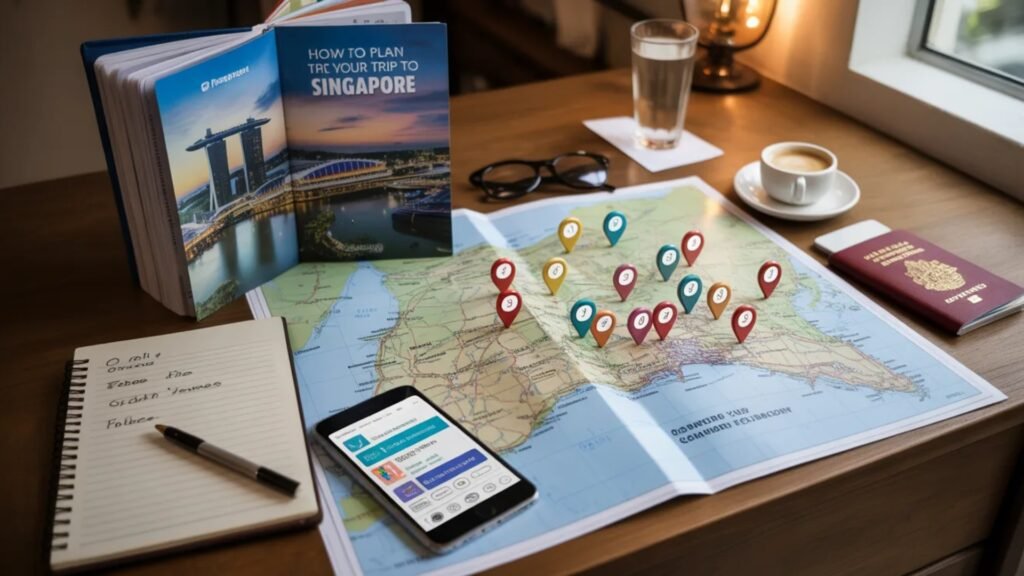
Planning a Singapore trip from the US is less complicated than people tend to assume. Singapore Airlines flies nonstop from JFK and SFO — roughly 18 to 19 hours. Cathay Pacific routes through Hong Kong, Emirates through Dubai. Round-trip from the East Coast runs about $700–$1,200 depending on timing and how far ahead you plan.
The basics: lock in flights early, confirm your entry requirements (fast and simple for US passport holders), pick a neighborhood base that fits your travel style, and build days loosely around what actually interests you. Don’t over-schedule. Singapore rewards wandering more than it rewards a rigid itinerary.
Three things to sort out before you leave: download the Grab app and the SimplyGo app, exchange a small amount of SGD cash for your first day (most places take cards but a few hawker stalls still run cash-only), and pack for heat. The tropical climate sits at 77–91°F year-round with humidity that’ll make you appreciate breathable fabric immediately. Your North Face puffer is staying home. Bring a compact umbrella, SPF 50+ sunscreen (UV index regularly hits 11), and a reusable water bottle — tap water here is completely safe and actually tastes good.
Visa Requirements & Entry Rules
Good news first: Singapore visa requirements for US passport holders are essentially nonexistent for short stays. Americans get 30 days visa-free on arrival. That’s it. What you do need is a passport valid at least six months past your departure date, and the SG Arrival Card — a mandatory digital pre-arrival form that replaced the old paper card in 2023. Fill it out at the official ICA website within three days of flying. Five minutes, costs nothing, and skipping it means delays at immigration that are entirely avoidable.
| Requirement | Detail |
|---|---|
| Visa for US citizens | Not required — 30 days free on arrival |
| Passport validity | Must be valid 6+ months beyond departure |
| SG Arrival Card | Mandatory — complete online before flying |
| Return/onward ticket | Recommended (immigration may ask) |
| Proof of funds | Roughly $500 USD equivalent recommended |
| Official ICA site | www.ica.gov.sg |
Best Time to Visit Singapore
There’s no genuinely bad month — the weather stays warm and humid year-round, and something interesting is always happening. That said, February through April is the sweet spot for most US travelers. Rainfall is lower, temps hover around a comfortable 82–86°F, and the post-Chinese New Year energy gives the city a lively, festive feel.
November through January is peak season — more expensive, more crowded, and the northeast monsoon brings rain. But the rain here is usually a short, hard burst. Thirty minutes of drama and then it’s over and the sky is clear again. Pack the umbrella and it stops being a problem.
| Month | Avg Temp | Rain Level | Crowds | Good For |
|---|---|---|---|---|
| Jan | 83°F | High | Very High | Festivals, Chinese New Year lead-up |
| Feb–Apr | 84°F | Low | Moderate | First-timers, sightseeing |
| May–Jul | 88°F | Moderate | Lower | Budget travel, shorter queues |
| Aug–Oct | 87°F | Moderate | Moderate | F1 (Sept), good all-round month |
| Nov–Dec | 82°F | High | Very High | Festive season — book early |
Travel Tips for First-Time Visitors
A few things worth knowing before you land. Type G plugs at 230V — US devices need an adapter and potentially a voltage converter. Check your chargers for “100–240V” printed on them. If you see that, you’re fine with just an adapter.
Currency in early 2026: roughly $1 USD gets you about $1.35 SGD. Cards work almost everywhere. Tipping isn’t a thing here — don’t feel awkward about it, it’s genuinely not expected.
Download MyTransport.SG before you land. It gives real-time MRT and bus arrivals and is often more accurate for Singapore’s transit than Google Maps in some situations. And one thing that consistently surprises first-timers — Singapore’s tap water is excellent. The national water agency maintains strict treatment standards. Drink straight from the hotel tap without a second thought.
Important Rules & Laws to Know
Singapore’s laws have a reputation, and it’s earned. But here’s the honest framing: the same rules that occasionally shock tourists are precisely what make Singapore one of the cleanest, safest destinations in Southeast Asia.
Chewing gum can’t be bought or brought in — ban’s been in place since 1992. Jaywalking within 50 meters of a crossing is fineable. Eating or drinking on the MRT, including water, carries a SGD 500 fine. Smoking outside designated areas risks a SGD 1,000 first-offense fine. Littering starts at SGD 300.
The serious one: drugs. Zero tolerance. Zero. Possession of controlled substances means mandatory caning and imprisonment. Trafficking above threshold quantities carries the death penalty, and sentences are carried out. No tourist exceptions. Ever. This is stated clearly at every entry point. For the overwhelming majority of visitors, none of this requires any behavioral change at all. Know the rules, follow them, and Singapore is one of the most welcoming, pleasant destinations you’ll find anywhere.
Top Things to Do in Singapore
Every time someone asks what there is to do in Singapore, the honest answer is: too many things. The city packs in attractions ranging from rainforest canopy walks to world-ranked theme parks, Michelin-recognized hawker stalls to cutting-edge contemporary art museums — and most of them sit within 30–40 minutes of each other by MRT.
What surprises Americans specifically is the density. In most major cities, world-class experiences require a full day of travel between them. In Singapore, you can do Marina Bay, the Peranakan Museum, Little India, and a hawker dinner before 8 PM without breaking a sweat. The travel tips that actually matter: hit outdoor spots in the morning before heat peaks around noon, use indoor attractions mid-day, and save the waterfront for evenings when the light does something remarkable to the bay.
Iconic Landmarks in Singapore
Some things are famous because they deserve to be. Marina Bay Sands is one of them. The SkyPark observation deck on Level 57 costs around SGD 32 for non-guests, and the view is worth every dollar. The Merlion at the riverbank — Singapore’s half-lion, half-fish national symbol — is surrounded by tourists at all hours and still delivers a genuinely satisfying photo when the skyline fills in behind it.
Jewel Changi Airport is technically an airport terminal. It also contains the Rain Vortex — a 40-meter indoor waterfall dropping through a glass dome surrounded by 100,000 plants. Go before or after your flight and budget at least two hours.
The Helix Bridge offers some of the cleanest unobstructed skyline shots in the city. The Singapore Cable Car from Mount Faber to Sentosa gives you 10 cinematic minutes watching the harbor spread below while the city pulls away behind you. Take it at sunset on your way to Sentosa and you’ll have a photo on your phone you’ll still be scrolling back to three years from now.
Gardens, Nature & Wildlife Experiences
Gardens by the Bay earns every word of its reputation. The 250-acre waterfront garden holds the Flower Dome and the Cloud Forest — a vertical garden built around an indoor mountain wrapped in mist and tropical plants. The Supertree light show runs nightly for free and is one of the best no-cost experiences in Southeast Asia. Go during the day for the conservatories, come back at night for the show. It’s a completely different experience.
The Mandai Wildlife Group parks have reset the global benchmark for what zoo experiences can be. Singapore Zoo uses open-concept design — no cages, naturalistic habitats, moats instead of fences. The Night Safari opens at 7:15 PM: tram through 40 hectares of nighttime jungle, animals moving freely through the dark around you. One of those travel experiences that’s actually better than it sounds — and it already sounds very good.
Sentosa Island Highlights
Sentosa probably deserves its own full article. Universal Studios Singapore tickets run approximately SGD 83 for adults, SGD 63 for kids — a full day here is worth it. S.E.A. Aquarium next door holds over 100,000 marine animals including whale sharks and manta rays. You could spend two full days on Sentosa without running out of things to do.
Beyond the parks: Palawan Beach (the southernmost point of mainland Asia), Siloso Beach for water sports, and Tanjong Beach Club running Sunday pool parties with an international crowd. The new Singapore Oceanarium, expected to begin opening in late 2026, will reportedly be the world’s largest. Book Sentosa activities in advance during US summer holidays and Christmas — it gets very busy.
Museums & Cultural Attractions
Singapore’s museums consistently punch above their weight. The National Museum covers the full sweep of the city’s history — from Malay sultanate origins through British colonialism to independence — with curatorial honesty that doesn’t soften the complicated parts. Entry is SGD 15 for permanent galleries. The Asian Civilisations Museum on the riverside covers 5,000 years of Asian material culture across 1,300+ artifacts in a beautifully restored colonial building that is itself part of the story it’s telling.
The Peranakan Museum is unmissable for anyone who hasn’t encountered Straits Chinese culture before. The Peranakans developed a hybrid culture across centuries of Chinese settlement in the Malay Peninsula — and the material culture they produced is extraordinary: beaded shoes, hand-painted porcelain, ornate ceremonial costumes. Ten permanent galleries, presented with genuine care.
The ArtScience Museum at Marina Bay Sands hosts rotating exhibitions pulling from global pop culture, contemporary art, and emerging technology — previous shows have included teamLab, Van Gogh immersive experiences, and NASA collaborations. One of the most relevant museum spaces in the region right now.
Offshore Islands & Hidden Gems
Most Singapore guides miss the offshore islands almost entirely. There are over 60 of them. Pulau Ubin — a 30-minute bumboat ride from Changi Point Ferry Terminal for SGD 4 each way — is the one that genuinely surprises people. It’s Singapore from 50 years ago: kampung houses, mangrove wetlands, jungle cycling trails, almost no development. Rent a bicycle for SGD 5–8 an hour and circle the island. It’s one of the most authentic, affordable experiences available anywhere in the country.
Lazarus Island, accessible by ferry from Marina South Pier, has something nearly impossible: a pristine, near-empty white sand beach within sight of a global financial hub. No vendors, no crowds, no development. Pack your own lunch and spend the afternoon in clear water. Sisters’ Islands Marine Park is Singapore’s only protected marine area — coral gardens, reef fish, snorkeling that genuinely surprises people who assumed Singapore had no natural beauty left underwater.
Best Neighborhoods to Stay in Singapore
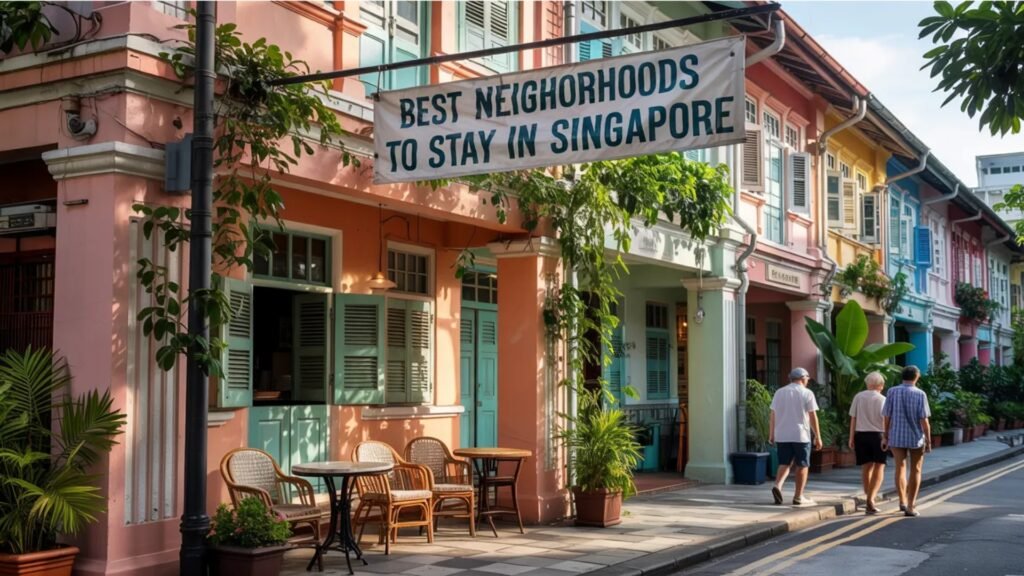
Where you stay in Singapore genuinely shapes the kind of trip you have. The neighborhoods are distinct — in personality, price point, street-level atmosphere — not just different pins on the same map. The good news is that the MRT is so fast and comprehensive that no neighborhood is actually inconvenient. You could base yourself in Little India and reach Marina Bay Sands in about 15 minutes.
The short version: Marina Bay and City Hall gives you maximum proximity to the iconic stuff, at maximum cost. Chinatown and Little India deliver the most culturally layered experience at 40–60% lower accommodation prices. Experienced Singapore travelers often structure return visits around staying somewhere new each time.
For First-Time Visitors
Marina Bay or City Hall is where first-timers consistently get the most out of their early days. Merlion Park is a five-minute walk. ArtScience Museum is 10. Gardens by the Bay is 20. City Hall MRT connects to nearly every major attraction without a transfer. Waking up to the Singapore skyline on your first morning erases every memory of the 18-hour flight. Worth prioritizing on a first visit.
For Sightseeing
Bugis and Bras Basah are the answer if you want to cover cultural ground efficiently. The National Museum, Asian Civilisations Museum, Peranakan Museum, and Singapore Art Museum all sit within a 15-minute walk of Bugis MRT. Turn a corner and you’re in Kampong Glam — Arab Street, Sultan Mosque, the boutiques of Haji Lane. Less expensive than Marina Bay, equally well-connected, and with a street-level texture the waterfront zone simply doesn’t have.
For Nightlife
Clarke Quay is the consistent answer — riverside bars, clubs, and restaurants running seven nights a week. 1-Altitude at 282 meters is the world’s highest open-air bar. Ce La Vi on the 57th floor of Marina Bay Sands has the most dramatic cocktail backdrop in the city. Boat Quay just east along the river runs slightly quieter, with a more local crowd and bars that don’t charge SGD 25 per drink.
For Shopping
Orchard Road is the main event for retail visitors. The 2.2-kilometer strip holds Ion Orchard, Paragon, Ngee Ann City, and a dozen more malls covering everything from Chanel to Uniqlo. For something completely different, Haji Lane in Kampong Glam has independent boutiques, vintage stores, and local designers in a setting that also happens to be one of the most photographed streets in Singapore.
On a Budget
Geylang and Little India offer the sharpest accommodation value in the city. Geylang is widely misunderstood — in practice it’s a fascinating, vibrantly local neighborhood with 24-hour durian stalls, excellent late-night food, and budget hotels at SGD 60–100 per night versus SGD 250–400 in the Marina Bay zone. Little India offers similar value with the bonus of being surrounded by brilliant banana leaf curry houses, fresh juice stalls, and neighborhood energy that tourist-centric areas genuinely can’t replicate.
With Family
Sentosa Island is built for families. Resorts World Sentosa puts Universal Studios, the aquarium, a waterpark, and multiple hotel options in one walkable complex. The car-lite, pedestrian-friendly design means kids can move freely without navigational stress. Hard Rock Hotel, Festive Hotel, and Equarius Hotel are all on the island. Beach Villas offers private pool villas a short walk from the beach — proper resort quality while staying close to the best theme park in Southeast Asia.
Where to Stay in Singapore (Hotel Guide)
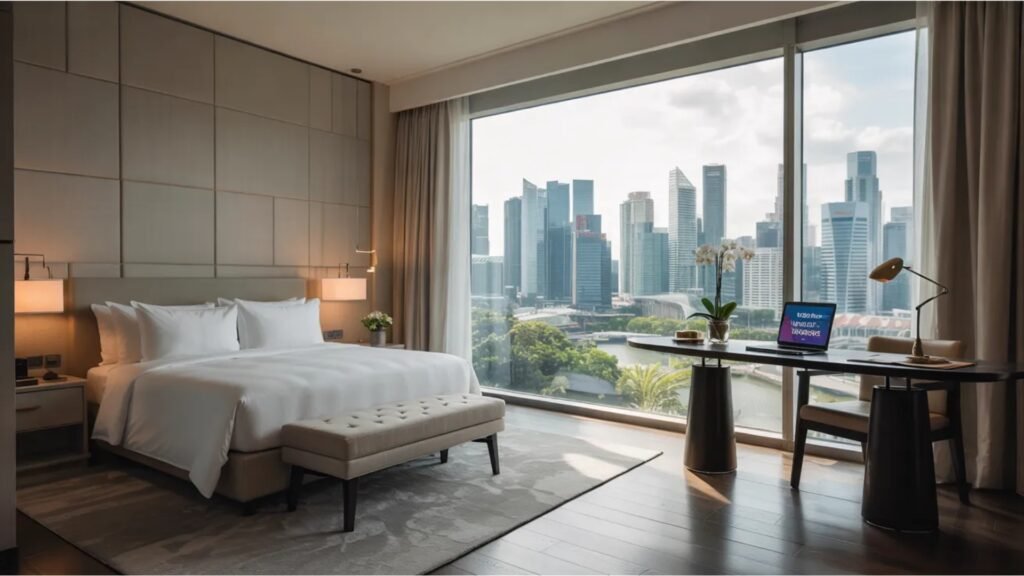
Singapore hotel prices reflect a city that operates at a genuinely high standard. Luxury hotels start at roughly SGD 450–600 (USD 330–450) per night. Mid-range options sit around SGD 180–300. Budget hotels start at SGD 80–130. Hostels offer dorms from SGD 25–45 a night. For US travelers: book 60–90 days ahead for December through January and Chinese New Year. Last-minute availability exists but prices climb sharply.
One thing worth knowing — a SGD 100 hotel in Singapore typically delivers cleanliness and service quality that a $100 hotel in most US cities doesn’t come close to matching. The whole tier is shifted upward.
Luxury Hotels
Marina Bay Sands remains the most iconic hotel in the region. The Level 57 infinity pool, guests only, is the most photographed hotel feature in Asia. Rooms from USD 450/night. Raffles Singapore on Beach Road completed a SGD 1.5 billion restoration in 2019 — colonial architecture, butler service, legendary Long Bar. Rooms from USD 600/night. Capella Singapore on Sentosa sits inside a colonial mansion surrounded by rainforest, with a quiet reputation for personalized service that keeps guests returning year after year.
Mid-Range Hotels
Hotel G Singapore on Middle Road delivers design-forward rooms in a central location for SGD 180–250 per night — the most consistently praised mid-range option by repeat visitors. The Warehouse Hotel in Robertson Quay occupies a beautifully converted 1895 spice warehouse with heritage aesthetics, a rooftop pool, and one of Singapore’s better hotel restaurants at SGD 250–320/night. Andaz Singapore in Bugis brings genuine boutique-quality service at accessible pricing (SGD 200–280/night) with one of the city’s best rooftop bars attached.
Budget Hotels
ibis Singapore on Bencoolen is the most consistently recommended budget option — central location, clean rooms, reliable service, SGD 100–140/night. The Hotel 81 chain covers 19 Singapore locations at SGD 80–110/night — spotlessly maintained and always near MRT stations. V Hotel Lavender adds a bit more personality than the chain alternatives at similar pricing, with solid transit access to both the cultural districts and Marina Bay.
Hostels
The Pod @ Beach Road is the clear top recommendation. Pod-style bays with privacy curtains, personal lighting, USB charging, actual sound separation. Beds from SGD 38–55/night. Wink Hostel near Clarke Quay runs a genuinely social atmosphere with great common spaces — works well for solo travelers hoping to meet people. Adler Luxury Hostel in Chinatown occupies a restored heritage shophouse and is widely considered the best-designed budget sleep in all of Southeast Asia. Singapore’s hostels would qualify as mid-range hotels in most other countries.
What to Eat in Singapore (Food Guide)
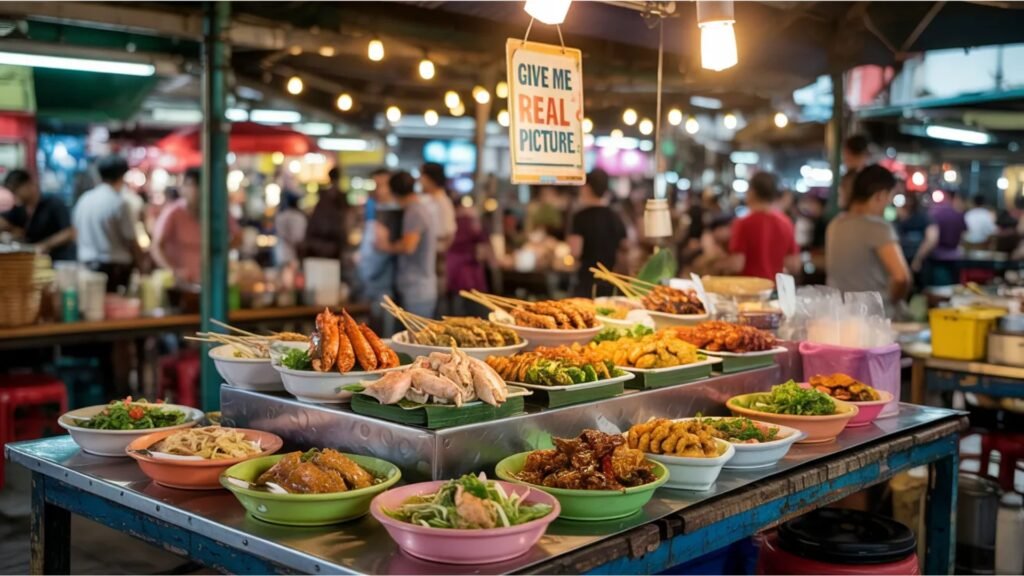
To properly discover Singapore, eat your way through it. That’s not filler — Singapore food is the city’s deepest expression of itself. A living archive of Chinese, Malay, Indian, Peranakan, and Western culinary traditions, all accessible simultaneously at prices that make the quality feel almost accusatory. The civil servant and the CEO eat at the same hawker center. Plastic table, mismatched chairs, extraordinary food. That democratic relationship with eating well is something Singapore has built into its identity at a foundational level.
The best food here doesn’t announce itself with white tablecloths. A $3 bowl of laksa from a stall running for 35 years will beat a $30 version from a restaurant most of the time. For American visitors, the price-to-quality revelation is immediate and consistent. The day you eat four extraordinary meals for less than what you’d pay for one mediocre lunch in Midtown Manhattan, something shifts in how you think about food travel forever.
Hawker Centers
Hawker centers are the soul of Singapore’s food identity. Open-air, government-managed food complexes — anywhere from 20 to 200+ stalls — each specializing in one or two dishes refined over years or decades. Maxwell Food Centre in Chinatown is the most famous: Tian Tian Hainanese Chicken Rice here gets called the best in the world regularly. Old Airport Road Food Centre in Kallang is the local favorite — less tourist-heavy, more sprawling, the variety staggering. Go for lunch on a weekday and point at whatever looks good.
| Hawker Center | Location | Must-Try Stall |
|---|---|---|
| Maxwell Food Centre | Chinatown | Tian Tian Chicken Rice |
| Lau Pa Sat | Marina Bay | Satay (evenings only) |
| Old Airport Road Food Centre | Kallang | Barbecued Stingray |
| Newton Food Centre | Newton MRT | Tiger Prawn Noodles |
| Tekka Centre | Little India | Roti Prata & Mutton Soup |
| Chinatown Complex | Chinatown | Hawker Chan Soya Chicken |
Must-Try Local Dishes
Hainanese chicken rice — poached or roasted chicken over fragrant rice cooked in broth, three dipping sauces on the side — is the unofficial national dish and the right starting point. Laksa is that rich coconut milk noodle soup with shrimp paste, lemongrass, and a level of heat that builds without warning. Chilli crab is the celebratory order: Sri Lankan mud crab in a thick sweet-savory sauce, eaten messily with fried mantou buns, completely worth the napkin situation.
And kaya toast. Charcoal-grilled bread with coconut-egg jam and cold butter, alongside soft-boiled eggs and kopi — local coffee brewed through a cloth sock filter, stronger than it looks. That’s the Singapore breakfast. Have it at least once, ideally at Ya Kun or Killiney Kopitiam, where the stall has been running the same way for generations.
Michelin Street Food
Michelin street food in Singapore changed the global conversation about what fine dining actually means. Hawker Chan at Chinatown Complex held a Michelin Bib Gourmand listing for years — soya sauce chicken rice at SGD 3.80 a plate, eaten at a plastic table, no ambiance, extraordinary chicken. Hong Lim Food Centre houses multiple Michelin-recommended stalls. The inspectors eat at folding chairs and rate the food entirely on its own terms. No other city in the region can make that claim with the same specificity.
Best Food Neighborhoods
Chinatown holds the densest concentration of classic Chinese-Singaporean cooking: chicken rice, roast duck, wonton noodles, dim sum. Little India is the address for banana leaf rice, roti prata, biryani, and South Indian curry houses that rank among the best in Asia. Katong on the east side is the heartland of Peranakan cuisine and widely regarded as having the finest laksa in the city. Arab Street and Kampong Glam offer Turkish flatbreads, Middle Eastern mezze, and Indonesian nasi padang. Geylang visitors wake up two blocks from Singapore’s legendary late-night supper strip — durian stalls, crab beehoon, and old-school Malay food running until 4 AM.
Getting Around Singapore (Transportation Guide)
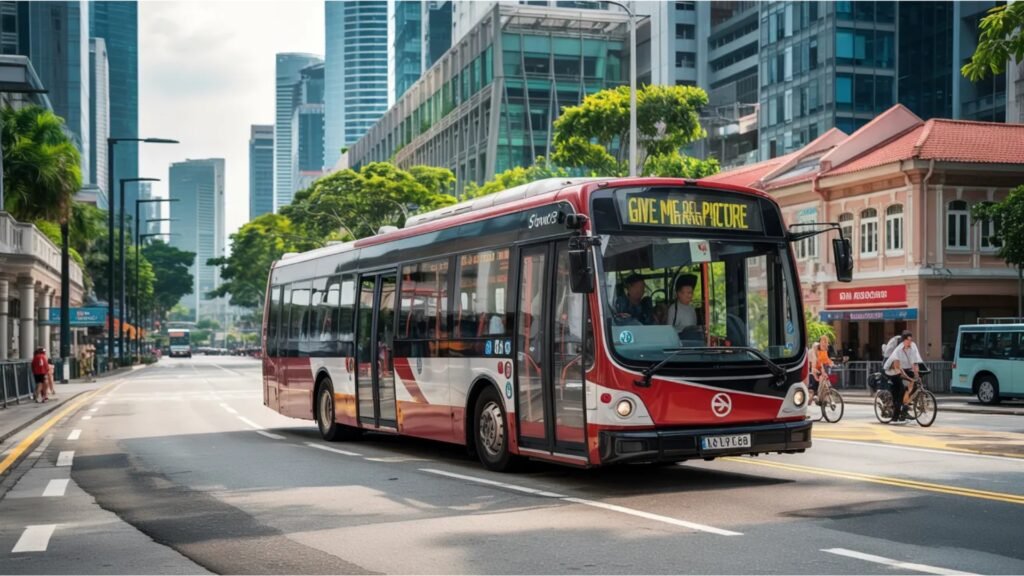
Getting around Singapore is one of the genuine pleasures of visiting. Not something you usually say about urban transit, but here it’s true. The MRT basics: six color-coded lines covering all major neighborhoods, trains every 2–4 minutes during peak hours, operating from 5:30 AM to midnight. The system connects Changi Airport to the city center in about 30 minutes for SGD 2.50 — the most affordable airport-to-city rail connection of any major global hub by a considerable margin.
The transport card — EZ-Link or the Tourist Pass — is the first thing to buy after clearing immigration. EZ-Link cards are SGD 12 (SGD 7 credit included), available from any station machine. The Tourist Pass at SGD 22–34 for 1–3 days offers unlimited rides and pays for itself in a single active sightseeing day.
| Transport Mode | Best Used For | Typical Cost | App |
|---|---|---|---|
| MRT | All-day sightseeing | SGD 0.90–2.50/ride | SimplyGo |
| Bus | Neighborhoods, MRT gaps | SGD 0.80–2.00/ride | SimplyGo |
| Grab | Night travel, groups, luggage | SGD 8–25/trip | Grab |
| Taxi | Airport runs, comfort | SGD 15–40/trip | MyTransport.SG |
| Airport MRT | Changi → City Hall | SGD 2.50 | SimplyGo |
| Sentosa Express | VivoCity → Sentosa | SGD 4 | Pay at gate |
Grab is the dominant ride-hailing platform here — Southeast Asia’s Uber equivalent, operating since 2012, reliable, accepts international cards without issue. Taxis are increasingly hard to hail on the street and cost 30–40% more than Grab. The bus system covers 370+ routes reaching areas the MRT doesn’t touch. For a city of this density, the transport system is simply one of the best-designed in the world. Getting lost is something you’d have to actively try to do.
Singapore Itineraries for Every Type of Traveler
How many days do you actually need? Three to five covers the major highlights without feeling rushed. Seven lets you go deeper — offshore islands, slower neighborhood wandering, the full museum circuit. Two days works as a strong introduction if you’re transiting.
The rhythm that works: outdoors in the morning before heat peaks around noon, indoor experiences mid-day, waterfront and light shows in the evening. Build around that and every day delivers.
2 Days in Singapore
Day 1 is Marina Bay. Start at Merlion Park at 8 AM before the crowd arrives. Walk to ArtScience Museum for two hours. Lunch at Lau Pa Sat (10 minutes on foot). Afternoon: Gardens by the Bay conservatories, then wait for the free Supertree light show at 7:45 PM. Evening: MBS SkyPark observation deck, then drinks at Ce La Vi with the city spread below you.
Day 2 is culture and food. Breakfast at Maxwell Food Centre — Tian Tian chicken rice and a kopi. Walk the heritage shophouses of Ann Siang Hill into Chinatown. Buddha Tooth Relic Temple, Sri Mariamman Temple. Lunch at Tekka Centre in Little India. Afternoon through Kampong Glam: Sultan Mosque, Haji Lane murals, Arab Street. Evening: Clarke Quay for sunset drinks, then a hawker center dinner.
3 Days in Singapore
Days 1 and 2 as above. Day 3 goes to Sentosa. MRT to HarbourFront, Sentosa Express to the island. Morning: Universal Studios Singapore — book via Klook in advance for 10–20% off gate pricing. Afternoon: S.E.A. Aquarium or beach time at Palawan or Siloso. Sunset: Singapore Cable Car back to Mount Faber for the harbor view. Evening: Night Safari if you have the energy — tram tours run until midnight and it’s completely worth the late night.
Family Itinerary
Best base for families: Sentosa. Day 1: Check in at Resorts World Sentosa. Afternoon at Jewel Changi Airport — the Rain Vortex alone occupies kids for an easy hour. Day 2: Universal Studios, full day. Day 3: Singapore Zoo in the morning (arrive at 8:30 AM before it gets hot), then River Wonders adjacent. Evening: Night Safari — the highlight for most families, full stop. Day 4: Gardens by the Bay Cloud Forest and ArtScience Museum for interactive exhibitions. Stroller-friendly MRT stations, child menus everywhere, genuinely safe and relaxed atmosphere throughout. “Family-friendly” is almost an understatement.
Budget Itinerary
Doing Singapore on a budget is less about sacrifice and more about knowing what’s free. Singapore Botanic Gardens: free, UNESCO-listed, beautiful at any hour. The Marina Bay waterfront promenade: free, best skyline views in the city. The Supertree light show: free, nightly at 7:45 PM. Fort Canning Park: free, forested hill with skyline glimpses. Haji Lane: free to walk, visually excellent.
Hawker centers feed you extraordinary meals for SGD 4–8. The MRT takes you everywhere for under SGD 10 a day. A realistic budget itinerary runs USD 60–80 per day all-in — hostel bed, three hawker meals, MRT transport, and a mix of free and low-cost attractions. That is not roughing it. That is an excellent trip.
Top Instagrammable Places in Singapore
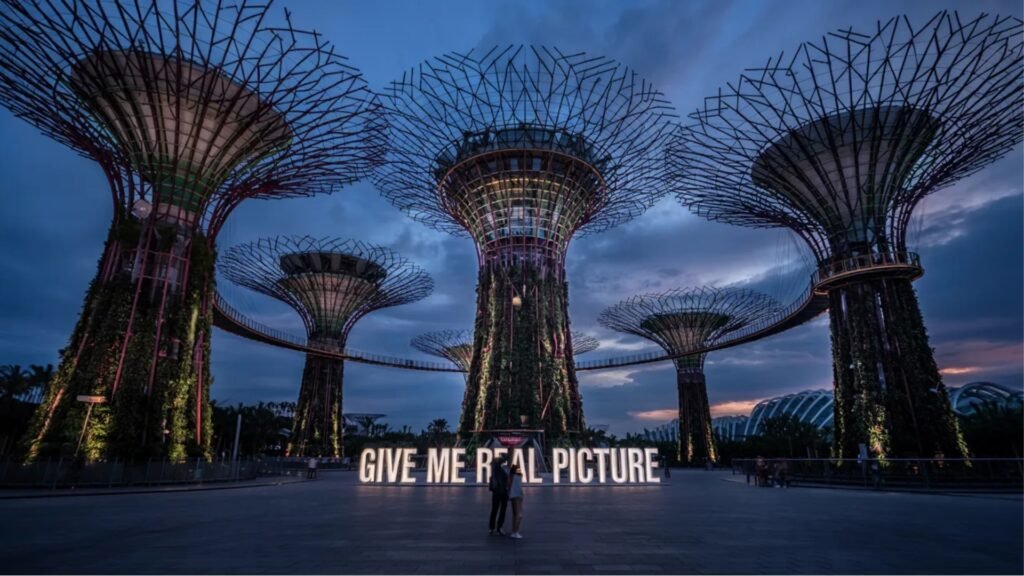
Singapore is maintained to a standard where reality matches the photograph more consistently than almost any other major city. Best spots reward specific timing: Supertrees at golden hour (5:30–6:30 PM) for warm silhouette shots, then again during the light show. Haji Lane is best in the morning before crowds flatten the charm. Marina Bay Sands infinity pool at blue hour, just after sunset.
The Singapore skyline from Merlion Park delivers best before 7 AM when the bay is still. The Cloud Forest interior shoots beautifully in the mist with a wide-angle lens. Most of Singapore’s best photo spots are free and public.
- Supertree Grove — Gardens by the Bay (light show 7:45 PM and 8:45 PM nightly, free)
- Rain Vortex — Jewel Changi Airport (world’s tallest indoor waterfall, free to photograph)
- Haji Lane — Kampong Glam (pastel murals and boutique fronts — morning light is best)
- Henderson Waves Bridge — Southern Ridges (wave-form pedestrian bridge through rainforest)
- Marina Bay Sands Infinity Pool — Level 57 (hotel guests only — genuinely worth one night)
- Cloud Forest interior — Gardens by the Bay (ethereal mist, vertical garden, otherworldly)
- Tiong Bahru — Art Deco shophouse neighborhood, Singapore’s most cohesive streetscape
- Satay by the Bay — Waterfront hawker center with MBS skyline in the background at night
- Sri Veeramakaliamman Temple — Little India (vivid gopuram against a blue sky)
- Fort Canning Park — Green hill offering skyline glimpses through old-growth tree canopy
How to Save Money in Singapore (Budget Travel Tips)
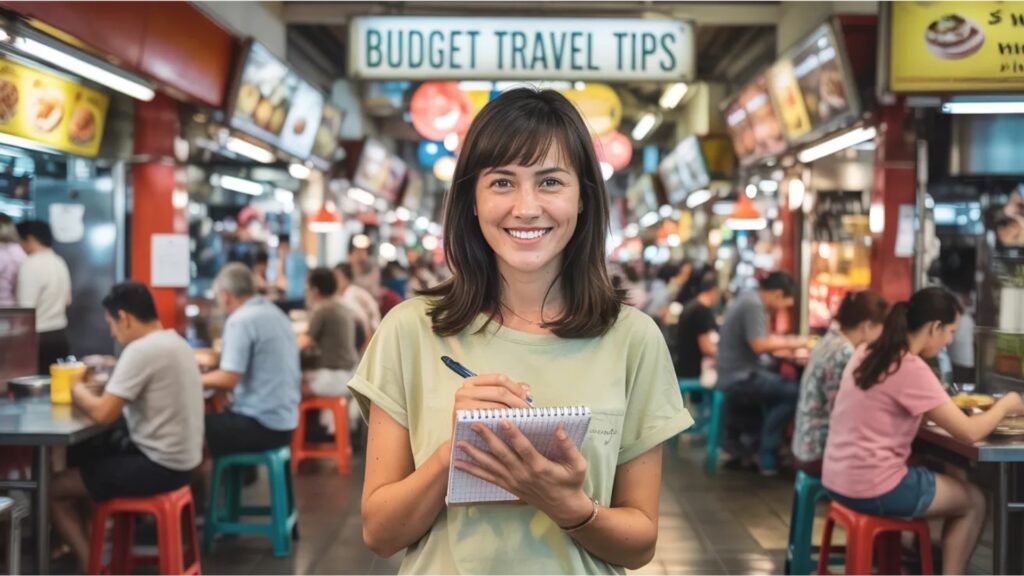
Is Singapore expensive? Compared to Bangkok or Bali, yes. Compared to New York, London, or Sydney, it’s moderate to affordable if you’re smart about it. The reputation for being expensive comes from comparing luxury hotel rates and rooftop cocktail prices to budget-tier Southeast Asia. That’s a misleading comparison.
The core principle for affordable Singapore travel: eat where Singaporeans eat, move how Singaporeans move, and stack your days with the city’s genuinely excellent free experiences.
| Category | Budget Option | Cost (SGD) | Premium Option | Cost (SGD) |
|---|---|---|---|---|
| Accommodation | Hostel dorm | 25–45/night | Marina Bay Sands | 550–900/night |
| Breakfast | Kaya toast + kopi | 3–4 | Hotel buffet | 35–55 |
| Lunch | Hawker chicken rice | 4–5 | Restaurant set lunch | 25–40 |
| Dinner | Hawker center meal | 6–10 | Mid-range restaurant | 40–80 |
| Transport (full day) | MRT + bus | 6–10 | Grab/taxis all day | 40–80 |
| Top attraction | Gardens by the Bay (free exterior) | 0 | MBS SkyPark | 32 |
| Full day estimate | ~SGD 50–80 | ~SGD 700+ |
A few practical hacks: book all paid attractions through Klook or Traveloka rather than at the gate — 10–25% savings are standard and the tickets are identical. The Tourist Pass at SGD 22–34 pays for itself in a single sightseeing day. Happy hour at most Clarke Quay bars runs 5–8 PM with cocktails at SGD 10–15 versus the standard SGD 22–28. Night Safari weekday pricing (Monday–Thursday) runs SGD 10–15 less than weekends. Small savings that add up across a full trip.
FAQs About Visiting Singapore
What are the best things to do in Singapore?
The four I’d call genuinely non-negotiable: Marina Bay Sands at sunset, Gardens by the Bay with the Supertrees at night and the Cloud Forest by day, at least one hawker center meal (Maxwell Food Centre is the right starting point), and the Night Safari. Beyond those four, things fan out in every direction — Sentosa for theme parks and beaches, the museum circuit in the Civic District, Pulau Ubin for something completely different, or just an afternoon wandering between neighborhoods with no specific agenda. Singapore rewards whatever type of trip you actually want to have.
What is the food like in Singapore?
Singapore food holds Chinese, Malay, Indian, and Peranakan traditions side-by-side in hawker centers where stall owners have spent decades refining a single dish. Street food runs from kaya toast at 7 AM through midnight durian in Geylang. The price-to-quality ratio floors American visitors without exception. A $3 plate of Hainanese chicken rice at a standard that would cost $30 in a New York restaurant is just a normal Tuesday lunch here. Eat at every opportunity.
Is Singapore expensive?
Depends entirely on how you travel. Budget: USD 60–90/day — hostel bed, hawker meals three times a day, MRT transport, free attractions. Mid-range: USD 150–250/day with a proper hotel and a mix of paid and free activities. Full luxury — Marina Bay hotels, fine dining, private experiences — runs USD 500–1,000+/day easily. The budget trip here is not a compromise. The hawker food is magnificent. The free attractions are world-class. A budget trip in Singapore delivers more than a mid-range trip in most other cities.
What are the rules tourists should follow?
Short list, worth knowing cold. No chewing gum — can’t buy it, can’t bring it in. No jaywalking within 50 meters of a designated crossing. no eating or drinking on MRT trains or in stations — SGD 500 fine. no smoking outside designated smoking zones — SGD 1,000 first offense. no littering — SGD 300 minimum. Cover shoulders and knees when entering temples, mosques, and religious sites. And zero tolerance on drugs — possession means imprisonment and caning, trafficking above threshold quantities carries the death penalty. No tourist exception, ever. Follow these rules and Singapore is one of the most welcoming, pleasant destinations any American will find anywhere.
Final Thoughts: Discover Singapore Your Way in 2026
Every year Singapore manages something most cities can’t — it stays consistent in quality while genuinely adding new reasons to come. The Singapore Oceanarium development, the Thomson-East Coast MRT line opening new neighborhoods, the Mandai Rainforest Corridor expansion — all real reasons to book this year specifically rather than putting it off.
For Americans, Singapore sits in a genuinely rare position. Accessible enough that a first-timer navigates it without stress. Safe enough to send your parents solo. Affordable enough at the hawker-and-MRT level to suit a real backpacker. Extraordinary enough at the hotel and dining level to justify a honeymoon. A $3 Michelin-recognized chicken rice at a plastic table with the Marina Bay skyline glowing in the background somehow captures the entire paradox of this city better than any paragraph can.
Just go. Discover Singapore for yourself. You won’t leave the same.