
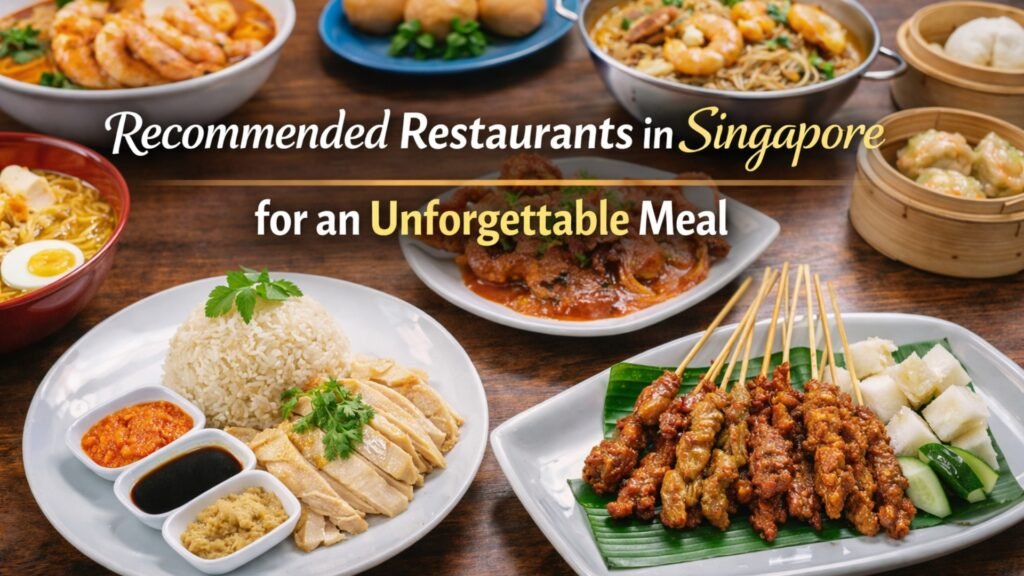
Top Picks: Recommended Restaurants in Singapore for an Unforgettable Meal
“Singapore doesn’t feed you. It wrecks you — in the best possible way.”
OK. So. Singapore.
I genuinely don’t know where to start with this place. And I’ve been thinking about that for a while now — like, how do you even begin describing a city where a $3.50 bowl of noodles can genuinely compete with a restaurant charging $350 for a tasting menu? It shouldn’t make sense. But somehow, in Singapore, it just does.
If you’re looking for a recommended restaurant in Singapore — great, we’ll get there. But honestly? That framing almost misses the point. Because Singapore’s food isn’t really about restaurants. It’s about the uncle who’s been frying char kway teow at the same hawker stall for 40 years. and It’s the queue you almost skipped but didn’t. It’s eating something you can’t pronounce and immediately wanting more.
This Singapore food guide is for people who actually want to eat well here. Not just tick boxes. Let’s go.
Why Singapore Is a Paradise for Food Lovers
Right. So Singapore is tiny. Like, genuinely small — you can drive across the whole island in under an hour on a good day. But the food? The food is enormous. In terms of variety, quality, history, and sheer density of good things to eat per square kilometre… it might be unmatched anywhere on Earth.
And I don’t say that lightly. Food tourism Singapore is real and growing fast. In 2025, Lonely Planet ranked Singapore among the top five food destinations in Asia. The Michelin Guide Singapore hands stars to hawker stalls. Actual hawker stalls. With plastic chairs and fluorescent lighting and trays you return yourself. That should tell you everything.
What makes this city special is the accessibility of it all. Great food isn’t locked behind a reservation or a dress code here. It’s at every corner, every food centre, every sleepy little kopitiam that opens at 6am and smells like roasted coffee before the sun’s fully up.
A Unique Blend of Cultures and Flavours
Here’s something that doesn’t get said enough — Singapore’s food isn’t one cuisine. It never was. This is a place built by migration. Chinese, Malay, Indian, Peranakan (Nyonya), Eurasian, and later Western influences all crashed into each other here over centuries. And instead of one drowning the others out… they blended.
Laksa is a perfect example. It’s Chinese noodles swimming in a Malay-spiced coconut broth. Nobody owns it. Both communities made it. Roti prata came from South India, got adopted completely, and is now about as Singaporean as it gets. Nasi lemak is technically Malaysian in origin but Singaporeans eat it like it’s theirs — and at this point, well… it kind of is.
The Singapore local cuisine you experience today is centuries of cultural layering made edible. Every bite carries history. Some dishes carry entire migration stories. That’s what makes eating here feel different. It’s not just food. It’s actually something.
What Makes Singapore’s Food Scene So Special
In 2020, UNESCO inscribed Singapore’s hawker centres as Intangible Cultural Heritage of Humanity. Which is — I mean, think about that for a second. The world looked at sweaty communal food halls with plastic stools and said: this is worth protecting forever. That’s wild. And also completely correct.
What separates the culinary experience Singapore offers from everywhere else is the range. You can eat a four-dollar breakfast at a kopitiam Singapore and a four-hundred-dollar dinner at a Michelin three-star restaurant in the same city, on the same day. Same passport. Same MRT card. Both experiences will stay with you. But for different reasons. And honestly, the four-dollar breakfast might stay longer.
Understanding Singapore’s Food Culture
Food here is social currency. It’s the language. “Eh, you eat already?” is basically how Singaporeans say hello. Before meetings. After meetings. As the meeting. The food conversation never stops — and that’s not an exaggeration.
The word “shiok” tells you everything you need to know about Singapore food culture. It’s local slang that roughly translates to deeply, intensely satisfying — but even that doesn’t fully capture it. When something is shiok, it hits somewhere beyond taste. It’s almost emotional. And once you’ve experienced food that’s genuinely shiok, you’ll understand why Singaporeans are so serious about where they eat.
Because they are serious. Frighteningly so. People here will argue about which Hainanese chicken rice stall is best with the kind of energy that others reserve for football matches. There are family feuds over this. Friendships tested. It sounds ridiculous until you’ve tasted the difference between a great plate and a mediocre one — and then suddenly, you get it.
The Role of Hawker Centres in Daily Life
There are over 110 hawker centres across Singapore. Government-built, open to the public, absurdly affordable, and genuinely one of the greatest urban food ideas anyone has ever had.
Each centre houses dozens of individual stalls — sometimes over a hundred. You’ll find Singapore hawker food spanning every major cuisine: Chinese, Indian, Malay, mixed, and everything in between. All under one roof. All within a five-minute walk of your tray return station.
These centres aren’t just places to eat. They’re neighbourhood hubs. Grandparents bring grandkids on weekday mornings. Office workers race in at noon. Night owls show up after midnight because yes, some hawker centres run late. The National Environment Agency maintains these spaces — keeps them clean, functional, and accessible to everyone regardless of income. That’s intentional. That’s policy. And it’s one of the reasons Singapore’s street food culture is genuinely democratic in a way few cities manage.
Street Food vs Restaurant Dining in Singapore
OK so here’s the honest take: neither is better. Both matter. The mistake tourists make is treating hawker food as the “budget option” and restaurants as the “real” experience. That’s completely backwards.
Some of the most unforgettable food in Singapore costs under five dollars. And some of the most celebrated recommended restaurants in Singapore — places like Odette or Labyrinth — are doing things with local ingredients that are genuinely breathtaking.
| Factor | Hawker / Street Food | Restaurant Dining |
|---|---|---|
| Average Cost | S$3 – S$8 per dish | S$30 – S$200+ per person |
| Atmosphere | Communal, loud, casual | Intimate, curated |
| Best For | Authentic local depth | Special occasions, creativity |
| Wait Times | Long at peak hours | Reservations usually work |
| Cultural Value | Extremely high | High — different layer |
The ideal Singapore food itinerary mixes both. Heavily. Because if you spend your whole trip at fine dining spots, you’ve missed Singapore. And if you only eat at hawker centres, you’ve missed a genuinely exciting chapter of what this city is becoming.
Must-Try Local Dishes in Singapore
Alright. This is where we get into the actual good stuff. And look — there are a million “what to eat in Singapore” lists out there. Most of them are fine. But a lot of them feel like they were written by someone who visited once, ate at a hotel restaurant, and Googled the rest.
This is different. These are the dishes that matter. The ones locals eat constantly. The ones that have earned their place in Singapore’s food identity over decades — sometimes over a century.
| Dish | Type | Where to Start |
|---|---|---|
| Hainanese chicken rice | Rice + poached chicken | Maxwell Food Centre |
| Chilli crab / black pepper crab | Seafood | East Coast, Jumbo Seafood |
| Laksa | Noodle soup | Katong, hawker centres |
| Nasi lemak | Coconut rice set | Malay stalls everywhere |
| Char kway teow | Stir-fried flat noodles | Old Airport Road |
| Bak kut teh | Pork rib soup | Chinatown, Balestier |
| Satay | Grilled skewers | Lau Pa Sat evenings |
| Rojak | Fruit + prawn paste salad | Hawker centres |
| Popiah | Fresh spring rolls | Various |
| Hokkien mee | Prawn noodle stir-fry | Amoy Street, hawker centres |
These are your best local dishes in Singapore — the non-negotiables.
Iconic Seafood Dishes You Can’t Miss
Chilli crab. That’s it. That’s the sentence. If you leave Singapore without eating chilli crab, something has gone wrong with your trip. The sauce is this incredible thing — sweet, savoury, mildly spicy, deeply rich — and you will use every scrap of fried mantou bread to soak it up. Then you’ll order more bread. It happens every time.
Jumbo Seafood at East Coast Park is one of the most consistently recommended restaurants in Singapore for this dish. Yes it’s touristy. It’s touristy because it’s genuinely good. Book ahead.
Black pepper crab is the drier, more aggressive sibling. Less sauce, more heat, intensely aromatic. Then there’s salted egg prawns — golden, creamy, weirdly addictive in a way that’s hard to explain until you’ve had them. And sambal stingray, grilled over charcoal on a banana leaf with sambal chilli — that’s a hawker staple that people drive across the island for. These are the must-try food in Singapore for anyone who eats seafood.
Classic Rice and Noodle Favorites
Hainanese chicken rice. I’ll be honest — it looks simple. Almost suspiciously simple. Poached chicken, oily fragrant rice, three dipping sauces. And then you eat it and you understand why people have opinions about it. Strong, specific, occasionally heated opinions. Tian Tian at Maxwell Food Centre is the famous one. The queue starts early. Go early.
Hokkien mee is thick and thin noodles stir-fried with prawns, squid, and egg in a prawn stock reduction. The smokiness is what you’re after — wok hei, they call it. The “breath of the wok.” Char kway teow is similar in that smoky wok energy but with flat rice noodles, Chinese sausage, bean sprouts, and sometimes cockles. Mee siam adds a tangy tamarind punch that cuts through everything. And congee — silky rice porridge — is what every Singaporean craves when they’re tired, sick, or just want something warm and uncomplicated.
These traditional Singapore dishes are the backbone of daily eating here. Not fancy. Just consistently, reliably excellent.
Traditional Breakfast and Light Bites
Mornings in Singapore smell like butter, toast, and strong coffee. The classic Singapore food experience starts at a kopitiam — a traditional coffee shop — with kaya toast, two soft-boiled eggs that are barely set, and a cup of kopi so thick and rich it feels like a different drink entirely compared to what most of the world calls coffee.
Ya Kun Kaya Toast has been doing this since 1944. Their website is worth a look for locations. But honestly, any kopitiam will do — the ritual is the point as much as the food.
Roti prata is a South Indian-influenced flaky flatbread, crisp on the outside, soft inside, dipped in curry. It’s available 24 hours at mamak stalls and it’s the kind of thing that becomes a habit fast. Nasi lemak — coconut rice with sambal, fried anchovies, peanuts, cucumber, and egg — hits differently at 7am when it’s already 28 degrees outside. And popiah (fresh spring rolls with turnip filling, wrapped in a thin crepe) is lighter, cooler, genuinely refreshing.
Exploring Singapore’s Famous Hawker Centres
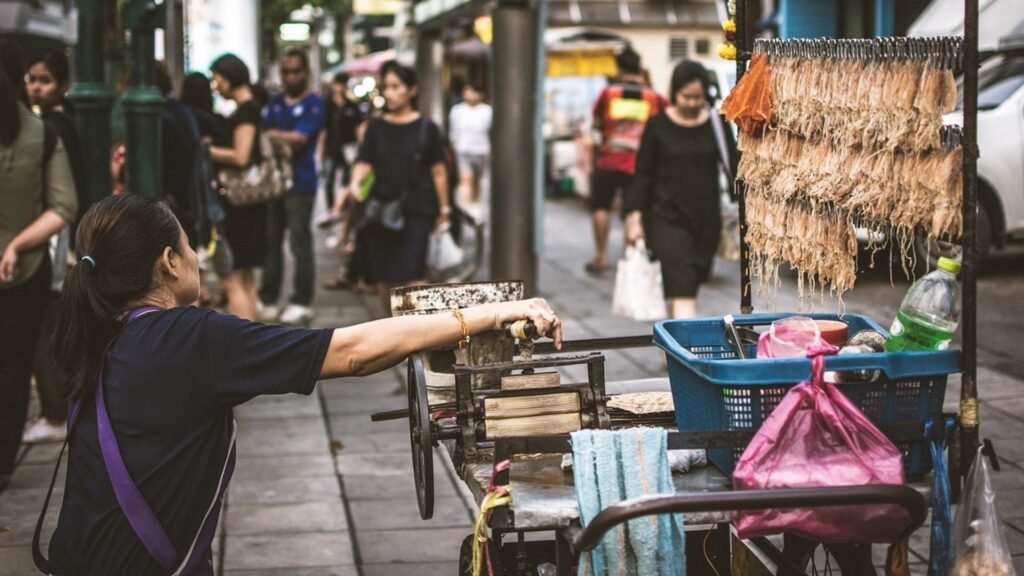
Skip the hotel breakfast. Seriously. Whatever they’re serving up there — it’s not worth it compared to what’s waiting downstairs, outside, two streets over, at a hawker centre that’s been running since 6am.
The best hawker centres in Singapore aren’t just food stops. They’re experiences. Loud, hot, chaotic, wonderful experiences where strangers share tables and nobody’s on their phone because the food in front of them is too good to ignore.
A recommended restaurant in Singapore might impress you. But a great hawker stall will haunt you. For weeks. I’m not being dramatic — people plan return trips to Singapore around specific stalls. It really gets that specific.
What to Expect at a Hawker Centre
First time? Here’s what you do. Walk the whole centre before you order anything. See what’s there. Find the stalls with the longest queues — those are usually worth investigating. Then “chope” your seat. Put a tissue packet, an umbrella, anything on a chair to claim it. This is a uniquely Singaporean custom and it works remarkably well given that no one’s ever formally agreed to it.
Order from one stall. Pay there. Collect your food. Then go to the next stall. Pay again. Bring it back to your table. Since 2021, returning your tray is legally required — Singapore actually enforced this properly and the centres are noticeably cleaner for it. Most stalls now accept PayNow or NETS for cashless payment. But keep some small notes anyway. Some of the older uncles and aunties prefer cash. It’s their stall. Respect the preference.
Popular Dishes You’ll Find There
| Hawker Centre | Must-Try | Famous Stall |
|---|---|---|
| Maxwell Food Centre | Hainanese chicken rice | Tian Tian Chicken Rice |
| Lau Pa Sat | Satay (evenings) | Multiple stalls |
| Old Airport Road | Char kway teow | Dong Ji Fried Kway Teow |
| Chinatown Complex | Bak kut teh | Various |
| Chomp Chomp Food Centre | BBQ Stingray | Multiple stalls |
| Amoy Street Food Centre | Hokkien mee | Ah Hock Fried Hokkien Mee |
| Tekka Centre | Fish head curry | Various Indian Muslim stalls |
Every one of these appears on every serious Singapore food bucket list for good reason. The quality, for the price, is just extraordinary.
The Best Areas in Singapore for Food
Singapore’s neighbourhoods each have their own flavour identity. Not metaphorically — literally. Walk into Little India Singapore and the smell of spice hits you before the food does. Step into Chinatown Singapore and you’re suddenly navigating roast duck hanging in windows and the sound of sizzling woks from heritage shophouses. Kampong Gelam smells like cumin and rosewater and charcoal. Katong Joo Chiat is quieter, more residential, and hiding some of the most complex food in the city.
The famous food in Singapore doesn’t just live at specific restaurants. It lives in these neighbourhoods — in their street corners, their morning markets, their decades-old family stalls. Plan your eating around the areas as much as around the dishes. You’ll eat better for it.
Little India for Rich and Spicy Flavours
Little India Singapore along Serangoon Road is a full sensory experience before you’ve even ordered anything. The colours, the spice smell, the sound of Tamil music drifting out of somewhere — it’s alive in a way that’s hard to describe and easy to feel.
Fish head curry is the dish to get here. A large fish head (usually red snapper) in a tangy, spiced curry with vegetables — it looks dramatic and tastes even better. Komala Vilas on Serangoon Road has been serving vegetarian South Indian food since 1947. The banana leaf rice is the move — rice surrounded by small portions of different curries and accompaniments, eaten with your right hand if you want to do it properly.
Tekka Centre at the edge of Little India is one of the hawker centres Singapore locals actually use daily. Biryani, dim sum influences blending with South Indian spice, halal Indian Muslim food — it’s a dense, exciting, affordable place to eat. Go hungry.
Chinatown for Traditional Chinese Cuisine
Chinatown Singapore is denser and louder than you expect. Smith Street, Temple Street, Pagoda Street — there’s food at every turn. The Chinatown Complex Food Centre is one of the largest in Singapore, several floors of stalls, and you could spend a full day just here without running out of things to try.
Song Fa Bak Kut Teh earned a Michelin Bib Gourmand and keeps earning it. Peppery pork rib broth, served with rice and you tiao (fried dough). It’s the kind of thing that sounds simple and tastes like someone spent years perfecting it — because they did. Dim sum spots open at 7am in Chinatown and the early crowds are worth joining. Roast duck and char siu (BBQ pork) hang in shophouse windows like edible window displays. These are traditional Singapore dishes done with genuine craft.
Kampong Gelam for Malay and Middle Eastern Food
Kampong Gelam is one of Singapore’s oldest neighbourhoods — Arab Street, Bussorah Street, the Sultan Mosque as backdrop — and it’s genuinely beautiful to walk through even if you weren’t planning to eat. But you will eat. You always do here.
Zam Zam Restaurant has been making murtabak since 1908. Stuffed pan-fried flatbread filled with minced meat and egg — rich, heavy in the best way, best eaten hot with curry dip. That’s over a century of the same dish. That’s not a marketing angle, that’s a legacy.
Nasi Padang restaurants line Kandahar Street. You pick from rows of curries, rendang, vegetables, sambal — piled onto rice in generous portions. Middle Eastern influences layer over traditional Malay food in this neighbourhood. Shawarma next to satay. Manakish next to popiah. It shouldn’t work as well as it does. The Singapore local cuisine here is a direct product of trade routes and centuries of cultural crossover.
Katong and Joo Chiat for Peranakan Specialties
Katong Joo Chiat is where Peranakan cuisine — also called Nyonya cooking — lives and breathes. This is food born from Chinese-Malay intermarriage over centuries. It’s layered with coconut milk, lemongrass, galangal, candlenut, gula melaka, and enough complexity that you could study it for years and still find something new.
Katong Laksa is the dish most associated with this stretch. Thick coconut broth, rice noodles cut short (you eat with a spoon only — no chopsticks needed), and a broth so rich it almost coats your lips. The debate over which stall does it best is genuinely lively. 328 Katong Laksa consistently comes up in every conversation about it. Go and form your own opinion.
Ayam Buah Keluak — chicken cooked with black Indonesian nuts that have a dark, earthy, almost truffle-like intensity — is another Peranakan must-try that you genuinely won’t find anywhere else in the world presented quite like this. This neighbourhood alone justifies the trip to Singapore.
Singaporean Desserts You Shouldn’t Skip
A lot of food guides skip the desserts. Or mention them briefly at the end like an afterthought. That’s a mistake. Singapore’s dessert culture is deep, specific, tied to cultural identity, and in this relentless tropical heat — genuinely necessary.
The Singapore food experience isn’t finished until you’ve had something sweet. And “something sweet” here doesn’t mean a generic chocolate cake. It means pandan dessert crepes and gula melaka rice balls and mountains of shaved ice that arrive at your table looking almost too dramatic to eat.
Almost.
Traditional Sweet Treats and Local Favourites
Ondeh ondeh are small green glutinous rice balls, rolled in fresh coconut, hiding molten gula melaka (palm sugar) inside. You bite in and the palm sugar just — spills. It’s a genuinely joyful eating experience. They’re everywhere. They’re always good.
Kueh dadar is a pandan dessert crepe — thin, fragrant, filled with sweetened coconut and palm sugar. The pandan flavour is grassy and fragrant and if you’ve never had it before, it’s one of those flavours that becomes instantly recognisable and immediately missed when you’re not in Southeast Asia.
Tau huay — silken tofu pudding in a light sugar syrup — sounds too simple to be worth mentioning. And then you have it warm on a cool morning and you completely understand. Goreng pisang (fried banana fritters) pair with kopi in a way that makes perfect sense. These traditional kueh and snacks are the unsung heroes of any Singapore food bucket list and most visitors walk right past them.
Cooling Desserts for Singapore’s Tropical Climate
Ice kacang is the definitive hot-weather dessert. A mountain — and I mean a genuine mountain — of shaved ice, drenched in coloured syrups (rose, pandan, sarsi), sitting on top of red beans, attap seeds, grass jelly, sweet corn, and sometimes ice cream. It’s completely chaotic. It’s wonderful. In 32-degree heat it feels like the most sensible food decision you’ve ever made.
Chendol is the quieter sibling. Shaved ice with coconut milk poured over it, green pandan-flavoured jelly strands, red beans, and gula melaka drizzled on top. It’s cooling and sweet and slightly nutty from the palm sugar. Mango Pomelo Sago has taken over dessert cafés more recently — fresh mango, pomelo segments, sago pearls in coconut milk — very good, very photogenic. Mei Heong Yuen Dessert in Chinatown is one of the most quietly recommended restaurants in Singapore for traditional cold sweets. The queue is sometimes long. Go anyway.
Drinks and Nightlife in Singapore
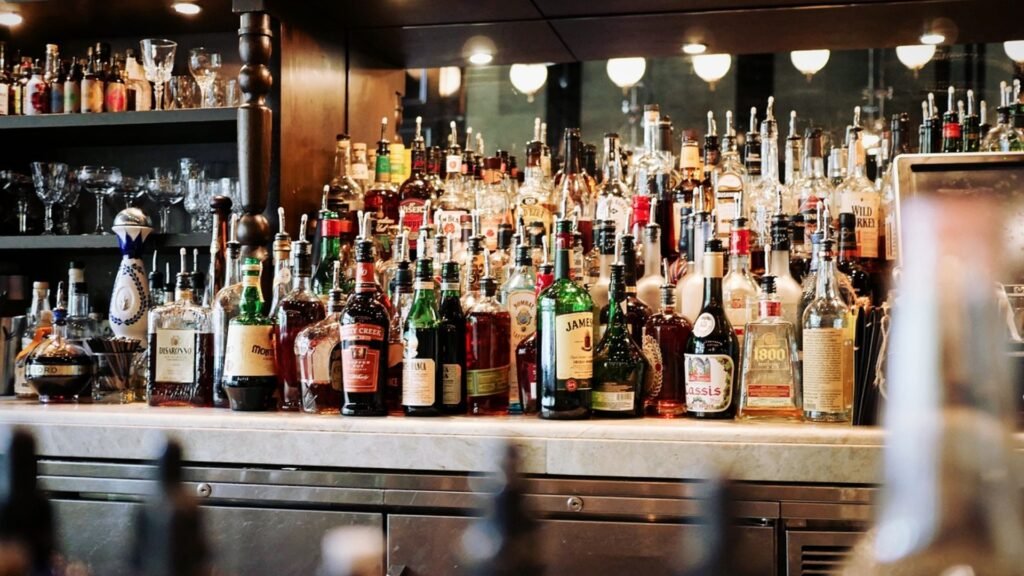
Singapore after dark is its own separate experience. The food doesn’t stop — it just shifts shape. Zi char restaurants (Chinese cook-to-order spots, like a casual Chinese restaurant where you shout your order across a counter) fill up around 7pm. Casual dining Singapore stretches well past midnight in some spots. Singapore nightlife isn’t just drinking — it’s eating late, it’s durian at midnight in Geylang, it’s satay smoke drifting through Lau Pa Sat at 10pm.
But yes. The bars are also genuinely excellent here. Singapore’s cocktail bars Singapore scene has grown into something legitimately world-class over the past decade and it’s still evolving.
Famous Cocktail Bars and Rooftop Spots
1-Altitude is 282 metres above sea level. 360-degree view of the city. It’s dramatic in the way Singapore sometimes allows itself to be dramatic — quietly, expensively, beautifully. Manhattan Bar at Regent Singapore consistently shows up on Asia’s 50 Best Bars lists and deservedly so. The drinks programme is exceptional and the space feels like 1920s New York via Singapore, which is a very specific and somehow very effective combination.
Atlas Bar near Bugis is the one you go to for atmosphere. Art Deco. Enormous gin tower. The kind of place that makes you want to dress slightly better than you planned to. Rooftop dining Singapore has CÉ LA VI at Marina Bay Sands as its obvious flagship — expensive, spectacular, worth once. Clarke Quay is the easy bar-hopping option for a livelier Friday night. Ann Siang Hill has quieter, more interesting bars if you dig around a bit.
Local Drinks You Need to Try
Kopi. Singapore’s version of coffee. Robusta beans, roasted with butter and sugar, brewed through a cloth filter. It’s thick and strong and tastes nothing like what most of the world calls coffee. Order “kopi-o” for black. “Kopi-c” for evaporated milk. Just “kopi” for condensed milk. It comes in a glass, usually hot, occasionally iced, and it’ll wake you up faster than anything you’ve had before.
Teh tarik — “pulled tea” — is exactly what it sounds like. Hot milk tea poured back and forth between two containers from a height until it’s frothy and slightly cooled. It’s satisfying in a way that’s partly taste and partly performance. Bandung (rose syrup with evaporated milk) is sweet and floral and very pink. And if you haven’t had a Milo Dinosaur — iced Milo with an extra heap of Milo powder piled on top that you stir in yourself — you’re not really done with Singapore yet.
| Local Drink | What It Is | Where to Get It |
|---|---|---|
| Kopi-C | Coffee + evaporated milk | Any kopitiam Singapore |
| Teh Tarik | Frothy pulled milk tea | Mamak stalls |
| Bandung | Rose syrup + evaporated milk | Malay food stalls |
| Milo Dinosaur | Iced Milo + extra powder | Hawker centres Singapore |
| Sugar Cane Juice | Fresh pressed, very cold | Hawker centres |
Tips for Eating Like a Local in Singapore
There’s an unspoken etiquette to eating in Singapore. It’s not written down anywhere. Nobody will hand you a rulebook. But you’ll notice it — in how people queue, how they talk to stall owners, how they eat. Learn the basics and you stop looking like someone who’s just here for the Instagram.
These tips apply whether you’re at a recommended restaurant in Singapore or sharing a plastic table with three strangers at a hawker centre at lunchtime.
How to Navigate Hawker Centres
Walk the whole centre first. Don’t just grab the first thing you see — survey the landscape. Find where the queues are forming. Find the uncle who’s been frying the same dish for 30 years and has a certificate on the wall behind him. That’s usually a good sign.
Chope your seat before you queue. Tissue packet, umbrella, literally a packet of sugar — place it on the chair and it’s claimed. Don’t remove someone else’s tissue pack. That’s a social crime here and you will know it from the look you receive.
Order from one stall. Pay there. Bring it back. Go to the next stall. Pay again. Bring that back too. When you’re done eating, return your tray to the tray return station. This has been legally enforced since 2021 and the system genuinely works. Most stalls take PayNow. But keep some cash. Always.
Best Times to Visit Popular Food Spots
Timing in Singapore’s food scene is genuinely important. Popular stalls sell out. Queues double in 20 minutes. Getting there slightly before the rush makes a real difference.
| Time | Best Move |
|---|---|
| 7 AM – 9 AM | Kopitiam Singapore breakfast — kaya toast, soft-boiled eggs, kopi |
| 11 AM – 12 PM | Arrive at hawker centres before the lunch crowd builds |
| 3 PM – 5 PM | Dessert cafés, pandan dessert spots, afternoon teh tarik |
| 6 PM – 7 PM | Dinner — popular stalls queue fast from 6:30 |
| Late Night | Geylang for durian and supper, 24-hour mamak stalls |
Budgeting for Food in Singapore
Singapore has a reputation for being expensive. For accommodation, shopping, and cocktails — yes, sometimes. But for food? One of the best-value cities in Asia, if you eat where locals eat.
A full day of hawker meals — breakfast, lunch, dinner — can genuinely cost under S$20. Breakfast for S$4. Lunch for S$5–S$6. Dinner for S$7–S$8. Full, satisfied, well-fed. Affordable food in Singapore isn’t a myth — it just requires avoiding hotel restaurants and tourist traps.
Mid-range eating (mixing casual dining Singapore with occasional sit-down spots) runs S$50–S$100 per day. Fine dining — Odette, Les Amis, Corner House — starts around S$150–S$400 per person. There’s no tipping culture. Zero. Don’t tip and don’t feel guilty about it. Service charge is added at restaurants automatically — that’s the system. At hawker centres, you pay exactly what you’re charged. Nothing more.
How to Plan Your Singapore Food Journey
Planning a food trip to Singapore properly isn’t about finding the ten most Instagrammed dishes and ticking them off a list. It’s about building a route that makes sense — geographically, culturally, logistically. A morning-to-midnight sequence where every meal leads naturally to the next neighbourhood, the next flavour register, the next experience.
Where locals eat in Singapore and where tourists eat sometimes overlap but the path there looks different. Locals know to go at 11am, not noon. They know which stall at which centre. They know not to ask for extra chilli and then not eat it. A good Singapore food itinerary borrows from local knowledge and adds a little intentional structure.
Creating a Food Itinerary
Here’s a three-day structure that covers serious ground without turning eating into homework:
Day 1 — Chinatown + Maxwell + Clarke Quay
Start with early dim sum in Chinatown around 7:30am. Lunch at Maxwell Food Centre — Hainanese chicken rice from Tian Tian, get there by 11:30 before the queue doubles. Afternoon: wander Chinatown Complex for snacks. Evening: satay smoke at Lau Pa Sat followed by drinks at Clarke Quay.
Day 2 — Little India + Kampong Gelam + Marina Bay
Breakfast at Tekka Centre in Little India Singapore — banana leaf rice or a full South Indian spread, early. Lunch: murtabak at Zam Zam in Kampong Gelam, walk Bussorah Street after. Dinner: rooftop dining Singapore at CÉ LA VI or 1-Altitude — book ahead.
Day 3 — Katong + East Coast + Geylang
Morning: Katong Laksa at 328 Katong. Popiah and kueh from Katong Joo Chiat shophouse bakeries. Dinner: chilli crab or black pepper crab at East Coast seafood restaurants. Late night: Geylang for durian if you’re adventurous. It smells like something left in a locker. It tastes like something you’ll fly back for.
Balancing Local and Modern Dining Experiences
Here’s the honest advice: don’t spend your whole trip chasing Michelin stars. You’ll miss Singapore’s soul. But don’t skip modern restaurants entirely either — because Singapore’s contemporary food scene is doing things with Singapore local cuisine that are genuinely exciting.
Odette at the National Gallery is consistently ranked among Asia’s 50 Best Restaurants. French technique, Singapore ingredients, quiet brilliance. Les Amis holds three Michelin stars with the kind of confidence that doesn’t need to announce itself. These are worth the money for a special occasion meal.
A good split for a week-long trip: 70% hawker and local eating, 30% modern or fine dining. Every recommended restaurant in Singapore worth visiting deserves to be chosen with intention. Not just because it’s famous. Because it fits where you are in the trip and what you actually want to eat.
Recreating Singaporean Flavours at Home
You come home from Singapore. Two weeks pass. And then one evening — out of nowhere — you’re craving laksa with a specific urgency that normal hunger doesn’t explain. It happens. Every time.
The good news is that Singapore street food and home cooking aren’t as far apart as you’d think. Several traditional Singapore dishes are genuinely achievable in a home kitchen without professional equipment. You need the right ingredients, patience, and ideally a wok that can handle proper high heat. Here’s where to start.
Popular Dishes You Can Try Cooking
Hainanese chicken rice at home is more achievable than it sounds. Poach a whole chicken in stock with ginger and spring onion until just cooked through. Cook the rice in the reserved poaching liquid with garlic, ginger, and a little sesame oil. Make three sauces — chilli ginger sauce, ginger scallion sauce, dark soy. Takes about 90 minutes total and tastes almost unfairly good.
Kaya (coconut pandan jam) is simpler still. Eggs, coconut milk, pandan leaves, sugar — slow-stirred over a double boiler until thick and fragrant. Spread on toast with cold salted butter at 7am and you’ve recreated one of the most iconic famous food in Singapore breakfasts in your own kitchen.
Rasa Malaysia covers both of these in excellent step-by-step detail — genuinely trustworthy recipes, well-tested, clearly written. Wok & Kin is excellent for char kway teow and rojak — dishes that need a bit more technique but are very satisfying to nail. Bookmark both.
Essential Ingredients for Singaporean Cuisine
You can’t fake Singapore local cuisine without the right pantry. These ingredients are non-negotiable — get them before you attempt any serious Singapore cooking:
| Ingredient | Used In |
|---|---|
| Belacan (fermented shrimp paste) | Sambal, laksa, rojak |
| Pandan leaves (fresh or frozen) | Kaya, ondeh ondeh, fragrant rice |
| Coconut milk | Laksa, nasi lemak, desserts |
| Gula melaka (palm sugar) | Chendol, kueh dadar, sauces |
| Lemongrass | Rendang, satay marinades |
| Dried shrimp | Char kway teow, fried rice |
| Kecap manis (sweet soy) | Stir-fries, Hokkien mee |
| Kopi powder | Homemade Singapore coffee |
In Singapore: Mustafa Centre (open 24 hours, genuinely extraordinary for ingredients), NTUC FairPrice, and Sheng Siong all stock these reliably. If you’re cooking from overseas — most large Asian grocery stores carry them, and Amazon stocks the shelf-stable versions. The fresh pandan is harder to find outside Asia but frozen works reasonably well as a substitute.
Right. So. Where Does That Leave You.
Singapore’s food scene isn’t something you understand in a day. It reveals itself gradually — through a bowl you almost didn’t order, a stall you found because you took a wrong turn, a dessert you’d never heard of 20 minutes before you ate it and immediately loved. Every recommended restaurant in Singapore has earned its reputation through years of consistency. Every hawker stall has a story that’s usually more interesting than the restaurant equivalent.
Whether this is your Singapore food guide for a first trip or your fifth return visit — the city will still surprise you. That’s the thing about a place that takes food this seriously. It keeps getting better at it. Keeps raising the bar. Keeps finding new ways to make you plan your next visit before you’ve even finished the current one.
Go hungry. Eat everything. Return soon.