
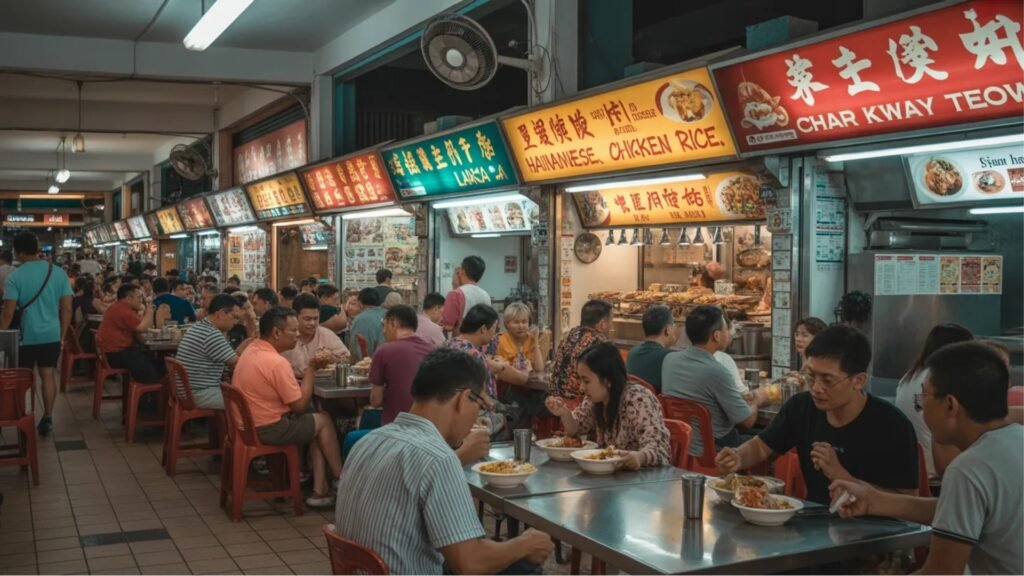
SBest Food Court in Singapore: Top Hawker Centers & Must-Try Dishes (2025)
Okay so… real talk. The first time I walked into a Singapore hawker center, I genuinely stood there for like three full minutes just — staring. A hundred stalls. The smell of chilli oil and coconut milk hitting you at the same time. Everyone around me moving with this confident, practiced energy, grabbing trays, knowing exactly where to go. And me? Completely lost.
But honestly? Within about twenty minutes I had the best plate of Hainanese chicken rice of my entire life. Cost me less than four dollars. I’m not joking.
That experience — that slightly chaotic, slightly overwhelming, incredibly delicious experience — is what this whole guide is about. Whether you’ve never set foot in Singapore before, or you’ve lived here for years and somehow still default to the same two stalls near your flat… this is the Singapore food guide I genuinely wish someone had handed me earlier.
We’re covering everything. The famous spots, the hidden ones locals don’t really talk about publicly, the Michelin-starred plates that cost less than a bus ride, the unspoken rules you’ll need to know, and the dishes that’ll make you rethink everything you thought you knew about Singapore street food. Let’s get into it.
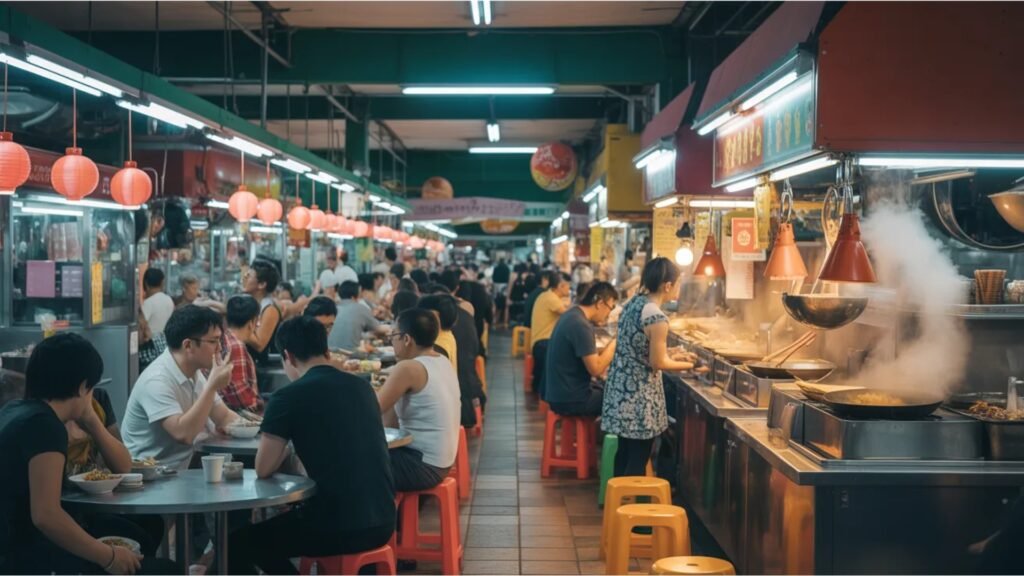
What is a Hawker Center in Singapore?
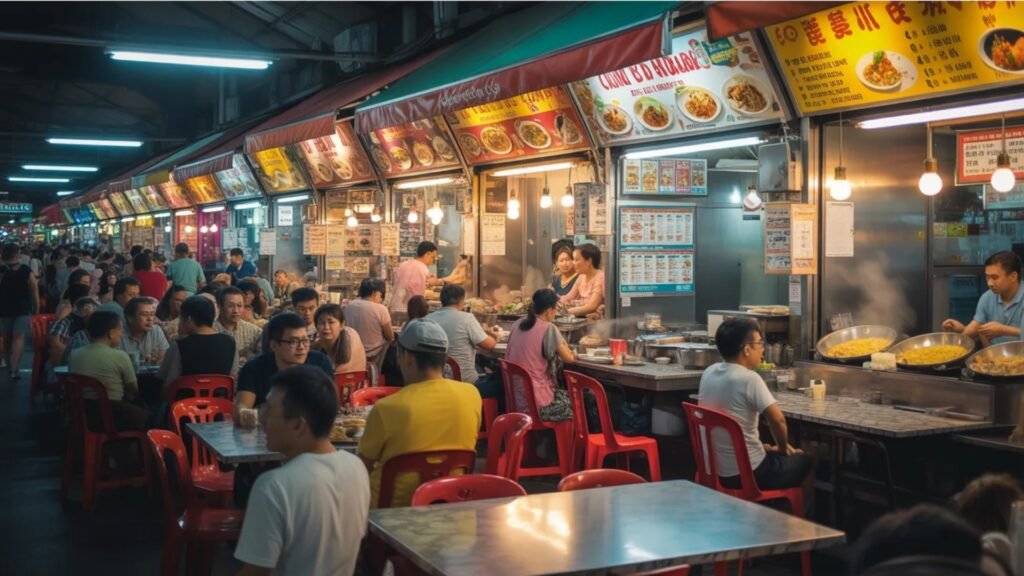
Right, so — basics first. A hawker center (or hawker centre, both spellings exist, nobody’s going to correct you) is essentially an open-air communal eating space. Rows of individual food stalls. Shared tables with plastic chairs. Ceiling fans working overtime. The kind of organised chaos that somehow — somehow — produces food that punches way above its weight.
This isn’t fast food. It isn’t a tourist attraction dressed up as local culture. It’s where actual Singaporeans eat actual meals, every single day. Your taxi driver, your office colleague, the retired uncle who reads the newspaper every morning over a cup of kopi Singapore — they’re all here. That’s what makes it different.
The history is genuinely interesting, by the way. Back in the 1800s and early 1900s, Singapore food culture was built on mobile street hawkers. Vendors with pushcarts, balancing poles, selling food from doorways and along roadsides across the colonial city. The government in the 1960s and 70s decided to bring them all into organised, licensed, hygiene-controlled centres. A lot of people worried that would kill the whole thing — strip out the soul of it. It didn’t. It preserved it. Today there are over 110 hawker centres across the island, feeding millions of meals daily. Singapore local food in its most unfiltered, most real form.
Hawker Centers vs Food Courts — What’s Actually Different?
People mix these up constantly. Understandably. But they’re quite different.
A hawker centre is government-managed, often open-air, and built on subsidised rental structures specifically designed to keep food prices low. A food court — you’ll find these everywhere in malls — is privately operated, air-conditioned, and noticeably pricier for comparable food. Both technically fall under the Singapore food courts umbrella in casual conversation but the experience? Worlds apart.
Actually, let me put it this way. Imagine you’re in Singapore for five days and you eat only at food courts in air-conditioned malls. You’ll eat fine. But you’ll miss the whole point. The Singapore food experience that actually tells the story of this country lives in the hawker centres. That’s not snobbery, that’s just fact.
| Feature | Hawker Centre | Food Court |
|---|---|---|
| Ownership | Government / Town Council | Private operators |
| Setting | Open-air or semi-outdoor | Air-conditioned indoors |
| Average meal price | SGD $3–$6 | SGD $6–$12 |
| Cultural authenticity | Extremely high | Moderate |
| Atmosphere | Loud, lively, genuinely local | Quieter, commercial |
| Typical location | Residential estates, markets | Shopping malls, MRT hubs |
So yeah. Go to the hawker centres.
Why Hawker Culture Has Such a Grip on Singapore
There’s this social equality angle that I don’t think gets enough attention. At a hawker centre, a senior executive and a construction worker sit at the same plastic table, eating the same four-dollar bowl of noodles, drinking the same teh tarik. Nobody blinks. Nobody performs.
That’s actually rare. Genuinely rare. In most cities food spaces stratify along income lines pretty quickly. Here, the hawker centre resists that — partly by design, partly by culture, mostly because the food is just too good for anyone to voluntarily give up.
And then there’s the generational recipe thing. Some of these stalls have been in the same family for three, four, sometimes five decades. The same dish, refined over fifty years. You’re eating something a grandfather perfected and a grandchild now serves with the same technique, the same proportions, the same instinct built from ten thousand repetitions. No restaurant with a marketing team can manufacture that. Hawker culture Singapore has it by default.
The variety alone is staggering, honestly. Chinese Malay Indian food fusion isn’t a concept here — it’s just geography. Walk through Tekka Centre on a Sunday and you’ve got South Indian roti prata next to Malay nasi lemak next to Teochew char kway teow next to a cendol dessert stall. Under one roof. Before 10am.
UNESCO Made It Official — And That Actually Matters
December 2020. UNESCO inscribed Singapore’s hawker culture Singapore on its Representative List of Intangible Cultural Heritage of Humanity. The same list as Neapolitan pizza-making. Japanese Noh theatre. The Mediterranean diet.
Some people rolled their eyes — felt like a tourism move. But the UNESCO official inscription describes it as a living space where communities gather, cultural identities are expressed, and social bonds form around shared meals. Any Singaporean will tell you that’s exactly right. The UNESCO hawker culture recognition mattered less as a credential and more as global acknowledgement that something genuinely irreplaceable is happening in these fluorescent-lit eating spaces every single day.
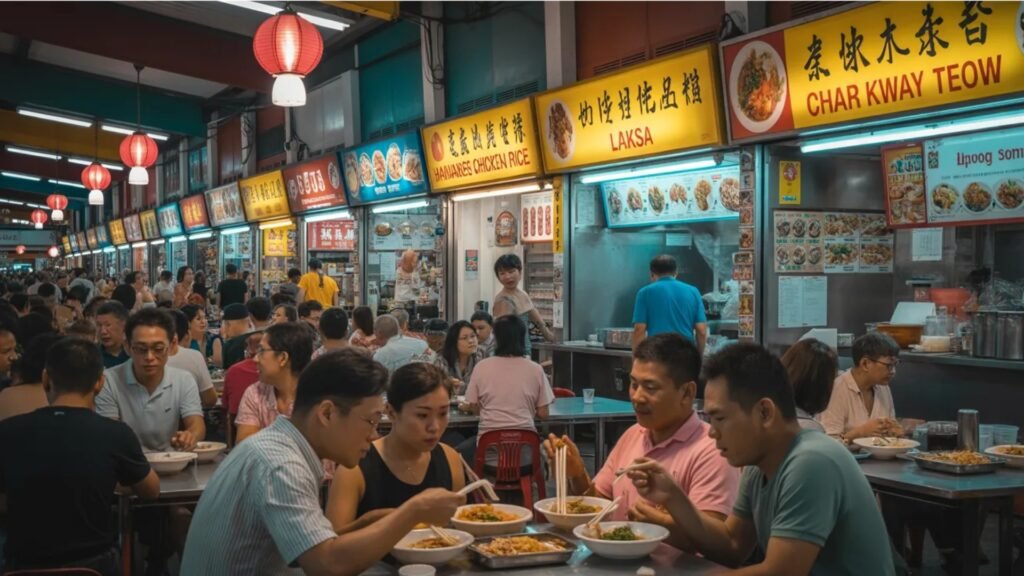
How to Eat at a Hawker Center — An Actual Beginner Guide
Okay. So you’ve walked in. It’s a bit overwhelming, right? A hundred stalls, no obvious menu system, everyone around you looks completely confident, and you’re standing there doing the classic tourist freeze.
Totally normal. Everyone starts here.
The basic flow is genuinely simple once you know it: walk around and browse first, find a seat and mark it (more on that in a second), go order your food, pay at the stall, collect or wait for delivery, eat, return your tray. That’s the whole system.
The stuff that trips people up isn’t the ordering — it’s the unspoken social rules around seating and payment and the tiny local customs that nobody explicitly explains. How to eat at hawker center isn’t something most guides cover properly, so let’s actually cover it.
How Ordering Works — It’s Simpler Than It Looks
Walk directly up to the stall. Most stalls have laminated menus on the wall or counter with photos and prices — genuinely helpful when you’re staring blankly at ten different noodle dishes that all look amazing. Point at what you want. Seriously, pointing works brilliantly. Most hawkers speak enough English, and many speak Singlish — this wonderfully expressive local creole that you’ll pick up fragments of surprisingly fast.
Oh, and dietary requirements — state them upfront, clearly, before you order. Not after. “No pork,” “halal,” “vegetarian,” “less spicy” — say it immediately. Most stalls accommodate this without fuss. Some popular stalls at peak hours use a numbering system: take a ticket, wait for your number, collect your food. Others take your table number and bring food to you.
Here’s a quick reference for common ordering situations:
| Situation | What to Do |
|---|---|
| Can’t read the menu | Point at what someone nearby is eating |
| Dietary restriction | State it clearly before ordering |
| Stall is packed | Give your table number, don’t hover |
| No table delivery system | Collect from the counter yourself |
| Language barrier | Point, gesture, smile — genuinely works |
How to order food in Singapore at a hawker centre basically comes down to: be direct, be clear about dietary needs, and don’t overthink it. After the first time, it feels completely natural.
The “Chope” Thing — You Need to Understand This Before You Go
Right, so this is uniquely Singaporean and it’ll confuse you if nobody explains it first.
“Chope” — derived from “chop,” meaning to mark or claim — is the practice of reserving a seat at a hawker centre by leaving a personal item on it before you go queue and order. Usually a packet of tissues. Sometimes an umbrella, a name card, a tote bag.
And here’s the thing — everyone respects it. It’s a completely self-regulating social system that has functioned without enforcement for decades. You see tissues on a seat? That seat is taken. Don’t remove them. Don’t sit there. Find another spot.
I know it sounds bizarre. It works perfectly. Hawker center rules Singapore are mostly unwritten, and this one is the most important unwritten rule of all. Don’t be the person who ignores a tissue packet. That’s a fast track to some very pointed local disapproval.
Cash or Cashless — What to Actually Carry
Hawker centres used to be strictly cash only. That’s changed a lot. Most stalls now accept PayNow, PayLah!, NETS FlashPay, and QR-code systems. Younger hawkers especially tend to run fully cashless.
But — carry some small notes anyway. SGD $2, $5, $10. Some older stalls haven’t made the switch, and more importantly, the stalls with the most legendary food are often the ones run by uncles who’ve been doing this for 40 years and haven’t changed much about their operation. Including the payment system. Practical hawker center tips that saves real inconvenience.
Tray Return — It’s Mandatory and Actually Matters
Since September 2021, Singapore made tray and crockery return mandatory across all hawker centres and coffeeshops. The National Environment Agency (NEA) enforces this. After your meal: stack your tray, return used crockery, deposit at the clearly marked tray return station. It takes thirty seconds.
The food hygiene rating Singapore system is equally serious — every hawker stall has an A, B, or C grading from regular NEA inspections, displayed prominently at each stall. Stick to A-rated stalls wherever possible. Full details at NEA Singapore. Singapore’s hawker food safety record is genuinely excellent — this transparency is a big part of why.
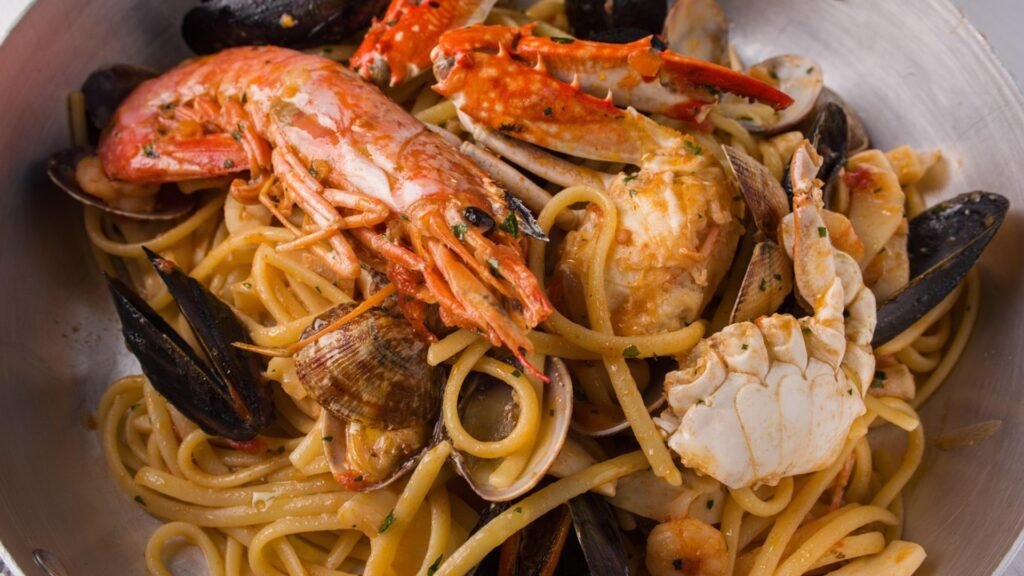
Must-Try Hawker Dishes in Singapore — The Real List
Okay, this is the section people actually come for. And look, the honest answer to “what should I eat” is — almost everything. The variety at any decent hawker centre is extraordinary. But some dishes have crossed from “popular” into something closer to national identity — they’re not just food, they’re edible chapters of Singapore’s story.
The genuinely remarkable part? You can eat your way through most of this list across one weekend, hitting multiple best hawker centers in Singapore, and spend less than SGD $50 total. That’s not a budget compromise. That’s affordable food Singapore producing world-class results at a price structure that most countries haven’t figured out how to replicate.
| Dish | Cuisine Origin | Average Price | Where to Find It |
|---|---|---|---|
| Hainanese chicken rice | Chinese-Hainanese | SGD $4–$6 | Maxwell Food Centre |
| Chilli crab Singapore | Local Singaporean | SGD $50–$80/kg | Newton Food Centre |
| Laksa noodles | Peranakan | SGD $3–$5 | Sungei Road, 328 Katong |
| Char kway teow | Teochew Chinese | SGD $4–$6 | Tiong Bahru Market |
| Satay skewers | Malay | SGD $0.70–$1 per stick | Lau Pa Sat Satay Street |
| Roti prata | South Indian | SGD $1–$3 | Tekka Centre |
| Nasi lemak | Malay | SGD $3–$5 | Changi Village |
| Bak chor mee | Hokkien Chinese | SGD $4–$6 | Various heartland centres |
| Curry puff | Peranakan/Malay | SGD $1.50–$2.50 | Tekka Centre, Old Chang Kee |
These are must-try dishes that belong on every Singapore food tour — local, visitor, it doesn’t matter. Eat them.
Hainanese Chicken Rice — The Unofficial National Dish
If Singapore could only keep one dish. Just one. Hainanese chicken rice would survive the vote without serious competition.
Poached or roasted chicken — silky, tender, faintly translucent — laid over fragrant rice cooked in chicken broth with ginger and pandan leaves. Three sauces on the side: fiery house-made chilli, pale ginger paste, dark soy. It looks almost too simple. It’s deceptively extraordinary.
Tian Tian Hainanese Chicken Rice at Maxwell Food Centre is the most famous version in Singapore. Anthony Bourdain ate here, called it one of the best things he’d ever eaten, and the international attention followed. Locals weren’t surprised — they already knew. The queue starts before the 11am opening. Worth every minute of the wait. This is the single most essential must-try dishes experience in any Singapore food guide, no debate.
Chilli Crab & Black Pepper Crab — Go Ahead, Get Messy
Chilli crab Singapore shows up in every food documentary about this country. For genuinely good reason.
Whole mud crab in a thick, tangy, sweet-spicy tomato and chilli gravy. You crack the shell, eat with your hands, mop every last drop of sauce with deep-fried mantou buns. It is messy. It is completely magnificent. Black pepper crab takes the same animal in an entirely different direction — dry-wok fried with a fierce black pepper crust, aromatic and bold. Newton Food Centre is one of the more accessible spots to try seafood without full restaurant pricing.
Laksa — The Coconut Curry Noodle Bowl That Changes People
Laksa noodles are genuinely transformative. Rich, spiced coconut milk broth — orange-red, intensely aromatic — loaded with thick rice noodles, prawns, fish cake, tofu puffs, and cockles. Peranakan in origin, born from the intersection of Chinese and Malay cooking.
Two main styles. Katong laksa uses cut noodles in a thick rich broth — eaten entirely with a spoon, no chopsticks. 328 Katong Laksa on East Coast Road is the most famous version. Sungei Road Laksa cooks theirs over a charcoal fire in a clay pot — a nearly extinct technique that produces a smokier, more complex bowl at SGD $3. Both belong on any serious Singapore food tour itinerary.
Char Kway Teow — The Smoky, Slightly Addictive One
Flat rice noodles. A screaming-hot wok. Chinese sausage, bean sprouts, eggs, cockles, dark soy, and lard. Three minutes of furious cooking over direct flame that creates “wok hei” — that smoky, slightly charred quality that home cooking almost never replicates.
Tiong Bahru Market has one of Singapore’s most consistently beloved char kway teow stalls — the same technique, the same recipe, maintained with the same intensity for decades. One of those best places to eat moments that only the famous hawker centers Singapore circuit delivers.
Satay Skewers — Especially After Dark
Every evening from around 7pm, Boon Tat Street alongside Lau Pa Sat transforms. Charcoal grill stalls set up along the road, smoke drifting across the neighbourhood, the smell of marinated chicken and mutton filling the air. Satay Street. One of the most atmospheric Singapore food experience settings anywhere on the island.
Satay skewers — bamboo-skewered marinated meat grilled until caramelised and lightly charred — with thick peanut sauce, ketupat rice, raw cucumber and onion. Order at least ten sticks. Probably twenty. You’ll understand why once you start.
Roti Prata — India Meets Singapore on a Flat Griddle
Roti prata deserves significantly more international recognition than it gets. Stretched dough cooked on a flat iron griddle until crispy-edged and soft-centred, served with fish or mutton curry for dipping. The plain version is perfect. The egg version is better. The cheese-egg-banana version is — actually, let’s not go there or you’ll never leave.
Tekka Centre in Little India serves some of Singapore’s most authentic roti prata alongside extraordinary North and South Indian cooking. Nasi lemak, biryani, teh tarik, banana-leaf rice — the variety is staggering. Sunday morning at Tekka, with the entire building vibrating with spice and colour and noise, is multicultural cuisine Singapore at its most vivid and most completely itself.
Best Hawker Centers in Singapore — The Ones Worth Knowing
Over 110 hawker centres on this island. Picking the best requires genuine editorial commitment. But some centres have built reputations so solid, across so many decades, that leaving them out of any Singapore culinary guide would be genuinely wrong. These are the famous hawker centers Singapore that serious food people know by name — locally and internationally.
Each one has its own character. Its own food strengths. Its own personality. The strategy: visit at least three across a trip. Notice how different they each feel despite occupying the same basic format.
Maxwell Food Centre — The Right Place to Start
Maxwell Food Centre is for most visitors the introduction to real hawker Singapore. Over 100 stalls in a large semi-open building at the heart of Chinatown. Operating since the 1980s. The headline act: Tian Tian Hainanese Chicken Rice at Stalls 10 and 11 — queue before 11am opening, join it without overthinking.
But don’t ignore everything else. Zhen Zhen Porridge is exceptional. The roasted duck stalls are quietly brilliant. The whole centre is the best single starting point for any where to eat in Singapore exploration. Address: 1 Kadayanallur St, Singapore 069184.
Lau Pa Sat — History, Architecture, and Evening Drama
Lau Pa Sat is one of those rare places where genuine architectural history and excellent food share the same space. Victorian cast-iron octagonal pavilion, built 1894, gazetted national monument. Eating here is genuinely eating inside a piece of history.
By day: standard hawker fare. By evening, Boon Tat Street outside closes to traffic and becomes Satay Street — a smoky corridor of charcoal grill stalls that’s hard to find anything comparable to anywhere in street food culture Asia. Yes, touristy. Also genuinely spectacular.
Old Airport Road Food Centre — Where Locals Actually Go
Ask any food-obsessed Singaporean where they actually eat — not where they send visitors — and many will say Old Airport Road Food Centre. Not glamorous. Not centrally located. Over 200 stalls, a devoted local following, and food quality that consistently exceeds its profile.
Toa Payoh Lor Mee here is among the island’s finest. Fried Hokkien Mee equally revered. Prices remain old-school affordable. This is cheap food Singapore in its most honest, most delicious expression — no compromises, no tourist markup, just extraordinary everyday food eaten by the people who’ve been eating it for decades. Real local food guide Singapore territory.
Tiong Bahru Market — Heritage Neighbourhood and Brilliant Food
Tiong Bahru Market occupies a beautiful Art Deco building from the 1950s — circular ramps, clean architectural lines, genuine character. Ground floor is a wet market. Upstairs: a hawker centre with one of the most loyal regular followings in Singapore.
Chwee kueh stall has been drawing queues here for decades. Chee cheong fun is silky and perfectly sauced. The char kway teow is, by widespread local consensus, among Singapore’s best. The surrounding Tiong Bahru neighbourhood — indie bookshops, small cafes, prewar shophouses — makes this the rare Singapore food markets experience that sits inside a genuinely interesting place.
Newton Food Centre — Yes, From That Movie
Newton Food Centre was well-known before Crazy Rich Asians made it globally famous in 2018. The film’s food scene sent international tour groups here with phones raised, and that energy hasn’t fully dissipated. It’s touristy. The food is still genuinely good — especially seafood, satay skewers, barbecue stingray.
Night atmosphere — fairy lights, charcoal smoke, a hundred conversations — is a legitimately enjoyable local dining experience for visitors. Near Newton MRT, short walk from Orchard Road. Convenient and worth including once.
Hidden & Local Favourite Hawker Centers You Need to Know
Past the famous names, Singapore’s real food soul lives in heartland centres. The ones attached to HDB blocks. Next to wet markets. Surrounded by residents who’ve been eating at the same stall since childhood. These are the hidden food gems that no travel magazine puts on its cover, and the food is often indistinguishable from — or better than — the famous spots.
Getting here requires willingness to leave the tourist belt. The reward is eating in a space that has never had any reason to perform for anyone except the people who actually live nearby. That’s exactly where the best food tends to hide.
Changi Village Hawker Centre — Weekend Morning Magic
Way out in Singapore’s northeastern corner, Changi Village Hawker Centre sits in a neighbourhood that feels entirely removed from the city’s usual pace. Breezy. Unhurried. Retirees reading newspapers over kopi for an hour without anyone minding.
Nasi lemak is the star — fragrant coconut rice with crispy fried chicken, sambal, egg, and anchovies. Some of the best versions in Singapore come from this modest, unsung centre. The otah — spiced fish paste grilled in banana leaf — is equally outstanding. Come on a weekend morning. Sea air, neighbourhood quiet, breakfast under SGD $6. Pure Singapore budget food happiness.
East Coast Lagoon Food Village — Beachside and Genuinely Good
Beachside hawker dining that’s neither invented nor tourist-targeted. East Coast Lagoon Food Village is a genuine community eating space that happens to sit along the East Coast Park shoreline, open to the sea breeze.
Famous for barbecued seafood, satay skewers, and one of Singapore’s most beloved laksa noodles stalls. Come in the evening after cycling through the park. The combination of sea air, physical tiredness, and a bowl of laksa ten metres from the ocean is one of Singapore’s great simple, honest pleasures.
Clementi Food Centre — Heartland Without the Hype
Won’t appear in any tourist guide. Entirely the point. Classic heartland Singapore — HDB flats, neighbourhood shops, families on bicycles, and a hawker centre quietly feeding the community for decades.
The wanton mee is excellent. Bak chor mee competes seriously for local loyalty. Economy rice for SGD $3.50. Affordable food Singapore in its most honest form — great food that has never needed to charge more because it has never needed to impress anyone outside the neighbourhood.
Tekka Centre — Little India’s Food Anchor
Tekka Centre is a full sensory event. Located at the edge of Little India on Serangoon Road, it functions as wet market and hawker centre simultaneously, wrapped in the extraordinary atmosphere of Singapore’s most vibrant ethnic enclave.
South Indian, North Indian, Malay cooking all under one roof. Roti prata, mutton biryani, teh tarik, mee goreng, banana-leaf rice. Walk through on a Sunday morning and the smells alone — turmeric, curry leaves, fenugreek, fresh coconut — justify the entire trip. Multicultural cuisine Singapore at its most vivid and most genuinely itself.
Michelin-Star Hawker Stalls — Yes, They’re Real and Yes, They’re Worth It
In 2016, the global food world had a collective moment of shock. Two Singapore hawker stalls — charging under SGD $3 per plate — received Michelin stars. The cheapest Michelin meal on earth. A plate of soya sauce chicken rice served on a plastic tray at a table with paper napkins.
The culinary establishment was stunned. Singaporeans were mostly delighted but not surprised. Because the logic was always obvious here: mastery doesn’t require white tablecloths. It requires decades of devoted, specialised practice. Michelin star hawker Singapore stalls have that in spades.
Liao Fan Hawker Chan — The $3 Plate That Changed Everything
Chef Chan Hong Meng’s Liao Fan Hawker Chan received its first Michelin star in 2016 — world’s cheapest Michelin-starred restaurant at the time. Soya sauce chicken rice for around SGD $2–$3. The chicken is poached, lacquered in a complex soya and spice reduction until glossy and deeply flavoured.
Queue at Chinatown Complex on Smith Street regularly exceeds 45 minutes. Worth every minute. This is must-try dishes territory without any qualification. Current details at Michelin Guide Singapore.
Hill Street Tai Hwa Pork Noodle — A Decade of Stars
Hill Street Tai Hwa Pork Noodle has maintained a Michelin star since 2016. Nearly a decade of consistent global recognition for a single hawker stall operated by one man — Tang Chay Seng. That kind of sustained quality at that level of scrutiny is almost incomprehensible.
Dry-tossed springy noodles with minced pork, sliced liver, pork balls, crispy lard, vinegar, and chilli. Sounds simple. Tastes like thirty years of daily refinement compressed into a single bowl. Queues exceed one hour regularly. Arrive before 9am. Verify current location at Michelin Guide Singapore.
Other Michelin-Recommended Stalls Worth Tracking
The Michelin Bib Gourmand list — recognising exceptional food at moderate prices — features dozens of Singapore hawker stalls updated annually. Names worth knowing: Ah Er Soup (Crawford Lane), Famous Sungei Road Trishaw Laksa, Outram Park Fried Kway Teow Mee, Lian He Ben Ji Claypot Rice (Chinatown Complex).
Not internationally famous. Among Singapore food obsessives, enormous respect — earned through consistency, not marketing. Check annual updates at Michelin Guide Singapore.
Best Food Stalls Inside Hawker Centers — How to Actually Navigate
Knowing which stalls to head for inside any centre is genuinely half the work. Walk into Old Airport Road Food Centre without a plan and 200-stall choice paralysis is very real. The best food court in Singapore experience improves significantly when you arrive with at least some stall names.
The golden rule — every local will tell you this — is follow the queue. Not as a reluctant compromise. As a deliberate strategy. Long queue equals quality, equals consistency, equals locals voting with their time repeatedly over years. This is the single most reliable hawker center tips piece of knowledge you will ever receive for eating in Singapore.
Famous Laksa & Noodle Stalls
328 Katong Laksa on East Coast Road. Thick coconut-heavy broth, cut noodles eaten entirely with a spoon. The original East Coast location carries the most character and the longest queue. Several branches exist but the original is the one.
Sungei Road Laksa — charcoal fire, clay pot, one-person operation. The broth has a smokiness gas-burner cooking can’t replicate. SGD $3 per bowl — one of the great budget-friendly food experiences anywhere in Asia. For bak chor mee, Ah Kow Mushroom Minced Pork Mee at Hong Lim Food Centre is a heartland institution locals return to obsessively.
Best Satay Stalls
Lau Pa Sat Satay Street from 7pm is the most atmospheric satay experience in Singapore. Charcoal smoke, competing grill stalls, peanut sauce thick enough to eat with a spoon. Order aggressively.
Satay by the Bay at Gardens by the Bay pairs decent satay skewers with the Marina Bay skyline at night — a combination that costs slightly more than heartland centres but earns the premium through sheer setting.
Desserts & Drinks You Absolutely Cannot Skip
Ice kachang — shaved ice over red beans, attap seeds, grass jelly, corn, drenched in coloured syrups and condensed milk. Completely essential on a humid Singapore afternoon. Cendol dessert is the elegant alternative: pandan rice flour jelly strips, coconut milk, shaved ice, gula melaka palm sugar syrup. The balance of coconut richness and caramel sweetness is genuinely sublime.
For drinks: kopi Singapore through a thick cotton-sock filter with condensed milk — non-negotiable. Teh tarik pulled frothy and sweet. Sugar cane juice pressed fresh to order. These are the Singapore food markets drink staples that define the eating experience as much as the food itself.
Hidden Gems Only Locals Know
The best hidden food gems inside Singapore’s hawker centres are rarely photographed and almost never written about publicly. An uncle who’s made the same bak chor mee for 40 years at a corner stall with no signage worth mentioning. An aunty whose curry puff has a loyal following that stretches two neighbourhoods.
Bukit Timah Market has a legendary Hokkien mee stall that regulars protect from wider publicity. Holland Drive Market has economy bee hoon at SGD $2.50 that tastes like it costs considerably more. Best way to find these top food spots: ask people who actually live here. Hotel staff who are Singaporean. Taxi drivers. The person ahead of you in the queue. The local tip network runs on word of mouth and is consistently, remarkably reliable.
Singapore Street Food Culture — What It Actually Means
Singapore’s Singapore food culture isn’t a background detail. It’s the foreground. The centrepiece. The whole point of understanding this city.
Food here carries meaning that extends far past nutrition or pleasure. A plate of nasi lemak on a Saturday morning is simultaneously breakfast, heritage, community ritual, and personal identity expressed in rice and sambal and crispy anchovies. The kopitiam uncle who’s been pouring kopi Singapore for 40 years is as much a cultural institution as any museum exhibit.
The hawker centre is where Singaporeans process life. Business conversations over kopi. Families gathering on Sunday mornings. Elderly men playing chess while waiting for lunch. Teenagers having first dates at plastic tables. Understanding this transforms the Singapore food experience from “eating cheap food” into genuine cultural participation — which is a completely different and far more valuable thing.
Eating Like a Local — The Small Signals Matter
Before ordering food, order your drink from the kopitiam drinks stall. Walk up, ask for kopi or teh tarik or fresh sugar cane juice, give your table number. The drink arrives while you queue for food. This is what locals do. It signals you understand the rhythm.
Mix dishes from multiple stalls freely — a table with chicken rice from one stall and wonton soup from another and cendol dessert from across the centre is completely normal. This flexibility is one of the great joys of the local dining experience format that makes hawker centres so fundamentally different from restaurant dining.
Food Diversity — Chinese, Malay, Indian Together
Singapore’s multiculturalism is most tangibly felt inside its hawker centres. Chinese Malay Indian food fusion isn’t a marketing concept — it’s the daily reality of what exists under a single roof. Teochew, Hokkien, Cantonese, Hainanese Chinese cooking alongside Malay, Javanese, North Indian, South Indian, and Peranakan dishes.
This density of genuine culinary diversity, at high quality, at accessible prices, in a compressed communal space, is genuinely unique in the world. Cities with more diverse restaurant scenes exist. Cities with deeper single-cuisine expertise exist. No city matches Singapore for breadth of authentic, culturally real, affordable food Singapore eating concentrated in open-air centres across a tiny island.
Why the Food Is Both Cheap and Excellent
The economics work because government-subsidised rental rates keep stall operating costs structurally low. Savings pass directly to diners. This is deliberate social policy — the government decided that affordable communal eating spaces are worth protecting and subsidising, and built the infrastructure accordingly.
Quality is high because specialisation builds mastery. A stall making only laksa noodles for 35 years produces better laksa than any restaurant with a 200-item menu. Recipes tighten, instincts sharpen, small adjustments compound over decades into something extraordinary. Is Singapore food expensive? Emphatically no — and the quality-to-price ratio that results is one of the world’s genuine gastronomic wonders.
Tips for Visiting Hawker Centers in Singapore — The Practical Stuff
A few practical details make a real difference. Knowing when to arrive, how to identify quality, what the hygiene standards mean, how to budget — these aren’t minor footnotes. They’re the difference between a slightly frustrating first visit and an immediately confident one.
Best Time to Visit — Avoid the Rush
Peak hours at every Singapore hawker centre: weekday lunch 12pm–2pm and dinner 6:30pm–8:30pm. During these windows seats disappear instantly, queues double, and the noise and heat reach their peak. Strategic alternatives:
| Meal | Times to Avoid | Best Window |
|---|---|---|
| Breakfast | 8–9am on weekends | 7–7:45am any day |
| Lunch | 12pm–2pm weekdays | 11am or after 2:30pm |
| Dinner | 6:30–8:30pm | Before 6pm or after 9pm |
| Weekend morning | 9–11am at famous centres | 7:30–9am neighbourhood centres |
Best time to visit hawker centers for a calm, enjoyable experience: early weekday mornings or late evenings. Weekend mornings at heartland centres before 9am are particularly good — the breakfast stalls are fresh, crowds are manageable, atmosphere is warm and neighbourhood-quiet.
How to Find the Best Stalls — Trust the Queue
Queue equals quality. Immutable law. A line of ten or more people is a direction marker, not a deterrent. The city’s food-obsessed population has done your quality control. A popular stall with a 20-minute wait almost always outperforms an empty stall with immediate seating.
Cross-reference with HungryGoWhere and the annual Michelin Guide Singapore Bib Gourmand list. Google Maps reviews for specific hawker stalls are surprisingly useful — many carry hundreds of honest local ratings that reflect genuine community consensus built over years.
Food Safety & Hygiene — What the Grades Mean
Every licensed hawker stall in Singapore displays its food hygiene rating Singapore certificate — A, B, or C — from regular NEA inspections. A rating means highest standards across food handling, personal hygiene, and premises cleanliness. Stick to A-rated stalls wherever possible.
Cooked-to-order is always safer than pre-cooked dishes sitting under heat lamps. Singapore’s hawker food safety record is genuinely excellent — the NEA licensing and enforcement system is robust and consistently applied. Full details at NEA Singapore.
Budget Tips — Eating Well for Very Little
Singapore budget food reality: a full hawker meal — main dish, side, and drink — rarely exceeds SGD $6–$8. Economy rice (“cai png”) stalls offer the ultimate value: three dishes over steamed rice for approximately SGD $3.50–$5. Kopitiam drinks cost SGD $1–$2 — dramatically less than convenience store bottled beverages.
Before ordering whole seafood at hawker centres, confirm pricing first — crab and lobster dishes occasionally carry surcharges not obvious from the menu board. Stick to hawker classics for the best value. The entire brilliant landscape of best hawker centers in Singapore culture is accessible on SGD $30–$40 per day. Eating generously. Not compromising once.
Food Tours & Local Experiences — Guided vs Going Alone
A well-run Singapore food tour adds something solo exploration can’t fully replicate: context. The story of why one laksa noodles stall still uses charcoal when every competitor switched to gas. The three-generation family history behind a chicken rice recipe unchanged for 50 years. These details make every dish taste richer — that’s not sentiment, it’s genuinely true.
But guided tours aren’t the only worthwhile approach. Self-guided tours with proper preparation are equally rewarding. The difference is mainly in the density of context and efficiency of coverage — a good guide compresses more meaningful eating into less time.
Why Join a Hawker Food Tour
Expert guides handle navigation, translation, and curation simultaneously. Good guides know which stall has been quietly excellent for 40 years despite zero online presence. They know which items to order at each stop. They introduce you to hawkers who wouldn’t otherwise engage with visitors, adding a human dimension that changes the whole experience.
Most tours cover 4–6 hawker centres in a half-day — far more ground than any independent visitor manages solo. For first-timers especially, this concentrated, context-rich format builds understanding at a pace that years of casual visiting can’t match.
Best Guided Food Tours in Singapore
Wok ‘N’ Stroll consistently rates among the best operators — covering Chinatown and CBD hawker hotspots with local guides who clearly love what they’re showcasing. Betel Box Tours specialises in heartland centres well off the tourist map. Klook Singapore and Airbnb Experiences list locally hosted hawker tours at various price points — many run by passionate food lovers rather than professional tour operators, often producing the most genuine results.
Self-Guided Food Tour Tips
Map a route linking three or four centres within a geographic cluster before you go. Chinatown works perfectly: Maxwell Food Centre to Chinatown Complex to Lau Pa Sat is walkable in under 15 minutes and covers an extraordinary range of dishes across three completely different personalities.
Order small portions at each stop. Share dishes where possible. Graze rather than gorge — the goal is coverage and variety, not fullness at the first stall. Use Google Maps “Hawker Centre” search for real-time reviews and navigation. A self-guided Singapore food tour built this way is flexible, affordable, and deeply personal.
Where to Stay Near Top Hawker Centers
Location relative to good hawker centres matters more than most visitors initially factor into accommodation decisions. Close proximity means waking up and walking two minutes to extraordinary breakfast for under SGD $5. Late-night char kway teow without a significant journey home. The best food court in Singapore experience is substantially better when excellent centres are immediately accessible.
Singapore’s MRT network is reliable, affordable, and air-conditioned — every hawker centre is reachable within 30 minutes from virtually anywhere on the island. Proximity still matters for daily convenience, especially at dawn and late evening when the best stalls and best atmospheres align.
Best Neighbourhoods for Food-Focused Visitors
Chinatown is the best single base for hawker proximity — walkable to Maxwell Food Centre, Chinatown Complex, Tanjong Pagar Plaza, and multiple other excellent spots within a 10-minute radius. Marina Bay / CBD puts you minutes from Lau Pa Sat. Little India around Serangoon Road places you steps from Tekka Centre, surrounded by Indian food extending well beyond any single hawker centre.
For the fullest immersion in Singapore food markets culture, Chinatown wins decisively.
Budget vs Luxury — Both Work Fine
| Budget | Mid-Range | Luxury |
|---|---|---|
| Footprints Hostel, Chinatown | Amoy Hotel, CBD | The Fullerton Hotel |
| CUBE Boutique Capsule | Hotel Indigo Katong | Marina Bay Sands |
| Wink Hostel, Chinatown | V Hotel Bencoolen | Capella Singapore |
| The Bohemian, Little India | The Warehouse Hotel | Raffles Hotel |
All options above sit within 10–20 minutes of multiple major hawker centres by MRT or short taxi. Singapore’s accommodation works at every price point for food-focused visitors.
Best MRT Stations for Hawker Access
Tiong Bahru MRT — 5-minute walk to Tiong Bahru Market. Bedok MRT — immediate access to Bedok Interchange, easy reach of Old Airport Road Food Centre. Toa Payoh MRT — drops you into one of Singapore’s most beloved heartland hawker zones. Chinatown MRT — walking distance to Maxwell, Chinatown Complex, and surrounding food streets.
A stored-value EZ-Link card gives complete MRT and bus freedom for approximately SGD $30–$50 per week. This is the practical infrastructure of any serious Singapore culinary guide exploration.
Final Thoughts — Why This Matters Beyond Just the Food
No attraction in Singapore — not Gardens by the Bay, not Sentosa, not the Marina Bay Sands infinity pool at golden hour — captures the actual soul of this city the way a hawker centre does. The best food court in Singapore isn’t a destination you tick off a checklist. It’s a living, constantly evolving expression of what Singapore actually is: pragmatic and brilliant, diverse and unified, deeply traditional and endlessly adaptable.
Eating at a hawker centre is active cultural participation. You’re sitting at the same plastic table, eating the same food, navigating the same social rituals as every other person in that space. The CEO, the construction worker, the grandmother, the university student — all eating the same Hainanese chicken rice from the same stall, paying the same price, returning their tray to the same station. That radical, practical equality is rare. Worth noticing. Worth showing up for.
A Food Experience That Cannot Be Replicated Elsewhere
What makes Singapore’s Singapore food experience genuinely unrepeatable is the specific convergence of factors that exist nowhere else in quite this configuration: government-protected cultural heritage, multi-generational culinary mastery built through radical specialisation, structural affordability engineered through deliberate social policy, staggering ethnic and culinary diversity compressed onto a small island, and world-class food safety enforced with genuine rigour.
Then add Michelin stars awarded to $3 plates of chicken rice. Add UNESCO hawker culture recognition. Add a city that turned communal open-air dining into a national identity marker that its population defends, celebrates, and practises daily with genuine enthusiasm.
This is food paradise — not in the filtered, performative, Instagram-ready sense. In the real sense. The sense that matters.
Quick Reference for First-Time Visitors
Everything condensed into one table — screenshot this before landing at Changi:
| What | The Answer |
|---|---|
| Best first hawker centre | Maxwell Food Centre, Chinatown |
| Single most essential dish | Hainanese chicken rice |
| Michelin stall must-try | Liao Fan Hawker Chan, Chinatown Complex |
| Best visiting time | Before noon or after 9pm |
| Average full meal cost | SGD $3–$6 |
| Local’s favourite | Old Airport Road Food Centre |
| Most atmospheric evening spot | Lau Pa Sat Satay Street |
| Essential drink | Kopi Singapore or teh tarik |
| Best dessert | Cendol dessert or ice kachang |
| Payment tip | PayNow + small cash backup |
| Key etiquette | Return your tray — mandatory since 2021 |
| Cultural status | UNESCO Intangible Heritage since Dec 2020 |
| Hygiene check | Always look for NEA A rating |
| Daily food budget | SGD $20–$40 eating generously |
Go hungry and Go curious. Go multiple times if you can. Singapore’s hawker centres reward every single visit with something worth remembering.