
Ultimate Travel Packing List for Every Trip in 2026
You’re standing at the Scoot check-in counter at Changi Terminal 1. It’s 5.45am. You’re half-asleep, running on a kopi from the kopitiam downstairs, and the staff member — very politely, mind you, this is Singapore — tells you your bag is 2.3 kilograms over. And now you have to pay SGD 80 extra. On the spot. At 5.45am.
That’s happened to me. Probably happened to you too.
And here’s the wild thing — it was entirely preventable. Like, completely. One proper travel packing list sorted before the trip and you never stand in that situation again. I’m not exaggerating. A good ultimate packing list genuinely changes how you move through airports. It changes how relaxed you feel on trips. It changes, honestly, the quality of the entire experience.
So this guide is me sitting down and telling you everything I know. Not in a corporate, “here are seven tips” kind of way. Just… actually what works. For Singapore travellers specifically. Flying from Changi. Dealing with Scoot’s 7kg limit and SQ’s different rules and the whole thing.
Let’s get into it.
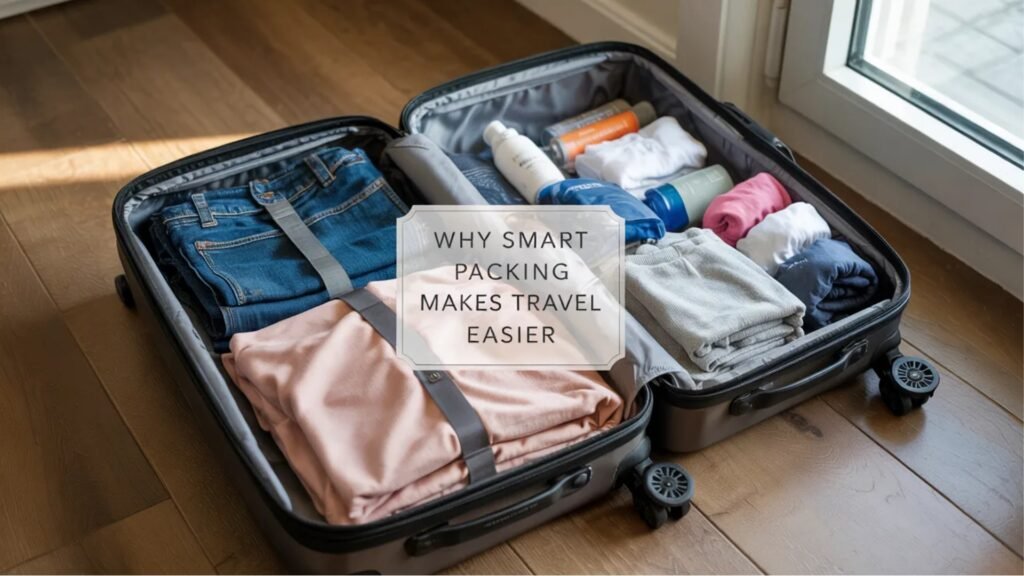
Why Smart Packing Makes Travel Easier
Alright, so first things first. Why does any of this even matter? Like, can’t you just throw stuff in a bag and figure it out at the airport?
Well… technically yes. But you really don’t want to.
Here’s what happens when you overpack — and I’ve seen this play out a hundred times, including with myself — you land somewhere exhausted, you’re dragging this 25-kilogram monster through a train station in Tokyo where the escalators are broken, you miss your stop because you couldn’t move fast enough, and suddenly the trip feels like a logistics exercise instead of an actual holiday. And trust me, that happens faster than you think it will. The weight of what you carry is not just physical. There’s this mental heaviness that comes with managing too much stuff across too many borders.
The whole point of getting your travel packing list right is freedom. That’s it. Just… freedom to move.
Benefits of Traveling With Carry-On Only
Here’s the simplest version: no checked bag means no baggage fees, no carousel wait, and basically no chance of your bag ending up in Frankfurt when you’re in Seoul.
Carry-on only travel saves you — this is a real number — somewhere between SGD 600 and SGD 1,440 a year if you’re doing six return trips and paying checked bag fees each time. That’s a whole additional trip to Japan. Gone. Or not gone, depending on whether you pack smart.
Changi Airport is honestly one of the best airports in the world and I still don’t want to be standing at the baggage carousel for 40 minutes when I could be in a taxi heading to my hotel. One bag travel means you walk off the plane, through the ICA e-gates (if you’ve got a Singapore passport, bless), and you’re out of the airport in under 15 minutes. Meanwhile the checked-bag crew is still watching the belt go around.
| What You’re Comparing | Checked Bag | Carry-On Only |
|---|---|---|
| Baggage fee on Scoot (per sector) | SGD 50–120 | SGD 0 |
| Carousel wait | 20–45 mins | 0 mins |
| Lost luggage risk | Real | Near zero |
| Changi exit speed | Slower | Fast |
| Physical strain on trip | High | Low |
| Airport flexibility | Limited | Maximum |
How Packing Light Saves Time and Money
Do the maths. Six trips a year. Two checked bag sectors per return trip. SGD 80 average. That’s SGD 960 a year, minimum. Just… gone. Packing light for travel isn’t being cheap — it’s literally redirecting that money toward the actual trip itself.
And there’s this other thing that nobody talks about enough. Minimalist travel packing makes decision-making easier. You have less to track, less to worry about, fewer “wait, where did I put my—” moments in a hotel room at midnight. Travel bloggers like Nomadic Matt have been saying this for years and they’re right. When you’ve got everything you need and nothing you don’t, travel feels almost effortless.
Almost.
Common Packing Mistakes Travellers Make
Oh man. Where to start with this one.
The biggest mistake — honestly, the one I see most often — is packing for the worst possible version of every scenario. People bring twelve outfits for a seven-day trip “just in case.” Just in case what? You spill something on yourself every single day? Okay well… if that’s genuinely you, pack some stain remover pens instead. Takes up way less room.
The second one is ignoring airline rules until you’re literally at the gate. Scoot is 54×38×23cm, 7kg. Singapore Airlines is 55×38×20cm, 7kg. AirAsia is similar. These aren’t guidelines. They’re hard limits and budget carriers enforce them with zero mercy, especially at peak travel periods. Packing a bag that’s “probably fine” is how you end up paying SGD 100 at the boarding gate at 6am.
| Mistake | Why It Keeps Happening | How to Fix It |
|---|---|---|
| Packing “just in case” stuff | Fear, basically | Build a real travel preparation checklist |
| Wrong clothes for the weather | Didn’t check the forecast | Look at 10-day weather before packing, always |
| Too many liquids | Grabbing full-size bottles | Decant into 100ml travel bottles at home |
| Shoes inside bag instead of on feet | Old habit | Wear your heaviest shoes through Changi security |
| No weight check before leaving | Overconfidence | Use a digital luggage scale every single trip |
| Duplicate items everywhere | No system | Packing cubes for travel solve this completely |
Essential Travel Packing Checklist
Okay so this is the foundation section. The stuff you actually need, organised in a way that makes sense for Singapore travellers specifically — because a lot of travel essentials checklist guides out there are written for Americans flying domestic or Europeans doing weekend hops. That’s not us.
We’re flying out of Changi. We’re dealing with CAAS liquids rules (same 100ml, one litre bag as TSA). We are going to Japan in February or Bali in June or London in October. The needs are different. So let’s go through it properly.
Important Travel Documents to Carry
Okay, documents. Non-negotiable starting point.
Your passport needs at least six months of validity past your travel dates. This sounds obvious but it catches people every single year — especially if you renewed in 2020 or 2021 and lost track of the expiry. Go check your passport right now. Seriously, this can wait. I’ll be here.
…Back? Good.
ICA’s online renewal portal is actually pretty smooth these days but it still takes time, so don’t leave it until two weeks before you fly. Carry physical printouts of your hotel booking for at least the first night, your travel insurance policy number, and any visa paperwork. Store digital backups in Google Drive or SingPass — both work fine offline once downloaded.
Singapore IC holders have it pretty good within ASEAN. Malaysia, Indonesia, Thailand, Brunei, Cambodia — you can often enter on your IC alone. But check MFA’s travel advisory page before you go because these things change and you don’t want to be the person arguing with an immigration officer about what you read on some blog.
A travel documents organiser — the slim ones from Shopee Singapore, usually under SGD 20 — hold your passport, cards, boarding pass, and a pen all in one place. Get one. Use it every trip.
Best Travel Wallets and Credit Cards
So, cards. This is actually kind of exciting to talk about because Singapore has some genuinely excellent travel credit cards and most people aren’t using them.
The DBS Altitude Card gives you 1.3 miles per SGD on overseas transactions and 3 miles on online flight bookings. The OCBC 90°N Card earns 2.1 miles per SGD overseas — one of the better earn rates around. And the UOB PRVI Miles Card is popular with people who fly a lot because of how broadly it earns across different categories.
But here’s the thing — you also want a multi-currency wallet for actual spending. YouTrip is honestly the one I recommend first to any Singapore traveller who hasn’t tried it. Load SGD, spend in JPY, EUR, USD, THB at interbank rates, zero conversion fees. It’s just… it works. Wise is a close second and arguably better for transfers. Revolut has its fans too.
One rule that I cannot stress enough: carry two cards from two different networks. Visa and Mastercard, ideally. Card machines fail. Banks block foreign transactions. It happens. Having a backup card isn’t paranoid — it’s just sensible.
A slim RFID-blocking wallet matters more than people think. Pickpocketing is less of a thing in Japan or Singapore, sure, but in busy European tourist areas or certain parts of Southeast Asia, card skimming and RFID theft is real. Spend SGD 30 on a decent travel wallet and sleep easier.
Must-Have Electronics for Travellers
Right. Electronics. This is where Singapore travellers tend to overpack because we love gadgets. I get it. I’m the same way.
But real talk — every electronic device takes up space and adds weight. And you’re working with a 7kg carry-on limit. So every item needs to genuinely earn its place.
Here’s what actually earns it. Your phone — obviously, non-negotiable. A Kindle for travel if you read at all — one device, hundreds of books, weeks of battery, weighs nothing. Noise-cancelling earbuds because budget flight engine noise is genuinely punishing over nine hours. A lightweight laptop if you work remotely or create content. That’s… honestly that’s probably your list. Unless you’re a photographer or videographer, in which case we’ll cover that later.
Oh — one thing that catches people: Singapore runs on 230V with Type G plugs (the three rectangular pin ones). Most of Asia, Europe, and the Americas use different voltages and plug shapes. A universal travel adapter is not optional. Get one that covers 150+ countries and has USB ports built in so you can ditch separate charging bricks. Epicka and BESTEK make solid ones.
Portable Chargers and Travel Adapters
CAAS rules — which apply to all Changi departures — cap portable chargers at 100Wh. In practice that’s roughly 20,000mAh at 3.7V. Anything larger needs pre-approval from the airline and most budget carriers just won’t allow it.
The Anker 737 20,000mAh sits right at the limit and is one of the best power banks you can get. The Baseus Blade 20,000mAh is flatter and packs more neatly. Either one is excellent.
Now — GaN chargers. If you haven’t switched yet, switch. Gallium Nitride technology means you get 65W–100W of charging power from a unit that’s roughly the size of a large matchbox. One GaN charger from Anker or Ugreen simultaneously charges your laptop, your phone, and your earbuds. It replaces three separate bricks with one tiny device. This is what smart luggage organisation actually means — every item doing multiple jobs.
| Device | Recommended Model | Weight | Why It’s Worth Packing |
|---|---|---|---|
| Power Bank | Anker 737 20K | 352g | 20,000mAh, 87W output, USB-C PD |
| GaN Charger | Ugreen 65W Nexode | 116g | Charges 3 devices at once |
| Universal Adapter | Epicka Universal | 135g | 150+ countries, USB ports included |
| eSIM | Airalo / Holafly | 0g (digital) | Data in 190+ countries, no physical SIM |
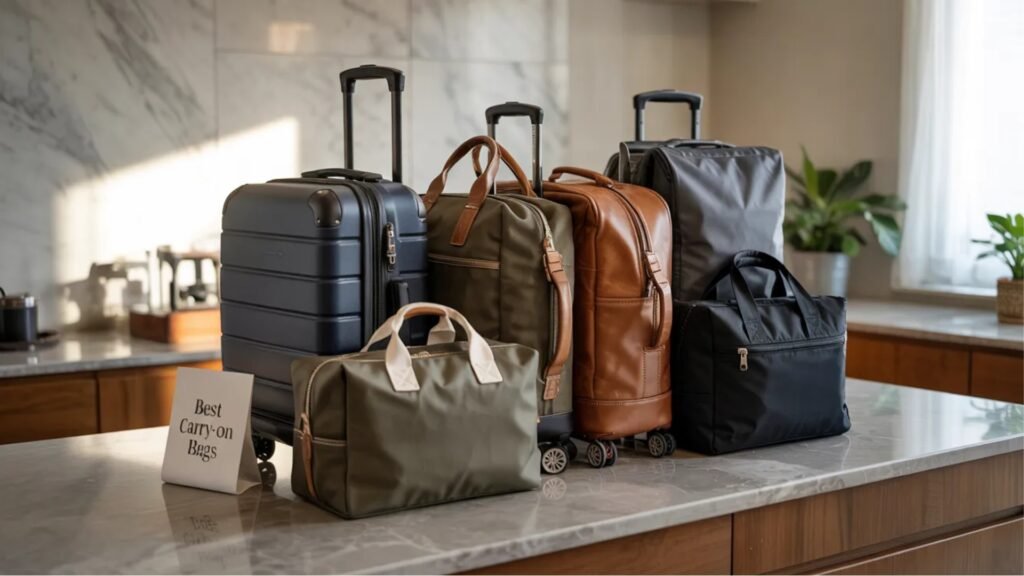
Best Carry-On Bags for Travel
The bag is everything. Genuinely. I’ve said this to every single person who’s asked me about packing and I’ll keep saying it — your bag is the decision that makes or breaks your entire packing system. Get it right and everything else clicks into place. Get it wrong and you’ll be fighting it every single trip for years.
Changi dimensional rules vary by airline. Scoot: 54×38×23cm, 7kg. Singapore Airlines: 55×38×20cm, 7kg. AirAsia: 56×36×23cm. The safest play is to buy a bag that fits within the strictest of those dimensions so you’re covered regardless of what you book.
Choosing the Right Carry-On Backpack
The best travel backpack debate is, honestly, endless. But for most Singapore travellers — people doing city trips to Tokyo, Seoul, Bangkok, Bali, London, not multi-day mountain treks — the clamshell-opening travel backpack wins.
Why? Because it opens like a suitcase. You can see everything at once. You can pack it methodically. and You can get through customs and hotel check-in without emptying the whole thing trying to find one document.
The Osprey Farpoint 40 is probably the most popular choice in Singapore’s travel community for good reason. Around SGD 200–250, hits the perfect weight-to-capacity ratio, excellent back ventilation (important when you’re sweating through a Bangkok afternoon), fits Changi’s overhead bins cleanly. The Nomatic Travel Pack is more premium at SGD 350+ and beloved by digital nomad travel gear people for its insane organisation system. The Peak Design Travel Backpack 45L is possibly the most thoughtfully designed travel bag ever made — but it’s expensive and heavy for what it is.
“The best bag is the one you forget you’re wearing.” — every experienced traveller ever, eventually.
For backpacking around the world long-term, Osprey Farpoint 40 remains the benchmark. You’ll see them everywhere on the road. There’s a reason for that.
Why Expandable Luggage Is Essential
Okay so here’s a very Singapore-specific problem. You leave home with a perfectly packed carry-on. You pass through Changi Jewel’s duty-free. and You spend a day in Tokyo’s Donki Hote. and You hit Myeongdong in Seoul. And suddenly your bag has a structural problem.
Expandable hard-shell carry-ons — the Samsonite Proxis, the Rimowa Essential — can open up an extra 2–3cm of capacity. Which sounds small but can genuinely save you from a gate-check situation.
But — and this is important — when expanded, these bags almost always exceed carry-on limits. So your options are: wear the extra stuff on your body, ship items home (Japan Post and K-Express are both cheap and reliable), or accept a checked bag fee on the return. Don’t try to bluff a Scoot gate agent with an expanded bag. It doesn’t end well.
Best Packing Cubes for Organisation
Okay if you’ve never used packing cubes for travel, this is your moment. They look almost embarrassingly simple — fabric cubes with zippers — but they transform your bag from chaos into a system you can execute in five minutes flat.
The method: one cube per category. Eagle Creek Pack-It cubes in different sizes are the gold standard. Large cube for tops. Medium for bottoms. Small for underwear and socks. Separate waterproof bag for anything wet or dirty. Compression cubes — double-zip, squeezes air out — can reduce clothing volume by up to 30%, which on a 7kg limit actually matters.
Here’s a sizing guide for a 40L bag:
| Cube Size | What Goes In | Good Brand |
|---|---|---|
| Large (L) | 4 tops / T-shirts | Eagle Creek Pack-It Specter |
| Medium (M) | 2–3 bottoms | Osprey Ultralight Packing Cube |
| Small (S) | 5 underwear + 5 socks | Monos Compressible Cube |
| Slim/Flat | Laptop, documents | Peak Design Packing Cube |
| Laundry Bag | Worn clothes (separated) | Sea to Summit Mesh Stuff Sack |
Foldable Duffel Bags for Extra Storage
Here’s one that almost nobody mentions but literally every experienced traveller does: carry a packable duffel.
Folded down, it weighs maybe 250 grams. Takes up the space of a water bottle. Unfold it and you’ve got a 25–40L bag that handles day trips, beach gear, market shopping, dirty laundry — anything. The Patagonia Black Hole 40L is virtually indestructible and weather-resistant. The REI Co-op Trail 25 is more affordable. Either way it’s one of the best travel packing hacks I know that costs almost nothing in weight or space.
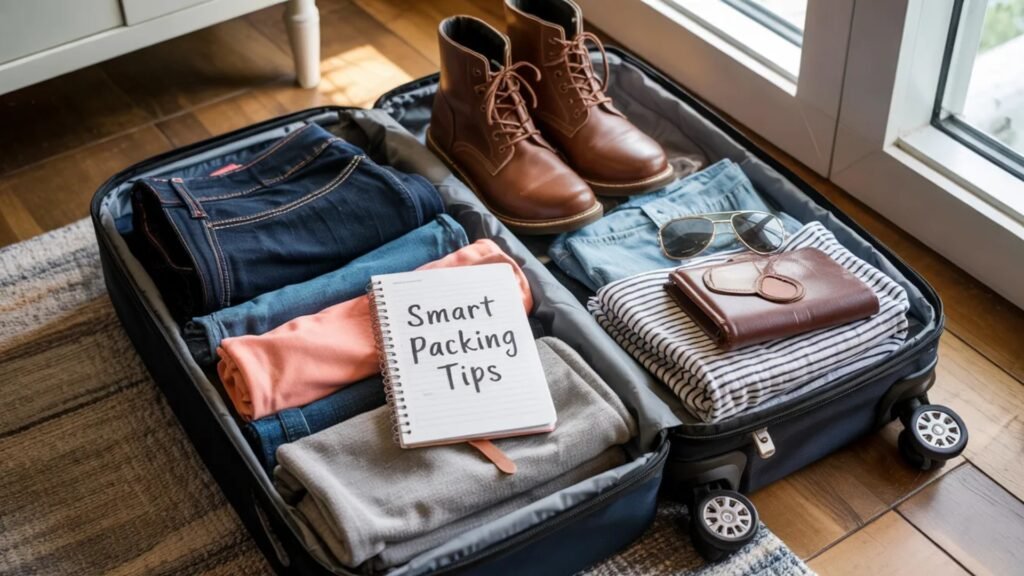
Smart Packing Tips for Every Traveller
Alright. This is the part where we talk about actual technique. The smart packing tips that make the difference between a bag that’s chaotic and a bag that works like clockwork, every single time.
How to Create a Packing Checklist
Three days before departure. Not the night before. Three days.
Open PackPoint or TripList (both free, both good) or even just your Notes app and work through this in order: where am I going, what’s the weather like for my actual travel dates, what am I actually doing each day, are there any formal occasions or special events.
Then build your packing checklist for vacation from those answers. Not from some generic online list. From your actual trip. The number of outfits you need is determined by how often you’ll do laundry, not by how long the trip is. More on that in a bit.
The template you build becomes your personal master list. After each trip, you update it — add the thing you forgot, cut the thing you never touched. After four or five trips, you’ll have a near-perfect personal system that takes about 30 minutes to execute and makes packing feel genuinely easy.
Packing Tips to Maximise Luggage Space
Folding versus rolling. This debate comes up every time and the answer is: rolling. Tight rolling. Not casual rolling — proper, firm rolling that compresses air out of the fabric as you go. T-shirts, shorts, light pants — roll everything. Thicker items like jeans go flat inside their cube because they don’t compress well from rolling.
The luggage space saving tips that actually move the needle:
Stuff your socks inside your shoes. Not around them — inside them. This fills dead space that would otherwise just be air. Wear your heaviest, bulkiest items through Changi security on departure day. Your thickest jacket, your chunky shoes, your heaviest sweater. None of that counts toward your bag weight if it’s on your body. This single trick can save 1.5 to 2 kilograms on a cold-weather trip.
For down jackets, use compression bags — actual vacuum-style ones, not cubes. The Matador FlatPak system is excellent here. Reduces volume by up to 60% on puffy jackets.
Travel bag organisation becomes second nature once you have a real system. Everything has a home. Nothing floats loose. Packing takes the same amount of time every trip.
How to Keep Your Carry-On Organised
Organisation isn’t about being neat for the sake of it. It’s about being able to find anything within ten seconds, whether you’re at a gate at Changi or digging through your bag in a Tokyo coin locker.
Colour-coded packing cubes: step one. The “grab zone” at the top of your bag or in the front pocket: step two. This holds only the things you need quick access to — boarding pass, phone charger, earbuds, a snack, your documents organiser. Nothing else lives there.
Dirty laundry bag: step three. Sea to Summit mesh sack works perfectly. Dirty clothes go in there immediately, never back in with the clean stuff. You always know exactly what’s clean and what’s not, which is weirdly important to your mental clarity on longer trips.
Here’s the one most packing tips for travelers guides skip: keep a permanently pre-packed toiletry kit. If you travel more than four times a year, maintain a second set of toiletries — toothbrush, travel toothpaste, razors, miniature shampoo, small moisturiser — permanently packed and ready to grab. Trip comes up? You grab the kit and go. No scrambling through your bathroom at midnight.
Plane Comfort Essentials You Should Pack
Long-haul from Singapore is genuinely long. SIN–JFK on Singapore Airlines is over 18 hours. SIN–London is 13.5. Even SIN–Tokyo, which feels “short” relative to those, is seven hours.
Compression socks first. I know they sound medical and boring. But sitting immobile for 8–18 hours significantly increases DVT risk and compression socks — worn from the gate, not when you’re already swollen — actually reduce that risk in a measurable way. CEP and Sockwell make ones that don’t look like hospital equipment.
Inflatable neck pillow. The Trtl Pillow Plus collapses to nothing in your bag but genuinely supports your neck in a way the horseshoe-shaped ones never do. A reusable water bottle filled post-security keeps you hydrated — aircraft cabin humidity runs at 10–15%, which is drier than most deserts and absolutely destroys your skin and sinuses over a long flight. Melatonin from Guardian or Watsons helps reset your body clock on long east-west flights. Lip balm. Small facial mist spray under 100ml. These things sound small but over an 18-hour flight they’re the difference between arriving feeling okay and arriving feeling like you’ve been through something.
Why a Plane Pouch Makes Security Easier
Changi security is fast. But it’s still a process. The people who get through fastest are the ones who’ve pre-organised everything that needs to come out of their bag before they reach the conveyor belt.
A plane pouch — slim, flat, lives at the very top of your carry-on — holds your liquids bag, passport, boarding pass, earbuds, phone charger, and a snack. At security you pull out one pouch, your laptop, and your jacket. Three things. Everything else stays in the bag. Done in under two minutes.
The Bellroy Venture Ready Pouch is excellent for this. So is the Aer Day Sling 2. Both are available in Singapore or via Bellroy’s online store with delivery here. This is genuinely one of those travel packing hacks that sounds trivial until you’ve used it and then you can’t imagine not having it.
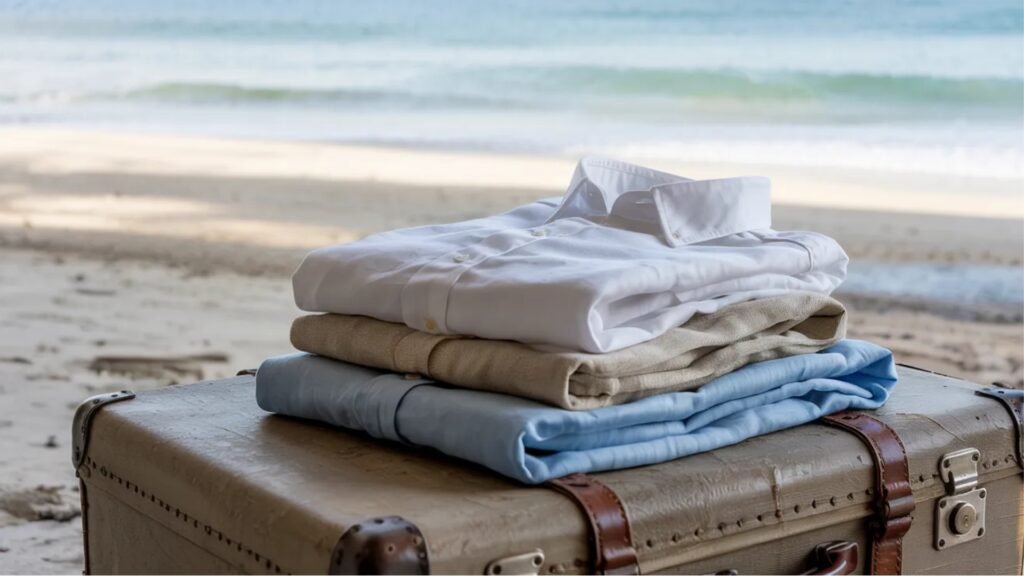
Lightweight Clothing Essentials for Travel
Okay so here’s the thing about being a Singapore traveller that’s kind of unique. We leave here in 32°C heat. We might land somewhere in minus five. Or we do a trip that goes Tokyo in February (cold), then Bali (absolutely not cold), then Seoul in March (still pretty cold). All in two weeks. All in one bag.
This is the clothing section. And it requires actual strategic thinking.
Best Travel Clothes for Any Climate
Merino wool. That’s the answer. Before you scroll past thinking about itchy Christmas jumpers — modern travel merino is nothing like that. It’s lighter than a cotton T-shirt. Soft against skin. Naturally antimicrobial, meaning it doesn’t smell after a full day of wearing. And it regulates temperature across a surprisingly wide range — you stay comfortable in it from about 15°C up to 25°C without layering.
Unbound Merino (Canadian brand, ships internationally, very popular with Singapore travel creators) makes the benchmark travel merino. Icebreaker and Smartwool are close behind. For seriously hot and humid destinations — Bali, Vietnam, Thailand, anywhere the humidity is aggressive — Uniqlo Airism is probably the most Singapore-appropriate travel fabric ever made. Available everywhere here, moisture-wicking, fast-drying, feels like wearing nothing in tropical heat. Pair with quick-dry nylon-blend travel pants from Outlier or Bluffworks and you’ve got an outfit that works from beach town to business dinner.
The minimalist travel wardrobe rule: every top must work with every bottom. Every layer must fit under or over everything else. Four tops plus two bottoms equals eight possible outfits, not six. Neutrals — navy, grey, olive, black, white — make this effortless.
Lightweight Jackets and Rain Gear
Every trip needs rain protection. Every trip. Even “dry season” destinations get unexpected rain. Singapore travellers transiting through Bangkok or KL know this intimately — you can go from blazing sunshine to absolute monsoon in about twenty minutes.
A packable rain jacket that compresses into its own pocket is one of the best investments in your entire travel gear checklist. The Patagonia Torrentshell 3L weighs about 200 grams and is genuinely waterproof, not just water-resistant — there’s a difference. The Arc’teryx Norvan SL is lighter but pricier. For budget-conscious travellers, Decathlon’s Forclaz 100 (available at all Singapore Decathlon stores, very affordable) provides solid rain protection.
For cold destinations, the Uniqlo Ultra Light Down jacket is the best value packable mid-layer on the market. Available in Singapore from around SGD 59. Packs into its own stuff sack. Adds meaningful warmth without meaningful weight or space.
Comfortable Shoes for Long Trips
Two pairs. Maximum. That’s your carry-on shoe budget and even two pairs requires discipline elsewhere.
Primary pair: what you wear on the plane. Secondary pair: flexibility depending on your itinerary — sandals for warm destinations, a smarter shoe for mixed itineraries. Allbirds Tree Runners have a loyal following among Singapore frequent travellers because they’re lightweight, machine-washable, packable, and look just presentable enough for a casual dinner. Birkenstock Arizonas for warm trips — sturdy enough for day-long walking, pack without deforming.
Wear your heaviest pair through Changi security on departure. They’re on your feet, not in your bag — that’s potentially 800g to 1.2kg of carry-on weight saved for other essentials.
Cold Weather Travel Clothing Checklist
Singapore travellers heading to Japan in winter, UK in autumn, or Northern Europe in December — the layering system is your solution. Three layers that pack to roughly the volume of one bulky winter coat, and provide more warmth because of the trapped air between them.
| Layer | Item | Weight | Warmth |
|---|---|---|---|
| Base top | Icebreaker 175 Merino | 180g | ★★★☆☆ |
| Base bottom | Uniqlo Heattech Extra Warm | 160g | ★★★★☆ |
| Mid Layer | Uniqlo Ultra Light Down | 250g | ★★★★☆ |
| Outer Shell | Patagonia Torrentshell 3L | 200g | ★★★★★ |
| Total weight | Complete winter system | 790g | ★★★★★ |
790 grams. For a full winter clothing system. That’s less than most single winter jackets weigh.
Travel Toiletries and Personal Care Essentials
The toiletries section of your travel packing list is honestly where most people either massively overpack or completely wing it and regret it. Both approaches cause problems.
Overpack and you’re lugging 600 grams of liquids through every airport. Wing it and you’re paying SGD 18 for a tiny tube of moisturiser at a convenience store near Narita at midnight because you forgot your face is dry from the flight.
CAAS — Civil Aviation Authority of Singapore — follows the same 100ml per container, one-litre resealable clear bag rule for departing flights. Know this cold. Changi security will pull you aside if your liquids bag is overstuffed.
TSA-Friendly Toiletries to Pack
Decant. Don’t buy travel-size. Decanting from your full-size products at home into reusable 100ml bottles is cheaper, more sustainable, and means you get exactly the products you actually like.
Muji Travel Bottles — available at any Muji Singapore (Plaza Singapura, ION, Bugis Junction) — are exceptional quality for the price. Fill them with your usual shampoo, conditioner, face wash, moisturiser, body wash. Your SPF 50 sunscreen is important — as Singapore travellers, most of us have sun protection built into our skincare routine and you don’t want to compromise that on a beach trip to Bali or an outdoor trip through Japan.
Stock up on travel-size items at Guardian or Watsons before you go — much better value than grabbing them in Changi’s departure halls. Your travel toiletries checklist should include: dental basics (travel toothbrush, travel toothpaste under 100ml, floss), skincare (SPF 50, moisturiser, face wash, micellar water), hair (100ml shampoo + conditioner or a 2-in-1), body (solid deodorant — no liquid rules — and 100ml body wash).
Eco-Friendly Travel Toiletries
Eco-friendly travel toiletries have come a long way in the last few years and honestly they’re often better for packing too, not just for the planet.
Solid shampoo bars from Lush (the Orchard ION store is excellent) or Ethique eliminate the liquids issue entirely — they’re solid, so they’re not subject to the 100ml rule at all. One bar lasts 60–80 washes. That’s longer than almost any trip you’ll take. Bamboo toothbrushes from The Source Bulk Foods on Haji Lane (a genuinely excellent zero-waste shop worth visiting). Zero-waste deodorant in compostable cardboard. Beeswax wraps instead of cling film for food.
This stuff aligns with Singapore’s Zero Waste Masterplan 2030 and is increasingly expected by accommodation and tour operators across Japan, Europe, and Southeast Asia. And it genuinely packs more compactly than conventional equivalents. Win-win.
Compact Medical Kit Essentials
The travel medical kit is the one area where you absolutely don’t want to be underprepared.
Imagine this. It’s 3am in a random city. Your stomach is doing things it’s never done before. The pharmacies are closed. You don’t speak the language well enough to explain what you need. You have nothing.
That’s preventable with ten minutes of preparation before you leave home.
Pack in a ziplock or a flat first aid tin: paracetamol and ibuprofen, antihistamine (Zyrtec is the Singapore traveller favourite), band-aids in assorted sizes, antiseptic cream, hand sanitizer at 60%+ alcohol in a 50ml bottle, oral rehydration salts (Pocari Sweat powder sachets work brilliantly), blister plasters (Compeed — get them at Guardian — are dramatically better than regular plasters for blisters). Any prescription medication travels in your carry-on always, with a signed GP letter if it’s a controlled substance.
For longer trips or destinations with uncertain medical access, travel insurance with medical evacuation coverage is worth it. SafetyWing, World Nomads, and InsureMyTrip are all well-regarded — SafetyWing has become particularly popular with Singapore-based digital nomads for its affordable nomad health insurance product.
Never check your medications. Ever. Always carry-on.
Reusable Products to Avoid Plastic Waste
Since Singapore’s plastic bag charge came in, most of us are carrying reusable bags as a default anyway. Bring that habit on the road.
A lightweight foldable tote (Muji’s pocket-size ones are SGD 2.90 and perfect), reusable water bottle, Stasher silicone bags (triple-duty: toiletry organiser, snack storage, cable organiser), bamboo straw if you need one. These things are lighter and more compact than their single-use equivalents, which makes them better for your bag and better for the planet simultaneously.
Best Travel Gear and Accessories
Gear is where the debate between value and quality lives. And honestly? Some stuff genuinely justifies the price. Some of it is just expensive packaging. This section is going to tell you which is which.
Noise-Canceling Headphones for Flights
Over-ear versus in-ear. The answer depends on your priorities.
If you’re doing a lot of long-haul — regular SIN–London or SIN–JFK or similar — over-ear headphones with industry-leading ANC are worth their weight in sanity. The Sony WH-1000XM6 is the current benchmark: 30-hour battery, best-in-class noise cancellation, comfortable enough for a full 18-hour flight. Around SGD 470 locally. The Bose QC45 is a close alternative at SGD 380 with slightly different sound signature.
If bag space is tight and you’re doing shorter or more frequent trips — weekly KL hops, regional Asia flights — the Sony WF-1000XM5 IEMs give you 90% of the ANC performance in a case that fits in your jacket pocket. AirPods Pro 2 are excellent if you’re already in the Apple ecosystem.
One practical note: some older aircraft on Singapore Airlines and regional carriers still only have 3.5mm headphone jacks. Carry a USB-C or Lightning to 3.5mm adapter. It weighs nothing and saves you from watching your seatback screen in silence.
| Model | Type | ANC | Battery | Price (SGD) |
|---|---|---|---|---|
| Sony WH-1000XM6 | Over-ear | ★★★★★ | 30hr | ~SGD 470 |
| Bose QC45 | Over-ear | ★★★★★ | 24hr | ~SGD 380 |
| Sony WF-1000XM5 | In-ear | ★★★★☆ | 8hr + 36hr case | ~SGD 320 |
| AirPods Pro 2 | In-ear | ★★★★☆ | 6hr + 30hr case | ~SGD 380 |
Best Travel Locks for Security
TSA-approved combination locks for checked bags. For carry-on-only travel, locks become more relevant for hostel lockers than for the bag itself.
Pacsafe makes the most respected travel security products around — their combination locks are TSA-approved and built to last. Forge locks are a solid budget option on Shopee and Lazada Singapore. If you’re hostel-travelling or staying in places with shared storage, a cable lock that threads through your bag zippers and around a fixed object is worth adding.
Portable Water Bottles for Travellers
Changi Airport has water bottle refill stations in all four terminals. They’re clearly signposted, the water is Singapore-quality (excellent), and filling up post-security saves you SGD 3–4 on a bottle of water and eliminates one piece of plastic from the waste stream.
Hydro Flask 24oz — keeps water cold 24 hours, hot 12 hours, genuinely indestructible, lifetime warranty. Hydaway Bottle — collapsible, folds to 4cm when empty, extraordinary space efficiency. For destinations with uncertain water quality — parts of Southeast Asia, rural areas anywhere — a LifeStraw water filter bottle lets you drink from almost any water source safely. 65 grams. Takes up almost no space. Could genuinely be important in the right situation.
Travel Tech Accessories Worth Packing
eSIM for international travel is the biggest upgrade most Singapore travellers haven’t made yet. Instead of buying a local SIM at every airport (often expensive, always time-consuming) or paying Singtel/StarHub/M1 roaming rates, you download a data eSIM from Airalo or Holafly before you depart. 190+ countries covered. Data plans from USD 4.50 for a week. Instant activation. If your phone is eSIM-compatible (iPhone XS and later, most flagship Androids from 2020 onward), there’s no reason not to use this.
Apple AirTags or Tile Trackers in every bag. Your carry-on and your personal item both get one. In the unlikely event something goes wrong, you have a fighting chance.
A USB-C hub (Anker makes compact, reliable ones) that gives you HDMI, USB-A, USB-C, and SD card reader from one device transforms your laptop into a proper workstation anywhere. Essential for digital nomad travel gear setups or anyone who needs to present or edit content on the road.
Travel Photography and Digital Essentials
Singapore has a genuinely active travel content community — Instagram, TikTok, YouTube — and if you’re creating content while you travel, your travel camera gear decisions directly eat into your weight budget. Every gram you spend on camera equipment is a gram taken away from something else.
Best Cameras for Travel Photography
The Fujifilm X100VI is the current darling of the travel photography world and for good reason. Fixed lens, extraordinary image quality, genuinely pocketable, beautiful film simulation modes. Around SGD 2,200. It’s replaced a camera body plus multiple lenses for a lot of Singapore travel photographers, which actually saves weight overall.
For video content creators, the DJI Osmo Action 5 (around SGD 380) is near-perfect: 4K at 120fps, excellent stabilisation, waterproof to 20 metres, genuinely tiny. For smartphone shooters — the Samsung Galaxy S25 Ultra and iPhone 16 Pro both deliver professional-grade photography without adding anything to your pack weight.
Critical rule: spare camera batteries go in your carry-on. Always. CAAS and IATA both prohibit lithium batteries in checked luggage. This is a safety rule, not a suggestion.
Lightweight Laptop Setup for Travellers
The M4 MacBook Air weighs 1.24 kilograms. In the context of a 7kg carry-on limit, that’s a meaningful chunk — but for remote workers or content creators, it genuinely earns that weight. Fanless, silent, runs cool, incredible battery life.
LG Gram 14 and ASUS Zenbook 14 OLED are excellent Windows alternatives at similar weight. Pair with a Samsung T9 SSD (500GB, 88 grams) for photo and video backup, and set up automatic cloud sync via Google One or iCloud+ over hotel Wi-Fi each night. Three-copy backup system — laptop, external SSD, cloud — protects everything from any single point of failure.
Organising Cables and Accessories Efficiently
Cables have weight. If you’re carrying a laptop cable, phone cable, watch cable, earbuds cable, camera cable — that’s 300–400 grams in cables alone, if you’re not managing it.
Standardise on USB-C wherever possible. One GaN charger plus one good USB-C cable charges your laptop, phone, earbuds, and power bank simultaneously. That’s five separate chargers replaced by two items.
A cable organiser roll — the Bellroy Cable Organiser Roll is widely considered the best on the market, available at Harvey Norman and other Bellroy stockists in Singapore — keeps everything tidy and means zero untangling every morning. Velcro cable ties, not zip ties. Reusable, silent, don’t damage cables over time.
Carry-On Packing List for 1 Week or More
The biggest myth in travel packing: “You can’t do more than a week without a checked bag.”
False. Completely false.
Thousands of long-term travellers — including Singapore frequent flyers doing two-week Japan trips or month-long Europe circuits — do it carry-on only every single time. The secret isn’t what you pack. It’s the laundry strategy.
Minimalist Packing Strategy for Long Trips
The 5-4-3-2-1 method: five pairs of underwear and socks, four tops, three bottoms, two pairs of shoes, one jacket. That’s it. That’s your wardrobe for any trip of any length.
How does a five-item wardrobe cover a two-week trip? Laundry. Do laundry every four to five days and you have infinite outfits. Merino wool washes in a hotel sink and dries overnight. Hotel laundry services in Japan, Vietnam, and Thailand are cheap and widely available. Coin laundromats are everywhere in any city. You stop worrying about running out of clothes because you literally can’t run out when you’re doing laundry.
Leave 20% of your bag empty when you depart. Singapore travellers, with our reputation for appreciating a good shopping opportunity, will always find something worth bringing home. An 80%-packed bag at departure comes home comfortably full, not bursting.
What to Pack for International Travel
The international travel packing list is destination-specific, and Singapore passport holders have genuinely remarkable access — visa-free or visa-on-arrival to 192 countries as of 2026. But visa-free doesn’t mean document-free.
Japan: Download VisitJapan Web before arrival for faster immigration. Get an IC Suica card. Carry cash yen — Japan is still very cash-preferred outside major tourist zones. Europe/Schengen: Travel insurance with minimum €30,000 medical coverage is legally required for Schengen entry. The Wise Card handles multi-currency spending efficiently. USA: ESTA approval (apply at esta.cbp.dhs.gov — not third-party sites) lasts two years. Print a copy. Australia: ETA via the official app before departure.
Always check MFA’s travel advisory page within 72 hours of departure. Entry requirements have changed repeatedly in recent years and continue to evolve.
In-Transit Outfit Essentials
Your in-transit outfit works harder than any other outfit on the trip. It goes through Changi security, sits in a seat for potentially 18 hours, arrives in a foreign country, navigates public transport or taxi queues, and then finally gets to rest when you check in.
It needs to do all of that while keeping you comfortable and looking like a human being at the end of it.
Optimal formula: merino wool T-shirt (regulates temperature, doesn’t smell after a full travel day), slim stretchy travel chinos or comfortable joggers with pockets, slip-on shoes with no metal components for easy security screening, a lightweight hoodie or travel jacket for aircraft air conditioning, compression socks worn from the gate. This outfit handles Singapore’s 32°C departure heat, the cold of the aircraft, and wherever you’re landing without requiring you to dig through your bag midflight.
How to Pack for Multiple Destinations
Multi-destination trips — Singapore to Tokyo to Seoul to Osaka, for instance, or Paris to Amsterdam to Berlin — need a more nuanced approach than single-destination packing.
The climate-band system is what works best. Instead of packing by outfit, pack by climate zone. All cold-weather layers go in one packing cube. All warm-weather items in another. When you move from a cold city to a warm one, you swap the cubes — cold-weather items go to the bottom of the bag, warm-weather items come to the top. Takes three minutes. Eliminates the need to repack entirely.
Research laundry options for each city before you go. Japan has coin laundromats (コインランドリー) in virtually every neighbourhood, usually cheap and 24-hour. Vietnam and Thailand have cheap hotel laundry. Seoul guesthouses often have facilities. Knowing your options removes the psychological pressure that causes overpacking in the first place.
Frequently Asked Questions About Packing
These are the questions that come up constantly in Singapore travel communities — Reddit’s r/singapore, travel WhatsApp groups, Changi airport frequent flyer forums. Let’s answer them properly.
What Is the Best Carry-On Size?
The safest dimensions — covering all major airlines operating from Changi — are 54×38×20cm. This fits within Scoot’s 54×38×23cm limit, SQ’s 55×38×20cm limit, and AirAsia’s 56×36×23cm limit. For backpacks, a 40–45L capacity typically corresponds to these dimensions when the bag isn’t over-stuffed.
Measure your bag when you buy it. Then measure it again packed. Bags bulge when full and a bag measuring 20cm empty can measure 24cm stuffed — which means it won’t close a full overhead bin and you’ll be asked to gate-check it. A digital luggage scale (under SGD 15 on Shopee) and a tape measure are the two tools that prevent every baggage drama at Changi.
How Many Outfits Should You Pack?
Three to four. For any trip length.
The maths works like this: three outfits plus laundry every three to four days equals unlimited trip duration. The number of outfits doesn’t change — the laundry strategy does. For a five-day trip you might not need to do laundry at all. For two weeks, you’ll do it once or twice. and For a month, it becomes a weekly routine. The bag weight stays exactly the same.
Can You Travel With Carry-On Only?
Yes. For any trip length. Completely.
The psychological barrier to one bag travel is almost entirely mental. Once you’ve done one successful carry-on-only trip from Singapore — even a short one, a weekend to Kuala Lumpur — and you’ve walked straight out of KLIA2 while the checked-bag crowd waits at the carousel, you won’t want to check a bag again. That feeling is real and it compounds every trip.
If you’re still not sure, test it on a short trip first. Four days to Bangkok. Follow the clothing formula in this guide, try the laundry approach, see how it feels. The conversion rate is very high among Singapore travellers who try this properly.
What Should Always Be in Your Personal Item?
Your personal item — the under-seat bag you carry in addition to your main carry-on — is your “if everything else goes wrong” bag. It holds everything you can’t afford to lose and everything you need to access during the flight without opening the overhead bin.
What goes in it: passport holder with passport, Singapore IC, and boarding passes. Phone and earbuds. Portable phone charger with USB-C cable. Prescription medications. A credit card and some local currency cash. A light layer for aircraft air conditioning. A snack. Your sleep kit for long-haul: eye mask, neck pillow, melatonin.
Think about it this way: if your overhead bag somehow disappeared — everything in your personal item is what gets you through the next 24 hours until the situation resolves. Pack it with that in mind.
Final Thoughts on Packing Smart
There’s a type of traveller you see in every airport. Moving through Changi like water. No drag, no stress, no desperate rearranging at the gate. One bag. Relaxed. That’s not luck or talent — it’s a system that took a few trips to build and now runs automatically.
That’s what this travel packing list guide has been building toward the whole time.
Pack Less and Travel Better
When everything you need fits in one bag on your back, you can do anything. Change your plans. Take the unexpected detour. Hop on a train you didn’t book. Say yes to an invitation you didn’t anticipate.
None of that is possible when you’re managing 25 kilograms of checked luggage across multiple connections. The freedom of packing light for travel is real, it’s immediate, and it changes what travel actually feels like on the ground.
The best souvenir from any trip is the experience of moving freely and seeing things you didn’t plan to see. That doesn’t require a big bag. It requires a clear head.
Building the Perfect Travel Packing Routine
Three days before departure. Not the night before. Three days.
Open your personal checklist. Cross-reference with the destination weather forecast. Lay everything you’re considering on your bed — every single item — before anything goes into the bag.
Then edit. For every item on the bed: “Will I definitely use this more than once?” If the answer isn’t yes, it goes back. Pack what remains. Weigh the bag. If you’re over the limit, remove in reverse order of certainty until you’re comfortably under.
Then don’t touch it.
The permanently pre-packed toiletry kit — keep a full second set of travel toiletries permanently packed and ready to grab. Trip comes up, you grab the kit. Trip ends, you refill the bottles. Once you build this habit, packing becomes something that takes 30 minutes and feels almost effortless.
Essential Travel Habits for Stress-Free Trips
Check in online the moment it opens — usually 48 hours before departure. Download the airline app and save your boarding pass both digitally and as a screenshot saved offline. Share your itinerary with someone at home. Charge every device the night before.
For carry-on-only Singapore passport holders using e-gates: 90 minutes at Changi is comfortable. Foreign passport or budget carrier: 2.5 hours. Don’t cut it closer than that.
These habits, combined with the smart packing tips throughout this guide, mean every departure from Singapore is calm. Every arrival is smooth. Every trip has room for the unexpected.
Travel smarter. Pack less. Experience more.
Quick Reference: Master Travel Packing Checklist for 2026
Documents Your passport (6+ months validity), Singapore IC, copies of hotel bookings, travel insurance policy, visa paperwork, ESTA or ETA if applicable, travel documents organiser, passport holder.
Money & Cards Primary travel card (DBS Altitude / OCBC 90°N / UOB PRVI Miles), backup card on different network, YouTrip or Wise loaded with SGD, local currency cash for arrival.
Electronics Smartphone, Kindle for travel, noise-cancelling earbuds or headphones, laptop if needed, USB-C cables (standardised), GaN multi-port charger, external battery pack (under 100Wh), universal travel adapter, eSIM activated via Airalo or Holafly, AirTag or Tile in each bag.
Clothing — 3 to 4 outfit formula 5 underwear and 5 socks, 4 tops (3 casual, 1 smart-casual), 2 bottoms, 1 packable rain-resistant jacket, 2 pairs of shoes (one worn, one packed), compression socks for the flight, light layer for aircraft.
Toiletries — 100ml rule applied Shampoo and conditioner in 100ml decant bottles, face wash, moisturiser, SPF 50 sunscreen, solid deodorant, travel-size toothbrush, travel toothpaste, floss.
Medical Kit Paracetamol, Ibuprofen, antihistamine (Zyrtec), band-aids assorted, antiseptic cream (Savlon), hand sanitizer 50ml at 60%+ alcohol, oral rehydration salts, blister plasters (Compeed), prescribed medications with GP letter.
Packing Organisation 3 to 4 packing cubes by category, dirty laundry bag, compact toiletry bag, ziplock bags (2–3 spare), packable duffel bag, digital luggage scale.
In-Flight Comfort Inflatable neck pillow, eye mask, compression socks worn from the gate, lip balm, mini facial mist under 100ml, melatonin, healthy snack, reusable water bottle empty for security.
Safety Travel lock (TSA-approved), AirTag in each bag, travel insurance documentation, emergency contacts written on paper, knowledge of local emergency numbers at destination.
Photography (if relevant) Camera body, one or two lenses, spare batteries in carry-on (never checked), SD cards, lens cloth, compact tripod or GorillaPod, charging solution.