
Chinatown Singapore Guide (2026) – Best Things to Do, Food, Temples & Travel Tips
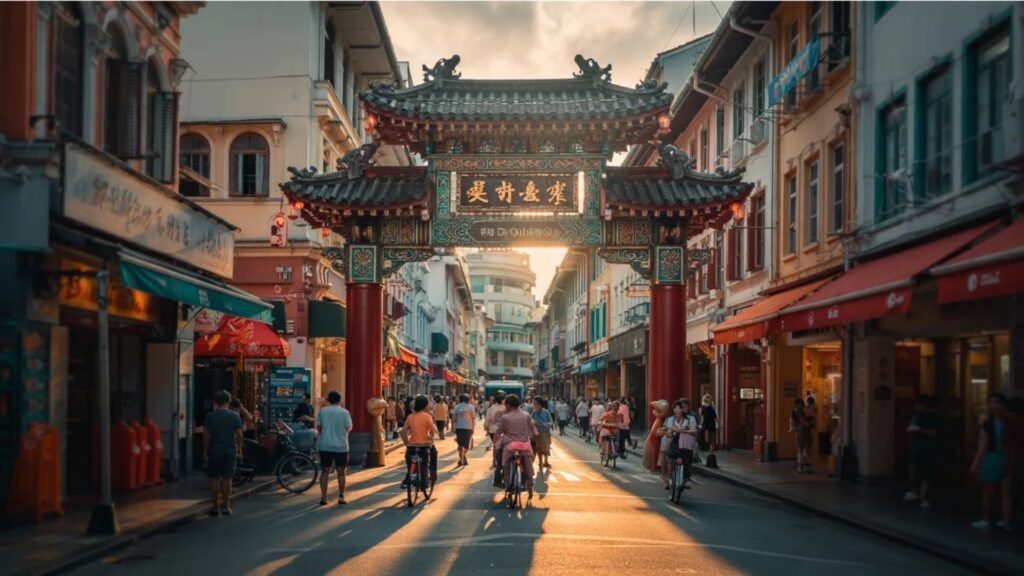
you’re planning a trip to chinatown singapore. Good choice. Honestly, really good choice. This pocket-sized neighbourhood packs more flavour, history, and pure sensory overload than most cities manage in an entire district. You’ve got ancient temples sitting right next to neon-lit street stalls. You’ve got a Michelin-starred hawker stall charging less than your morning coffee. and You’ve got incense smoke drifting past third-wave espresso bars like it’s the most normal thing in the world. Because here? It is.
This guide covers everything — the food, the temples, the hidden alleys, the transport, and yes, even where to sleep. Whether you’re a first-timer landing at Changi with zero plans, or a Singapore local who somehow hasn’t explored this neighbourhood properly yet, this is the guide you’ve been looking for. No fluff. No tourist-board clichés. Just real, useful advice from someone who’s eaten too much chicken rice and doesn’t regret a single bite.
Why Visit Chinatown in Singapore? (Quick Overview)
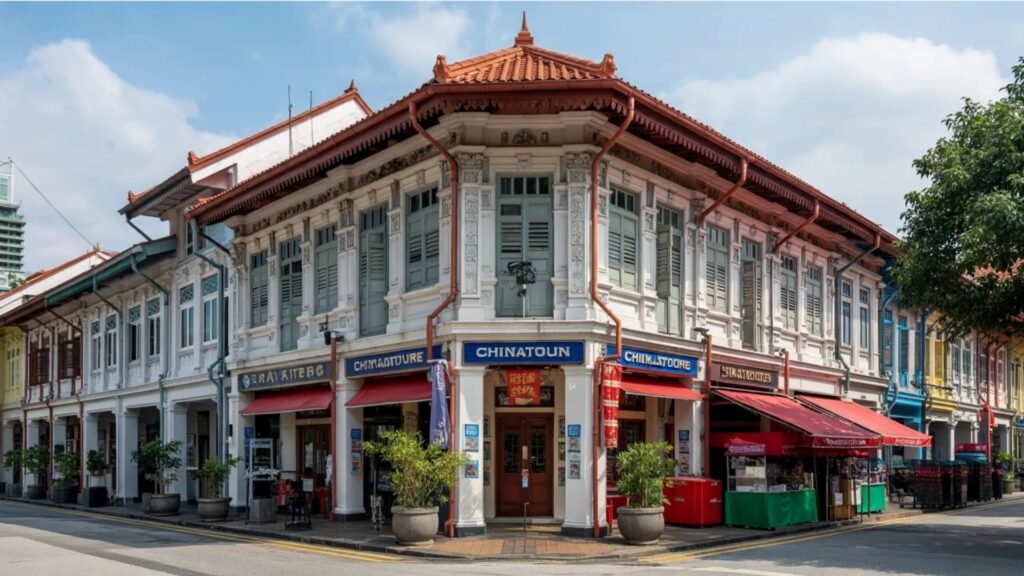
Look, chinatown singapore doesn’t need much of an introduction. But here’s the thing — a lot of people either rush through it in two hours or skip it entirely because they’ve heard it’s “too touristy.” Both are mistakes. This neighbourhood rewards slow, curious visitors more than almost anywhere else on the island. It’s walkable, affordable, and genuinely layered — meaning the more time you spend, the more you find.
The Chinatown Singapore attractions range from century-old temples to hole-in-the-wall dessert spots that only locals know about. And unlike some Singapore tourist zones that feel a bit curated and hollow, Chinatown still functions as a real, living neighbourhood. People eat here every day. They pray here. They run businesses in the same shophouses their grandparents did. That authenticity? That’s the real attraction.
History & Cultural Significance
Well, you know, none of this happened by accident. Back in 1822, Sir Stamford Raffles drew up what’s called the Raffles Town Plan — basically Singapore’s first zoning map. He allocated this specific patch of land to the Chinese community, which at the time was flooding into Singapore from provinces like Fujian, Guangdong, and beyond. Hokkien, Cantonese, Hakka, Teochew — different dialects, different customs, same burning ambition to build something new.
| Chinese Dialect Group | Original Region | Legacy in Chinatown |
|---|---|---|
| Hokkien | Fujian Province | Thian Hock Keng Temple, clan associations |
| Cantonese | Guangdong Province | Opera, medicine halls, cuisine |
| Hakka | Multiple provinces | Trades, leather, commerce |
| Teochew | Eastern Guangdong | Food culture, merchant families |
Those early immigrants built Chinatown heritage sites that still stand today — cultural landmarks Singapore residents genuinely treasure. The Singapore religious sites here aren’t museum pieces. They’re active. Incense burns daily. Devotees come every morning. History isn’t behind glass here; it’s still happening.
What Makes Chinatown Unique in 2026
Okay so here’s what’s changed recently, and honestly it’s exciting. The 2026 version of chinatown singapore looks a little different from what your travel brochure might suggest. New pedestrian-friendly zones have opened up, making street-level exploration way more comfortable. Specialty coffee shops and Japanese-style dessert bars have moved into restored shophouses — right next door to medical halls selling century-old herbal remedies. It sounds like it shouldn’t work. Somehow it really does.
The Chinatown cultural experience in 2026 sits at this fascinating crossroads between preservation and reinvention. The Singapore Chinatown highlights still include all the classics — the temples, the night market buzz, the hawker heritage. But now there’s this new creative energy layered on top. Young designers, indie restaurateurs, craft cocktail makers — they’ve chosen Chinatown specifically because of its character, not despite it. It’s no longer just a heritage zone. It’s a destination with genuine contemporary edge.
Top Things to Do in Chinatown Singapore
The things to do in Chinatown Singapore list is genuinely long. And that’s the problem, actually — first-time visitors often try to do everything in a morning, get overwhelmed, and leave feeling like they missed something. You did. You missed a lot. So let’s slow down and actually cover the best things to do in Chinatown Singapore in one day in a way that makes sense.
The Chinatown Singapore walking tour approach works best here. This neighbourhood is compact — almost everything is within a 15-minute walk. The key is sequencing your stops intelligently, starting early before the crowds arrive and building towards the evening when the streets genuinely come alive. The Chinatown Singapore attractions hit differently at 8am versus 8pm. Experience both if you can.
Explore Chinatown Street Market & Pagoda Street
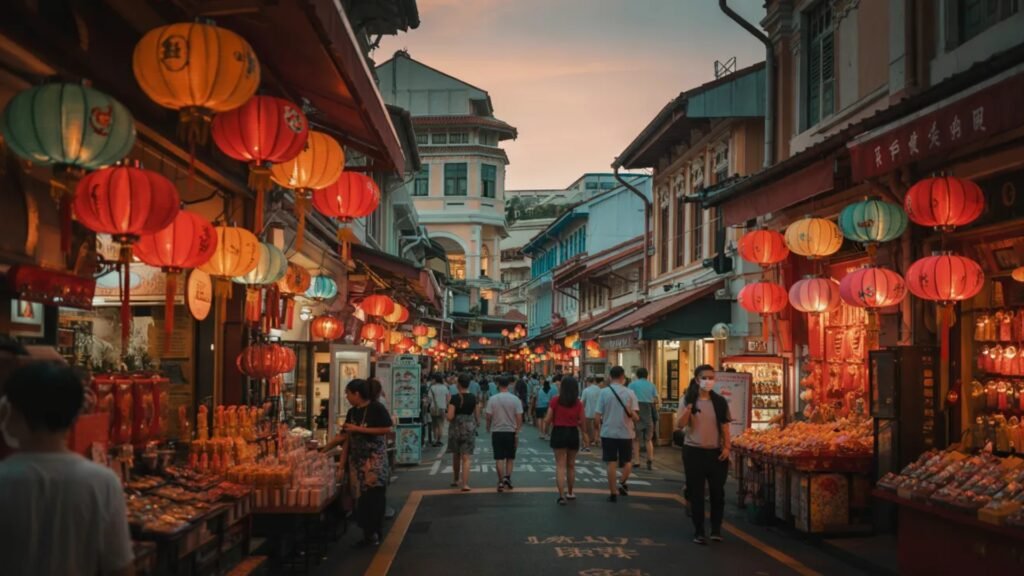
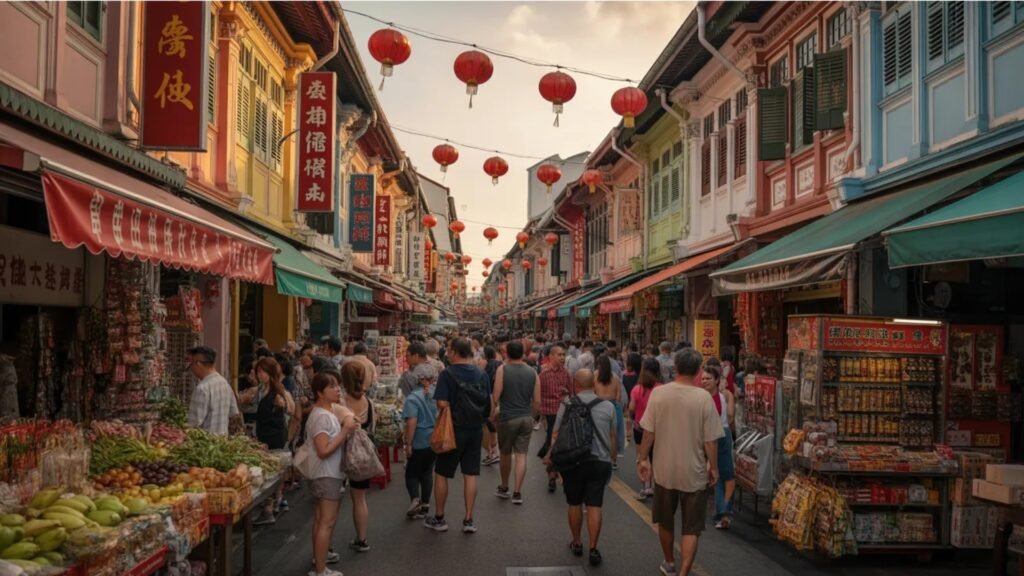
Right, so Pagoda Street Singapore is where most people start — and honestly, that’s fair. The Chinatown Street Market here is exactly what you picture when you think of this neighbourhood. Lanterns strung between shophouses. Stalls selling silk scarves, jade pendants, embroidered pouches, ceramic teaware, and enough fridge magnets to decorate a small aircraft hangar. It’s busy. It’s colourful. also It’s a little chaotic. You’ll love it.
Pagoda Street shops peak in the evening when the streetlights kick in and the whole strip takes on this warm, amber glow that makes everything look like a film set. But here’s a local tip you won’t find on most travel sites — come early morning too, around 8am, when the vendors are setting up and you can actually have a conversation without shouting over tour groups. The Singapore souvenir shopping experience is genuinely more enjoyable when it’s quiet. And the prices? More negotiable. Bring cash in small denominations and be friendly, not aggressive. Works every time.
Discover Chinatown Murals & Street Art
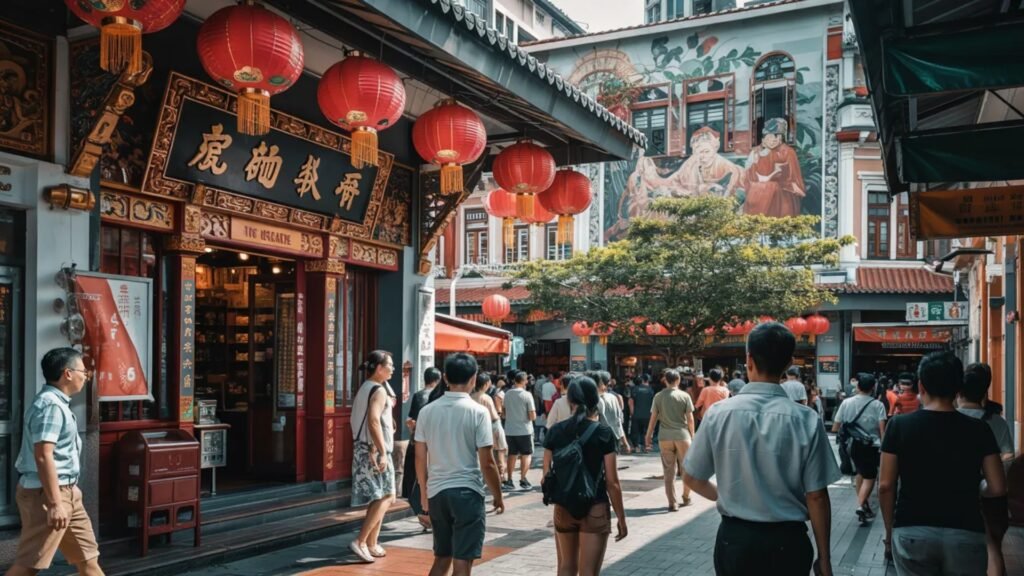
This one surprises a lot of people. Chinatown murals have become one of the neighbourhood’s most compelling visual stories, and honestly they deserve way more attention than they get. The most celebrated are the Yip Yew Chong murals — meticulously detailed works that capture vanished scenes of Chinatown life. The wet market. The provision shop. The family packing mooncakes in a narrow corridor. They’re not just pretty pictures; they’re documentation of a world that’s mostly gone.
Street art Singapore Chinatown extends beyond Yip Yew Chong’s work into a broader creative ecosystem along Banda Street, Bukit Pasoh Road, and the laneways around Club Street. The Chinatown walking route for art specifically takes about 90 minutes at a comfortable pace. You don’t need a guide — just follow your eyes. Every corner seems to have something. Some pieces are big, bold, political. Others are tiny and blink-and-you-miss-it. That’s part of the charm.
Walk Through Ann Siang Hill & Hidden Gems
If Pagoda Street is Chinatown’s front room — presentable, busy, dressed up for guests — then Ann Siang Hill is the back garden. Quieter. Leafier. More personal. This cobblestone ridge runs parallel to the main tourist drag and houses some of Singapore’s most beautifully restored shophouses, now converted into wine bars, boutique hotels, and independent restaurants. The contrast with the market streets just minutes away is genuinely striking.
The hidden gems in Chinatown Singapore tend to cluster around Ann Siang Hill and the surrounding laneways — Club Street, Amoy Street, and the tight corridor of Erskine Road. These areas attract a creative, independent crowd. Small-batch gin bars. A jazz club tucked into a pre-war building. A florist doing serious artistic work. Walk slowly here. The self-guided walking tour Singapore approach works brilliantly on these streets — no map needed, just curiosity and comfortable shoes.
Visit Chinatown Heritage Centre
The Chinatown Heritage Centre sits at 48 Pagoda Street inside three beautifully restored shophouses and houses what is genuinely one of Singapore’s most emotionally affecting museum experiences. It’s not a sterile collection of artefacts behind glass. It’s a recreation — cubicle bedrooms, opium den corridors, oral history recordings, personal objects belonging to families who actually lived here. Walking through it, you get a real, visceral sense of what life looked like for Chinese immigrants in the early 20th century.
| Chinatown Heritage Centre | Details |
|---|---|
| Address | 48 Pagoda Street, Singapore 059207 |
| Opening Hours | 9am – 8pm daily (last entry 7pm) |
| Admission | ~$18 adults, ~$12 children |
| Recommended Visit Time | 90 minutes minimum |
| Nearest MRT | Chinatown MRT Station (NE4/DT19) |
The Singapore immigration history told inside these walls is genuinely moving. Allow 90 minutes minimum — rushing it is a mistake. For the Chinatown Singapore itinerary for first time visitors, this should be a non-negotiable stop. Book tickets online via the official Chinatown Heritage Centre website to skip the queue.
Famous Temples in Chinatown Singapore
The Chinatown Singapore temples situation is, well… remarkable. Within a five-minute walk, you can visit a Buddhist temple, a Hindu temple, and a Taoist temple. Three different faiths. Three different architectural languages. and also Three different ritual traditions. All coexisting in a neighbourhood the size of a few city blocks. That’s not an accident — it’s a reflection of Singapore’s entire social philosophy in miniature.
The Singapore religious sites in this district aren’t tourist attractions in the traditional sense. They’re working places of worship. People come here to pray, to make offerings, to seek comfort, to mark important life events. Visitors are welcome — genuinely welcomed — but respect matters. The Chinatown cultural experience here asks something of you: slow down, observe, be present. Don’t just photograph and move on.
Buddha Tooth Relic Temple & Museum
The Buddha Tooth Relic Temple dominates South Bridge Road like a dream you’d half-remember — this vast, ornate Tang Dynasty-inspired structure completed in 2007, built specifically to house what’s believed to be a tooth relic of Gautama Buddha himself. The relic sits in a gold stupa on the fourth floor, in a room you can visit but must approach in respectful silence. The Buddhist temple Singapore atmosphere inside is genuinely powerful — incense thick in the air, devotees in deep concentration, light filtering through elaborate wooden screens.
Don’t miss the rooftop Buddhist garden on the fifth floor. It’s free, it’s peaceful, and the view over the surrounding shophouse rooflines is one of the better vistas in the district. Admission to the whole complex is free, though donations are appreciated. Dress modestly — shoulders covered, knees covered. Sarongs are available at the entrance if you’ve come from a day at the beach and totally forgot. The official temple website has full visiting guidelines.
Sri Mariamman Temple (Oldest Hindu Temple)
Singapore’s oldest Hindu temple Singapore has been standing on South Bridge Road since 1827. That’s nearly 200 years of continuous worship on the same patch of ground. The Sri Mariamman Temple was originally established by Naraina Pillai, a Tamil trader who arrived with Raffles’ expedition. What you see today — that extraordinary gopuram tower rising above the shophouses, covered in hundreds of hand-sculpted deities in vivid colour — largely reflects 19th and 20th-century renovations and expansions.
The best time to visit is early morning, ideally before 9am, when devotees perform their rituals and the temple operates in its most authentic register. The annual Thimithi fire-walking festival, usually held in October or November, draws enormous crowds and is one of the most extraordinary spectacles in Singapore’s cultural calendar. There’s a small entry fee for non-Hindu visitors — check NHB’s heritage portal for current rates and festival dates.
Thian Hock Keng Temple (Historic Chinese Temple)
Here’s a fact that stops most visitors in their tracks: the Thian Hock Keng Temple was built entirely without nails. Not a single nail in the original 1840 construction. The interlocking timber and granite structure was assembled using traditional joinery techniques brought over by craftsmen from China. It’s an engineering marvel that also happens to be one of Singapore’s most beautiful buildings.
The Taoist temple Singapore was built as a thanksgiving offering by Hokkien immigrants, dedicated to Mazu — the goddess of the sea who protected them on their dangerous ocean crossing. It sits on what was once Singapore’s original shoreline; the land in front of it has since been reclaimed. That historical detail alone is worth sitting with for a moment. This is one of the finest Chinatown heritage sites in all of Southeast Asia, and it’s genuinely undervisited. Come before 9am for the best experience and the best photographs.
Best Food & Hawker Centres in Chinatown
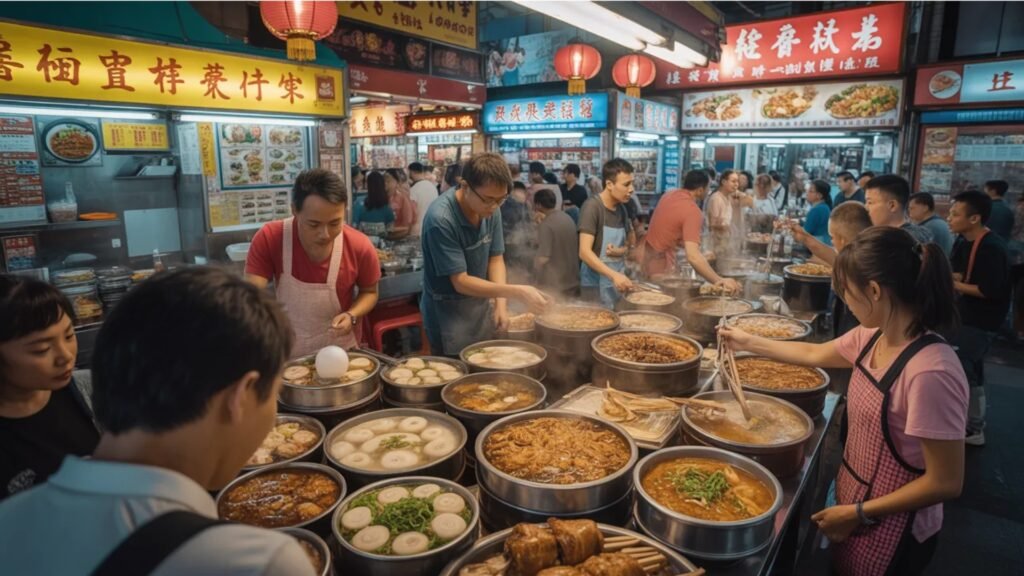
Right, this is the section you came for. Let’s be honest. Chinatown Singapore food is legendary — and that’s not hyperbole, that’s a UNESCO-endorsed fact. Hawker culture in Singapore received UNESCO Intangible Cultural Heritage status in 2020, and Chinatown is arguably where that culture runs deepest. This is where stall families have been perfecting single dishes for three, four, sometimes five generations.
The food tour Chinatown Singapore experience is genuinely one of the best things you can do on the island, and it costs almost nothing. A full day of eating — breakfast, lunch, snacks, dinner, dessert — can be done for under S$30 if you know where to go. The local food Singapore Chinatown scene rewards adventurous eaters but also has plenty for the cautious. You don’t need an adventurous palate. You just need to show up hungry.
Chinatown Complex Food Centre (Budget Eats)
The Chinatown Complex Food Centre at 335 Smith Street is Singapore’s largest hawker centre — over 260 stalls across two floors serving food from before sunrise until well past midnight. It’s loud, it’s chaotic during peak hours, and it is absolutely magnificent. This is where locals come for daily meals, not tourists on Instagram hunts. The quality is consistently high because the customers are unforgiving regulars who’ve been eating here for decades.
| Must-Try Dishes | Stall Type | Approx. Price |
|---|---|---|
| Beef Kway Teow | Noodle stall | S$4–6 |
| Bak Kut Teh | Pork rib soup | S$7–9 |
| Carrot Cake (both styles) | Wok fry | S$3–5 |
| Rojak | Mixed salad | S$4–5 |
| Char Siew Rice | BBQ pork | S$4–6 |
Most stalls are cash-only — bring small notes. The complex is accessible directly from Chinatown MRT Station, which makes it stupidly convenient. Come before 12pm or after 2pm to avoid the lunchtime crush.
Maxwell Food Centre (Must-Try Dishes)
Maxwell Food Centre sits at the corner of Maxwell Road and South Bridge Road, and it’s probably the most famous hawker food Singapore venue in the world — largely thanks to the legendary Tian Tian stall and the fact that Anthony Bourdain filmed here. Yes, that episode. The crowds have grown accordingly. But here’s the thing: it’s still worth it, even with the tourists. Because the food is genuinely extraordinary.
Tian Tian Chicken Rice — stall number 10 — serves what many consider Singapore’s definitive version of the dish. Poached chicken, fragrant rice cooked in chicken stock, three dipping sauces, clear broth on the side. It costs around S$5–6 and it will stay in your memory forever. Arrive before 11am to beat the queue or go at 2:30pm when the lunchtime rush has cleared. The Maxwell Food Centre official listing has operating hours for individual stalls.
Liao Fan Hong Kong Soya Sauce Chicken Rice (Michelin Spot)
In 2016, the world’s food press had a collective meltdown. A hawker stall in Singapore received a Michelin star — the first street food vendor in the world to do so. That stall was Liao Fan, run by chef Chan Hon Meng, who had been perfecting his Michelin hawker stalls Singapore craft for decades before anyone with a red guide showed up.
Singapore street food getting international recognition wasn’t new, but a Michelin star was a different level of validation. Today, Liao Fan operates both its original hawker format and a sit-down restaurant on Smith Street. The hawker version still draws queues. The soya sauce chicken — glossy, dark, impossibly tender — is paired with rice or noodles starting from S$3.50. Genuinely one of the most remarkable meals you’ll have anywhere on this planet, at any price point.
Chinatown Food Street Experience
Chinatown Food Street on Smith Street is a pedestrianised outdoor dining corridor that comes alive after dark. It’s more curated than the hawker centres — think alfresco tables, string lights, stalls serving satay, BBQ stingray, chilli crab spring rolls, and sugarcane juice. Is it slightly touristy? Yes. Is it still delicious? Also yes.
The Chinatown night market energy here is distinct from the daytime street market experience. Families, couples, groups of friends spread across long communal tables. The smell of charcoal satay drifts down the entire street. It’s social, it’s convivial, and it captures something real about how Singaporeans actually like to eat — outside, together, without fuss. Best experienced between 7pm and 10pm on any evening except Monday when some stalls rest.
Best Cafés & Dessert Spots in Chinatown
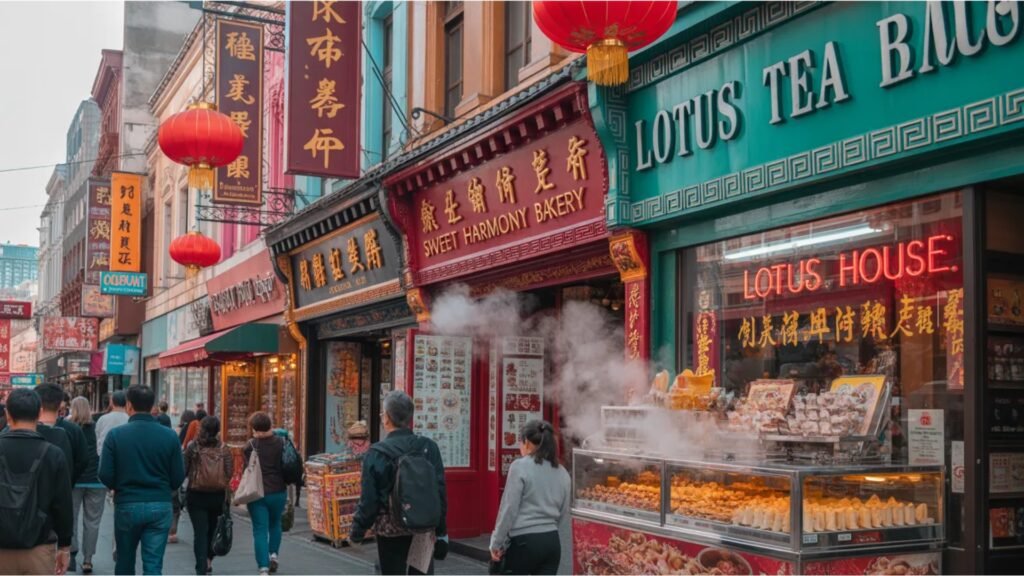
Nobody talks about the best cafes in Chinatown Singapore enough, and honestly? That’s criminal. The café scene here has quietly become one of the most interesting in the city. It’s not the sterile, Instagram-first coffee culture you find in some parts of Orchard or Marina Bay. The cafés in Chinatown wear their heritage shophouse settings as a genuine design language, not just a backdrop.
The dessert spots Chinatown Singapore scene has similarly levelled up. Japanese-inspired soft serve, traditional tang yuan made with modern flavour combinations, Taiwanese shaved ice, grass jelly desserts dressed up for 2026 — it’s a remarkable mix. The brunch Chinatown Singapore offering has also expanded dramatically, with several spots now running weekend-only menus that book out fast. Check Instagram pages before you go — these places don’t always update their Google listings in time.
Trendy Brunch Cafés
Keong Saik Road has undergone one of Singapore’s more remarkable street-level transformations in recent years. What was once a notorious red-light district is now lined with some of the city’s most characterful brunch spots, wine bars, and bakeries, all operating from lovingly restored two-storey shophouses. The bones of the old buildings — mosaic tiled floors, timber staircases, louvred shutters — give every café a personality that no amount of interior design budget can fake.
Nylon Coffee Roasters on Everton Park (just a short walk from the Chinatown core) is widely considered one of Singapore’s best specialty roasters. The atmosphere is warm, the baristas know their stuff, and the pastries are from serious bakers. For Instagram cafes Singapore content, Keong Saik’s various multi-concept spaces offer strong visual material — but they’re genuinely good cafés first. The photos are a bonus.
Matcha, Coffee & Instagrammable Drinks
The matcha latte Singapore scene has found a natural home in Chinatown’s shophouse corridors. Several Japanese-inspired concepts have opened in the last two years, sourcing ceremonial-grade matcha and presenting it in formats ranging from traditional whisked preparations to soft-serve swirls and lattes with intricate latte art. If you’ve had matcha before and found it bitter, try it here — quality sourcing changes everything.
Beyond matcha, the Chinatown Singapore drink scene includes cold brew coffee taprooms, heritage kopi shops that have been serving the same blend since the 1960s, and a growing number of hybrid tea houses blending Singaporean teh tarik tradition with contemporary café culture. The contrast of sitting in a 100-year-old shophouse drinking a precision-brewed single-origin espresso is one of those small, perfect Chinatown moments. Seek it out.
Shopping in Chinatown Singapore
Shopping Chinatown Singapore is more nuanced than most first-timers expect. Yes, the souvenir racks exist. Yes, some of it is low-quality tourist fare. But tucked between the fridge magnets and $2 keychains are genuinely worthwhile finds — artisan goods, heritage products, locally-made items that you won’t find in any airport terminal. The key is knowing where to look and having the patience to explore a little deeper.
The Chinatown Singapore guide to shopping essentially breaks down into three categories: cheap and cheerful souvenirs for volume gifting, traditional goods with genuine cultural heritage, and locally-made items from independent Singapore brands that make thoughtful gifts. All three exist within walking distance of each other. The shopping here rewards time investment more than almost any other Singapore shopping district.
Cheap Souvenirs & Street Finds
The Chinatown Street Market on Pagoda and Temple Streets is your first port of call for Singapore souvenir shopping at accessible prices. Chopstick sets in decorative boxes, silk coin purses, embroidered tote bags, ceramic chopstick rests shaped like goldfish, paper lanterns, miniature sampans — the selection is wide and prices start extremely low. Quality varies significantly, though. Inspect everything before buying.
Traditional Chinese goods Singapore like hand-painted lacquerware, jade pieces, and porcelain tea sets are also available here, though the better quality versions tend to be in the more permanent shops on Eu Tong Sen Street and South Bridge Road rather than the temporary market stalls. For ceramics specifically, the shophouses on Trengganu Street consistently have better quality and more interesting selections than the main Pagoda Street drag.
Traditional Medicine Shops (Medical Halls)
The TCM shops Chinatown along South Bridge Road and Eu Tong Sen Street are one of the neighbourhood’s most fascinating experiences — and most visitors walk straight past them. These traditional Chinese medicine Singapore medical halls, some operating since the early 1900s, are packed floor to ceiling with dried herbs, roots, fungi, and ingredients whose names you’ll never remember but whose aromatic impact hits you the moment you step inside.
The herbalists at most of these shops speak English and are genuinely happy to explain their products to curious visitors. You don’t need to buy anything to browse — though many visitors leave with a small packet of quality dried chrysanthemum or a bag of longan for their hotel kettle, having paid remarkably little for something genuinely special. It’s one of the most culturally specific Chinatown cultural experience moments available in the whole district.
Unique Local Brands & Gifts
Beyond the markets, unique gifts Chinatown come from a growing number of Singapore-founded independent brands that have chosen shophouse locations for their studios and retail spaces. Handmade batik labels producing contemporary prints rooted in Peranakan colour traditions. Independent publishers putting out Singapore-specific titles you won’t find at Kinokuniya. Ceramic studios where the artist is often working at a wheel in the back while you browse the front shelves.
Local brands Singapore operating from Chinatown include some genuinely compelling design-meets-heritage stories. Several have been featured in regional design publications and ship internationally — meaning your luggage weight isn’t necessarily a limitation. These make far better gifts than anything you’ll buy at Changi Airport’s departure gate. Start at Club Street and work your way through the adjacent laneways with an hour and an open mind.
Museums & Cultural Experiences
The museums Chinatown Singapore offering is richer than most people realise, and refreshingly affordable. You don’t need to spend serious money to get serious cultural depth here. Between free heritage trails, subsidised museum admission, and the wealth of outdoor architectural history just visible on the streets, the cultural experiences Singapore available in this district rival much larger and more expensive destinations.
What makes Chinatown’s museums distinctive is their specificity. These aren’t broad national history museums covering everything at a surface level. They’re focused, intimate institutions that go deep on particular stories. The Singapore cultural trails that connect them add outdoor context — meaning the museum visit and the neighbourhood walk reinforce each other in a way that’s genuinely enriching.
Chinatown Heritage Centre
The Chinatown Heritage Centre Singapore deserves a second mention here because the depth of its programming goes beyond what the entry price suggests. The thirteen galleries cover distinct chapters of Chinese immigrant life — the arrival, the community structures, the trades, the festivals, the domestic arrangements of extreme poverty, and the gradual building of prosperity across generations.
The cubicle-room recreation on the second floor is, for most visitors, the emotional centrepiece. Families of six, seven, eight people living in a space barely larger than a modern bathroom. Cooking on portable stoves in shared corridors. Sleeping in shifts. The Singapore immigration history told here isn’t romanticised. It’s honest about hardship in a way that makes the city’s current prosperity feel genuinely earned and meaningful.
Singapore City Gallery
Free, uncrowded, and genuinely jaw-dropping — the Singapore City Gallery at The URA Centre on Maxwell Road is one of the most overlooked attractions in the entire city. The centrepiece is a spectacular scale model of Singapore’s entire urban landscape, spanning the CBD, Chinatown, Marina Bay, and beyond. The level of detail is extraordinary. You can identify individual buildings, trace the waterfront reclamation history, and understand the city’s spatial logic in a way that no map or aerial photograph quite manages.
Urban planning Singapore is a globally studied success story, and this gallery tells it with humility and clarity. Interactive stations cover housing policy, transport planning, green infrastructure, and future development visions. The whole thing is free. Open Monday to Saturday. It’s worth 90 minutes of anyone’s time, and it’s ten minutes’ walk from Chinatown MRT Station. Go.
Cultural Walking Trails
The National Heritage Board’s Singapore Heritage Trails — available through the Roots.sg app — offer curated self-guided walking routes through Chinatown that cover clan associations, pre-war shophouses, outdoor shrines, and community landmarks. QR codes at key stops trigger audio narratives. The app is free. The trails are free. The experience is legitimately excellent.
The Chinatown walking route options cover different themes — the Hokkien community history, the Peranakan cultural layer, the street-level retail history. Each takes around 90 minutes to two hours at a comfortable pace. For the Chinatown Singapore walking tour experience without hiring a guide, this is genuinely the best option available. Far more rewarding than a hop-on bus tour, and at literally zero cost.
Where to Stay in Chinatown Singapore
Staying in the district puts you at the geographic heart of one of Singapore’s most characterful neighbourhoods — MRT-connected, walkable to the CBD, and with restaurants and cafés starting from your doorstep. The hotels Chinatown Singapore landscape covers a genuinely wide range, from capsule hostels to luxury boutique properties in restored shophouses. The neighbourhood rewards those who actually stay here rather than day-tripping in.
Where to stay Chinatown largely depends on your budget and your priorities. Budget travellers get remarkable value here — facilities are clean and modern, and the location means transport costs stay low. Boutique luxury travellers, meanwhile, get something you genuinely can’t find in Orchard or Marina Bay: a hotel with actual history embedded in its walls.
Budget Hotels
Budget hotels Chinatown Singapore start from around S$35–50 per night for hostel dorms and S$80–120 for private rooms. Wink Hostel on Mosque Street has become something of a design icon in the Singapore budget accommodation world — pod-style sleeping with excellent privacy, central location, and genuinely thoughtful design. The Cube Boutique Capsule Hotel is another strong option, especially for solo travellers who want quality without overpaying.
Cheap accommodation Singapore in this district gets you something that budget zones in other cities often can’t: genuine neighbourhood character. You wake up to sesame biscuit vendors setting up outside. Morning kopi at the ground-floor kopitiam costs S$1.50. The MRT is five minutes’ walk. This is, objectively, a good way to wake up in Singapore.
Luxury & Boutique Stays
For luxury hotels Chinatown Singapore, the standout options are few but exceptional. The Scarlet Singapore on Erskine Road is a Victorian-era building turned into a dramatically decorated boutique hotel — dark velvet, ornate detailing, a rooftop bar with a small plunge pool. It’s theatrical in the best way. Hotel 1929 on Keong Saik Road is more restrained in aesthetic but rich in heritage detail, with a celebrated restaurant at ground level.
Boutique hotels Singapore in Chinatown don’t try to compete with the Marina Bay Sands for spectacle. They offer something different: intimacy, history, and the distinct pleasure of sleeping inside a building that’s been standing since before Singapore was a republic. Duxton Reserve, a Marriott Autograph Collection property on Duxton Hill, marries colonial shophouse architecture with contemporary luxury service. Rates from around S$250/night. Worth every dollar for the right traveller.
How to Get to Chinatown Singapore
Getting to chinatown singapore is genuinely straightforward — this is Singapore, after all, where public transport runs with a reliability that would make Swiss rail engineers mildly envious. The how to get to Chinatown Singapore question has a very simple primary answer: take the MRT to Chinatown MRT Station and walk out of Exit A. You’re there. That’s it.
The Chinatown Singapore travel guide answer for transport goes a little deeper for visitors coming from specific parts of the island, but the core message is the same: Singapore’s Singapore public transport guide MRT network connects you to Chinatown from virtually anywhere in under 40 minutes. The EZ-Link card — available at all MRT stations for around S$12 including stored value — is the essential tool. Get one the moment you land.
MRT Routes & Nearest Stations
Chinatown MRT Station sits at the intersection of two major lines — the North East Line (NE4) and the Downtown Line (DT19). This double-line access means you can reach Chinatown directly from a remarkable number of points across Singapore without transfers.
| Journey | Line | Travel Time | Notes |
|---|---|---|---|
| Orchard → Chinatown | DT (Downtown Line) | ~15 min | Direct, no transfer needed |
| Changi Airport → Chinatown | DT (Downtown Line) | ~40 min | Direct from Expo interchange |
| Little India → Chinatown | NE (North East Line) | ~10 min | 3 stops, NE8 to NE4 |
| Clarke Quay → Chinatown | NE (North East Line) | ~5 min | 2 stops |
| Harbourfront → Chinatown | NE (North East Line) | ~15 min | 4 stops, passing Outram Park |
The Maxwell MRT Station (TE18 on the Thomson-East Coast Line) is also useful — it exits almost directly in front of Maxwell Food Centre, making it the best option if food is your primary destination.
Bus & Taxi Options
Buses to Chinatown Singapore serve the district comprehensively. Routes 61, 63, 174, and 851 run along South Bridge Road and New Bridge Road, connecting Chinatown to the CBD, Bugis, and the southern districts. Bus stops are clearly marked and real-time arrivals are available on the MyTransport.SG app — a genuinely useful tool for navigating Singapore by bus.
Taxi Singapore services are available via the Grab app, which is the dominant ride-hailing platform in Singapore. Standard metered taxis can be flagged at Chinatown Point and People’s Park Complex pickup bays. Avoid surge pricing periods — 7–9am and 5–7pm on weekdays are peak demand windows. For a short hop from the CBD, Grab typically charges S$6–12 depending on traffic.
Best Time to Visit
The best time to visit Chinatown Singapore on a daily basis is weekday mornings between 8–11am. Temples are active. Hawker stalls are serving their freshest preparations. The streets are navigable. Vendors are relaxed and conversational. It’s a completely different experience from peak afternoon tourist hours.
Seasonally, Chinese New Year is transformative. The district becomes Singapore’s most spectacular festival zone — lit up with red lanterns, packed with night bazaars, alive with lion dance performances and firecrackers at temple entrances. The Chinese New Year Singapore experience in Chinatown is genuinely unmissable if your dates align. But book accommodation six months out — the neighbourhood fills up completely and prices spike sharply.
Suggested Chinatown Walking Itinerary (1-Day Plan)
The Chinatown Singapore itinerary below covers a full day in a logical, walkable sequence — starting early to catch the temples at their most atmospheric and ending late to experience the night market energy. The Singapore itinerary Chinatown approach works best if you treat timing as a guide rather than a rigid schedule. Some of the best moments here happen spontaneously — an unexpected conversation with a temple keeper, a stall you didn’t plan to visit, a mural around a corner you took by accident.
This is essentially the half day Chinatown itinerary extended — because once you’re here, leaving after four hours feels wrong. The neighbourhood has a gravity to it. Plan for the full day and you won’t regret a minute of the extra time.
Morning Plan
7:30am — Start at Chinatown Complex Food Centre for a proper Singaporean breakfast. Fried carrot cake, soft-boiled eggs, kopi-O. Budget S$5–8 for a satisfying spread. 8:30am — Walk to Thian Hock Keng Temple while it’s quiet and the morning light is perfect on the stonework. Spend 30–40 minutes here, properly. 9:30am — Chinatown Heritage Centre opens. Allow 90 minutes. 11am — Ann Siang Hill walk and Yip Yew Chong murals hunt through the laneways.
The Chinatown Singapore walking tour morning section covers the heritage core without crowds and sets up everything that follows with proper context. Wear comfortable shoes — the cobblestones on Ann Siang Hill are genuinely uneven and sandals are a bad idea.
Afternoon Food Tour
12:30pm — Maxwell Food Centre. Queue for Tian Tian Chicken Rice. Order the chicken rice set, eat slowly, appreciate it. 2pm — Sri Mariamman Temple visit. 3pm — Browse the TCM shops Chinatown on South Bridge Road and the Pagoda Street shops for souvenirs. 4:30pm — Specialty coffee or matcha latte Singapore on Keong Saik Road. Sit down. Rest your feet.
The food tour Chinatown Singapore afternoon segment should cost around S$20–30 total for food and drinks — including the Michelin-tier chicken rice, the afternoon coffee, and a dessert snack from one of the street stalls. This is why food tourism in Chinatown is so compelling. The quality-to-cost ratio is genuinely extraordinary.
Evening & Night Experience
6pm — Return to Buddha Tooth Relic Temple for the rooftop garden at golden hour. The light at this time is exceptional and the garden is peaceful above the early evening street noise. 7pm — Smith Street Food Street for satay and BBQ stingray. Order widely and share. 8:30pm — Pagoda Street night market browsing — now lit and atmospheric in a way it isn’t during the day. 9:30pm — Cocktail bar on Club Street to close the evening properly.
Chinatown at night Singapore is a distinct experience from daytime. The Chinatown night market lights up, the food street fills with families and tourists and local couples, and the ambient noise shifts from daytime commercial hustle to evening social warmth. The night market Singapore atmosphere here is genuine — not a manufactured tourist show. Stay as long as you want.
Travel Tips for Visiting Chinatown Singapore
The Chinatown Singapore travel tips that actually matter aren’t about what to see — they’re about how to engage with the neighbourhood in a way that maximises your experience and respects the community that actually lives here. This is still someone’s neighbourhood. The market vendors, the temple devotees, the kopitiam aunties — they’re not part of a performance for tourists. Remembering that changes how you interact with everything.
The Singapore tourist guide basics apply here too — stay hydrated (it’s 30+ degrees and humid year-round), carry a small umbrella (afternoon rain showers come without warning), and keep your phone charged because QR codes for heritage trails, Grab bookings, and Google Maps will be doing real work all day.
Budget Tips
A seriously good budget travel Chinatown Singapore day is achievable for under S$50 all-in — including food, transport, and a museum entry. The heritage trails and walking tours are free. The temples are free. Maxwell and Chinatown Complex hawker centres charge S$3–8 per dish. The MRT from anywhere on the island costs under S$3. The free things to do in Chinatown Singapore list is genuinely long — outdoor murals, shophouse architecture, the Singapore City Gallery, the NHB heritage trails, the temple gardens.
Cheap things Chinatown aren’t inferior things. This is the fundamental insight most budget travellers need to internalise about Singapore. Eating at a Michelin-starred hawker stall for S$5 isn’t a compromise. It’s one of the best food experiences available anywhere in the world at any price. Spend your money on experiences, not upgrades.
Cultural Etiquette
Temple etiquette Singapore is straightforward but important. Remove your shoes before entering any temple — there will always be a designated shoe area near the entrance. Dress modestly — shoulders and knees covered is the standard expectation across Buddhist, Hindu, and Taoist sites. Don’t touch religious offerings, statues, or ritual objects. If you want to photograph inside a prayer hall, look for a sign or ask someone. Most temples allow photography in common areas but not in the inner sanctum.
Cultural respect Chinatown extends beyond temples into everyday interactions. Speak at a reasonable volume in narrow residential laneways where people actually live above the shophouses. Don’t block vendor stalls while taking extended photo sessions without buying anything. If you sit at a hawker centre table, order something — the vendors depend entirely on turnover. These are small gestures but they’re noticed and appreciated.
Safety & Tourist Advice
Singapore is one of Asia’s safest cities by any measurable metric, and safety Chinatown Singapore is genuinely not a major concern in the way it might be in other urban tourist districts around the region. Tourist safety Singapore basics still apply though: keep your phone in your front pocket in crowded night market conditions, use official Grab rides rather than unlicensed transport touts, and keep digital copies of your passport and travel insurance somewhere accessible.
The emergency number in Singapore is 999 for police and 995 for medical emergencies. Singapore’s public healthcare system is world-class if anything goes wrong. One practical note: the Chinatown Singapore area gets very busy during Chinese New Year and national holidays — stay alert, stay with your group, and enjoy the energy rather than fighting it.
FAQs About Chinatown Singapore
These are the questions people actually Google before visiting — and they deserve straight, honest answers rather than vague tourism-board waffle. The Chinatown Singapore FAQ below addresses the real decision-making concerns: how long to allocate, whether it’s genuinely worth including in a tight Singapore itinerary, and what specifically makes this neighbourhood worth your time.
The visiting Chinatown questions below also factor in 2026-specific updates — new openings, changed admission fees, and transport changes that make some older guides slightly inaccurate. Always cross-check current opening hours and event schedules on the Singapore Tourism Board website and the NHB Roots portal before your visit.
How Many Hours Do You Need in Chinatown?
The how long to spend in Chinatown Singapore answer genuinely depends on your travel style. Minimum realistic time for a solid highlight run — three temples, one hawker centre, a quick walk through the street market — is about three to four hours. That covers the surface. A full day (eight to ten hours) gets you the Heritage Centre, the murals, Ann Siang Hill, multiple food stops, shopping, and the night market experience.
Hours needed Chinatown Singapore expand the more you engage. First-time visitors to Singapore should budget a full day. Repeat visitors who haven’t explored deeply should budget at least half a day. The neighbourhood rewards slow exploration far more than speed-running. Chinatown visit duration is really a question of what you want to leave with — a photo set or an actual experience.
Is Chinatown Singapore Worth Visiting?
Bluntly? Yes. Emphatically. Is Chinatown worth visiting is a question that gets asked surprisingly often, usually by people who’ve heard it’s “touristy” and wondered whether to skip it for something more off-the-beaten-path. Here’s the thing: Chinatown Singapore review after review from serious travellers consistently rates it among the most rewarding Singapore experiences precisely because it functions as a real neighbourhood. Locals eat here daily. The temples see genuine devotional traffic. The markets serve real customers, not just tourists.
Is Chinatown Singapore worth visiting if you’re a Singaporean local who hasn’t been recently? Also yes. The 2026 version has enough new openings — cafés, art installations, food concepts — to justify rediscovering it even for people who grew up nearby. This neighbourhood keeps evolving without losing what makes it fundamentally itself. That balance is rare and worth celebrating.
What Is Chinatown Famous For?
What is Chinatown famous for covers a lot of ground. First and most obviously: food. The Maxwell Food Centre, the Chinatown Complex Food Centre, the Michelin hawker stalls Singapore — all of this food heritage runs deep here. Second: temples. The religious plurality of Buddha Tooth Relic Temple, Sri Mariamman Temple, and Thian Hock Keng Temple within a single walkable area is genuinely extraordinary. Third: architecture. The UNESCO-listed shophouses, the colonial-era civic buildings, the clan associations — this is one of Singapore’s best-preserved heritage streetscapes.
Chinatown Singapore highlights also include Chinese New Year celebrations (arguably the most spectacular in Southeast Asia outside of mainland China), the Chinatown Heritage Centre, the emerging street art scene, and the overall cultural diversity that makes this neighbourhood unlike any other Chinatown in the world. What is Chinatown famous for, ultimately, is being genuinely, defiantly itself — despite development pressures, gentrification, and tourist commodification. That resilience is the real story.
Related Travel Guides
Singapore travel guides that pair naturally with a Chinatown visit extend your exploration outward from this neighbourhood into the broader city. Chinatown singapore is an excellent anchor for a Singapore trip — central, MRT-connected, and surrounded by other worthwhile neighbourhoods like Tanjong Pagar, Keong Saik, and the CBD waterfront. The guides below pick up where this one leaves off.
Related Singapore articles here focus on budget-conscious and experience-rich travel — the same philosophy that makes Chinatown so compelling applied to the rest of the island. Singapore rewards visitors who do their research. The Chinatown Singapore travel guide approach of going deep rather than wide pays dividends everywhere you apply it on this island.
Free Things to Do in Singapore
Singapore’s reputation for being expensive is, frankly, overstated for experience-hungry travellers who know where to look. Free things Singapore include the Singapore City Gallery (free admission, genuinely world-class), the NHB Heritage Trails (free app, free routes, free audio guides), Gardens by the Bay’s outdoor gardens (free, stunning, open 24 hours), Fort Canning Park (free, historical, great for picnics), and the Jewel Changi Rain Vortex (free to view from the public areas).
Free attractions Singapore cluster surprisingly heavily around the Chinatown and civic district area — meaning a Chinatown visit pairs naturally with a broader free-experiences day across neighbouring districts. The full free things guide for 2026 is available on the STB website with regularly updated listings.
Singapore Budget Travel Guide
Singapore budget travel guide planning starts with a single insight: the most acclaimed food in Singapore is also the cheapest. A day eating exclusively at hawker centres — breakfast, lunch, snacks, dinner — costs under S$25 and reaches genuine Michelin-tier quality at multiple stops. Add free attractions and efficient MRT travel and a full Singapore day comfortably comes in under S$60 all-in.
Cheap Singapore travel in 2026 is entirely achievable without compromising quality. The hostel and budget hotel scene has improved dramatically, with design-conscious capsule hotels starting from S$35/night. Student and off-peak MRT fares reduce transport costs further. The official Singapore Tourism Board budgeting resources offer regularly updated price guides and promotional offers worth checking before you book.