
Thian Hock Keng Temple (2026): Complete Travel & History Guide
you’re thinking about visiting Thian Hock Keng Temple Singapore, right? Well, let me tell you something. This isn’t just any temple you stumble upon while walking through Singapore. I mean, honestly, when you actually step foot inside this place, you feel it. The history just hits different. You know that feeling when you walk into somewhere really old and you can sense all the stories it holds? Yeah, that’s exactly what happens here.
Thian Hock Keng Temple is basically the oldest Chinese temple in Singapore. Like, we’re talking about 1839 here. That’s almost 200 years of history standing right there in Chinatown Singapore. The temple survived so much. Wars, changes, urban development, everything. And it’s still standing. Still functioning. People still pray here every single day.
Here’s the thing though. Most people walk past it without really understanding what makes it so incredibly special. They take a photo, maybe light an incense stick, and move on. But if you actually take time to learn about Thian Hock Keng Temple Singapore, you’ll realize you’re looking at one of Southeast Asia’s most important heritage temples in Singapore. This guide? It’s going to help you understand everything. History. Architecture. What you should see. How to get there. All of it.
Overview of Thian Hock Keng Temple
Thian Hock Keng Temple Singapore is Singapore’s oldest active Chinese temple, and honestly, it’s probably the most significant one too. The name literally translates to “Temple of Heavenly Happiness,” which is kind of fitting when you think about what it means to the Hokkien community in Singapore. So basically, this temple sits right on Telok Ayer Street in the heart of historic Chinatown Singapore, and it’s been there since 1839.
Now, what makes this place unique? Well, the temple is dedicated primarily to Mazu (also spelled Matsu), the Chinese sea goddess. She’s basically the patron deity of fishermen and sailors. Back in the day, when Singapore was just developing and early Chinese settlers were arriving on ships, Mazu temple worship was huge. These immigrants came from southern China, particularly from Fujian province, and they brought their faith with them. The Hokkien people especially revered Mazu, and they built this magnificent temple as a spiritual home.
What I find amazing is that it’s designated as a Singapore National Monument. The National Heritage Board oversees its preservation now. It’s not just a place where people pray anymore. It’s a living museum of Chinese culture and maritime trade history Singapore. You’ve got architectural brilliance mixed with spiritual energy. And you can literally feel the respect people have for this place just by watching the devotees as they come in.
History of Thian Hock Keng Temple
Origins and Construction (1839–1842)
You want to understand thian hock keng temple history? Okay, so picture this. It’s the 1830s. Singapore is just becoming this major port city under British colonial rule. Sir Stamford Raffles has already established Singapore as a trading post. Ships are arriving from everywhere. And aboard many of those ships? Chinese merchants and laborers from Fujian, from Hokkien-speaking regions.
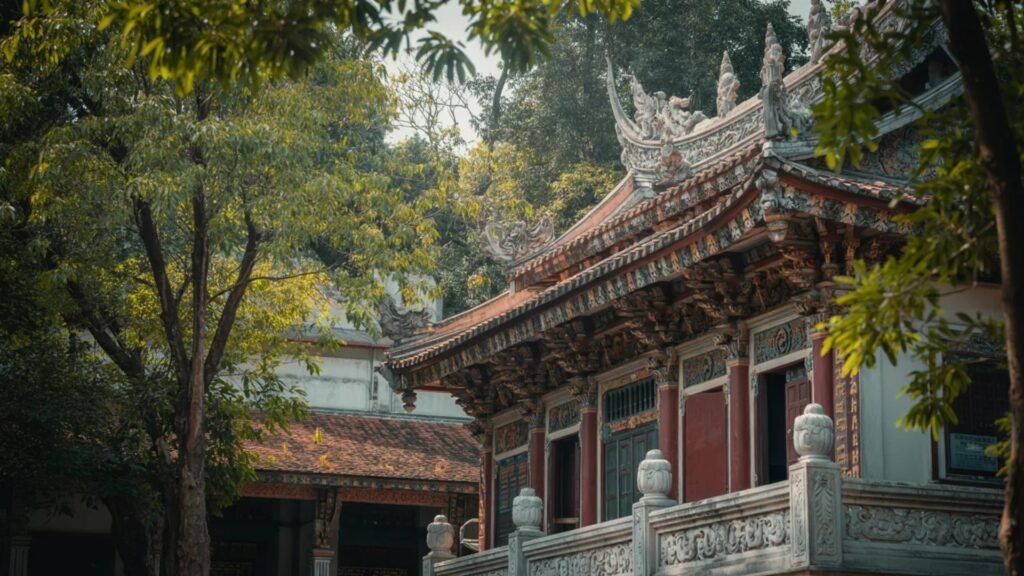
The temple was built between 1839 and 1842. Think about that timeline. That’s pre-industrial era. No fancy construction equipment. Just skilled craftsmen who understood traditional Fujian architecture. They sourced materials directly from China. The wood, the stones, the decorative elements. Everything had to be brought by ship. And these craftsmen? They were masters of their craft. They understood every single detail of Southern China temple design. The proportions, the feng shui principles, the spiritual symbolism behind every beam and every carving.
What’s really interesting is that this temple was initially built right near the shore. Seriously. Telok Ayer Bay used to come much closer to where the temple stands now. The name “Telok Ayer” actually means “oil bay” in Malay, but historians think it might refer to the water itself. The historic shoreline telok ayer bay has completely changed over the years due to land reclamation. But the temple’s location was deliberately chosen. It was supposed to overlook the sea, to be where Chinese immigrants religious practices would flourish, right where people could see the ocean and remember their homeland.
Role of Early Chinese Immigrants
Okay, here’s something that really gets me about this story. The early Chinese settlers Singapore weren’t just coming here for fun or adventure. Many of them were running from difficult situations. The First Opium War had messed things up back in China. There were economic hardships. Political instability. Poverty. So they looked toward Singapore as this opportunity. This place where they could work, earn money, and build new lives.
But you know what? Even with all that struggle, they maintained their spiritual practices. Chinese folk religion Singapore isn’t just something you do when things are good. It’s integrated into every part of life. Birth. Marriage. Death. Business dealings. Everything. The Mazu worship in Singapore became central to the Hokkien community history. These fishermen, merchants, and laborers would gather at the temple to pray before sailing out. They’d come back to give thanks if they survived storms. They’d bring their families to celebrate festivals.
The temple became more than a religious space. Honestly, it became the social hub for the Chinese diaspora Southeast Asia. If you had a problem, you went to the temple. Looking for business connections? The temple. Need help with housing or work? The temple had people who could help. It’s what we’d call a clan-based community development singapore hub. The Singapore Hokkien Clan Association managed a lot of the operations, and they basically took care of their own people.
What I find really moving is that despite being in a colonial setting, despite being outnumbered and sometimes facing discrimination, these immigrants maintained their identity through this temple. They taught their children about religious practices of chinese immigrants. They passed down traditions. and also They preserved their language and customs. And all of that happened within these walls.
Restoration and Preservation Efforts
Fast forward to more recent times. By the mid-20th century, the temple had aged quite a bit. The wood was deteriorating. Some of the decorative elements were damaged. The original craftsmen’s work was fading. Singapore’s government realized this was too important to lose. The National Heritage Board stepped in with serious restoration projects.
The major restoration happened in 2000-2002, and it was huge. They brought in conservation experts who understood heritage conservation singapore at the highest level. These weren’t just contractors slapping new paint on walls. These were specialists who respected the original construction methods and materials. They studied the temple carefully, documented everything, and only then started restoration work. When they were done, the temple got recognized by UNESCO. It was literally awarded in 2001. That’s how significant this temple restoration singapore 2001 unesco award moment was.
What they did was incredible. They replaced damaged timber with wood that matched the original specifications. The roof tiles were carefully restored to match historical records. Ornamental carvings were cleaned and repaired using traditional techniques. But here’s what really matters: they didn’t try to make it look brand new. They preserved the patina. The aging. The marks of time. Because that’s part of the story, you know? Every crack tells you something about the centuries this building has survived.
Today, ongoing maintenance continues. The National Heritage Board ensures the temple doesn’t just survive, but actually thrives. It’s protected by law. You can’t just come in and renovate without permission. And honestly? That’s exactly how it should be. This isn’t some museum piece that nobody uses. It’s a living, breathing temple where actual worship happens daily.
Architecture and Design of Thian Hock Keng Temple
Traditional Southern Chinese Design
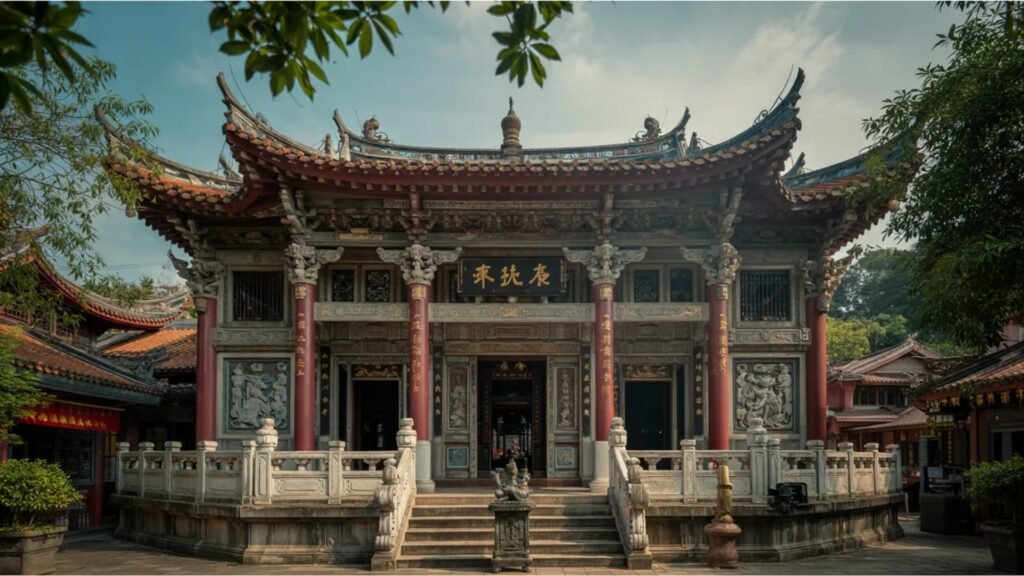
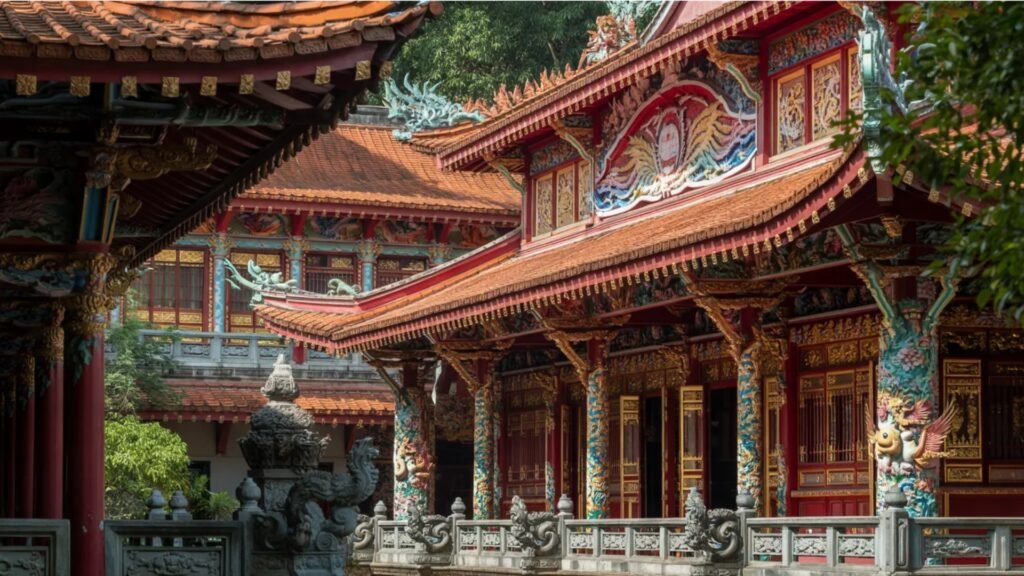
So when you look at thian hock keng temple architecture details, you’re basically looking at textbook traditional Fujian architecture. And I mean that in the best way possible. The layout follows classical principles that have been used in southern China for centuries. If you’ve ever studied feng shui, this temple is like a masterclass in it.
The temple is organized around a central axis. You’ve got the main entrance facing the street. Then you move through into the courtyard. And the main prayer hall sits beyond that. Everything is symmetrical. Left side mirrors the right side. The proportions follow specific ratios. This isn’t random. It’s deliberate. It’s based on Southern China temple design principles that emphasize balance, harmony, and spiritual flow. The idea is that energy, or “chi,” flows through the space in a specific way. And the architecture guides that flow.
What’s really cool is how they adapted traditional Chinese temple architecture Singapore to work in the Singapore context. The roof design, for instance. You’ve got these elaborate curved roofs with the trademark upturned eaves. That’s classic Chinese architecture right there. But the materials? The construction techniques? They had to account for Singapore’s tropical climate. The humidity. The rain. So while keeping the aesthetic completely authentic, the builders incorporated practical solutions for durability.
The entrance is magnificent. You don’t just walk in casually. There’s this whole sequence. Stone lion statues guard the entrance. These are called “fu lions” or “guardian lions,” and they’re protective figures in Chinese deities in singapore temples traditions. One has its paw on a ball (representing control of the physical world), and the other has its paw on a child figure (representing the continuation of life and prosperity). When you walk between them, you’re walking through a spiritual boundary.
Materials and Craftsmanship
Alright, let me tell you about the materials because this is genuinely fascinating. Everything in Thian Hock Keng Temple Singapore was specifically sourced from China. The wood. The stone. The tiles. The craftspeople back in the 1800s weren’t just grabbing whatever was available locally. They imported specialized materials because they understood that quality matters, especially for something this important.
The main structural beams are teak. Teak is incredibly durable. It resists rot and insects. Seriously valuable stuff. But beyond the structural elements, you’ve got these intricate wood carvings throughout. The pillars inside the temple? They’re not just plain cylindrical supports. They’re covered in carved dragons, flowers, and religious imagery. Each carving tells a story. Some depict scenes from Chinese mythology. Others show Buddhist or Taoist deities.
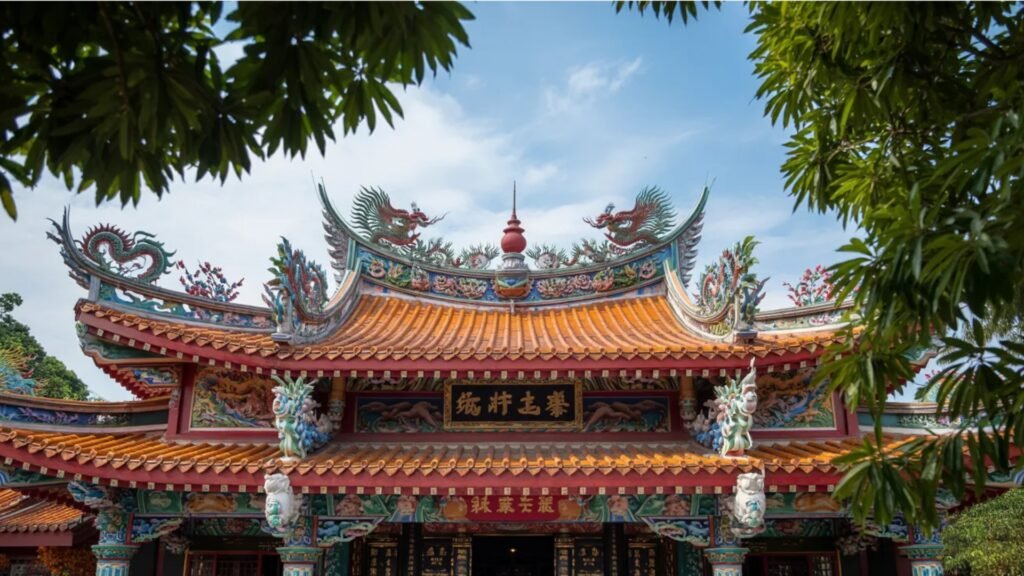
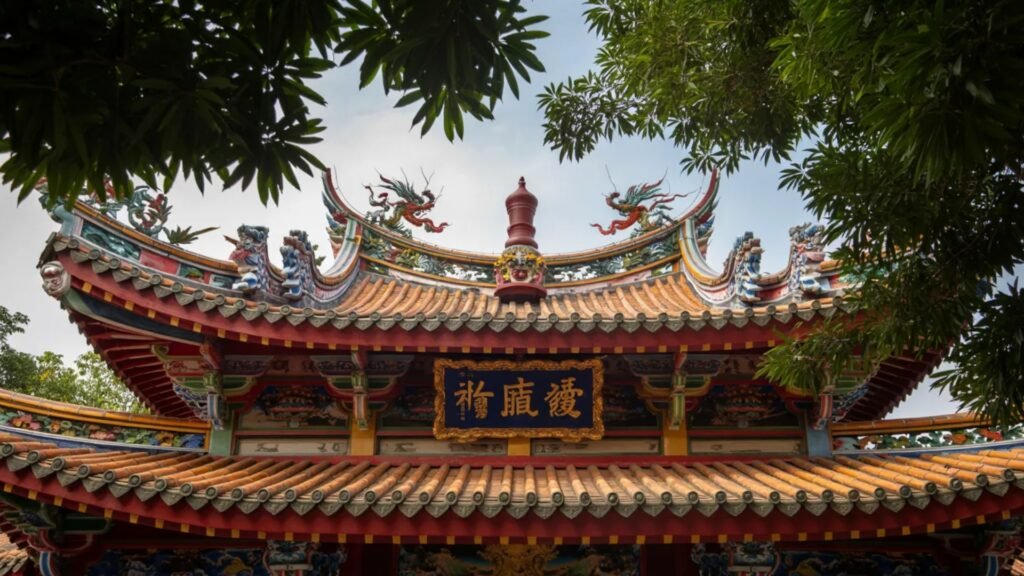
The roof tiles are decorated ceramic. These aren’t cheap. They’re hand-crafted. Each one is glazed in vibrant colors, predominantly greens, yellows, and blues. If you look at the roof ridges, you’ll see these amazing figurative sculptures. Dragons. Phoenix birds. Immortals from Chinese mythology. These ridge tiles actually serve a purpose beyond decoration. In traditional belief, they ward off evil spirits and protect the building.
The stone work is equally impressive. The courtyard flooring? Cut stone tiles arranged in patterns. The walls? Granite blocks fitted together so precisely that you can barely see the gaps. This level of craftsmanship takes decades to master. The original builders brought experienced artisans from China who understood these traditional techniques. And here’s what’s really important: modern restoration work at Thian Hock Keng Temple respects these original methods. They don’t use modern shortcuts. They source matching materials and employ craftspeople trained in traditional techniques.
Symbolism in Temple Decorations
Okay, this is where it gets really interesting. Everything you see in Thian Hock Keng Temple Singapore symbolizes something. Nothing is decorative for decoration’s sake. Take the dragons, for example. Dragons in Chinese culture aren’t villains like in Western stories. They’re symbols of power, wisdom, and protection. Specifically, dragons represent the emperor and imperial power. So when you see dragons carved or painted throughout the temple, you’re looking at representations of divine authority and cosmic power.
The phoenix is equally significant. You see phoenixes alongside dragons in many decorative elements. The dragon represents yang (masculine, active energy), and the phoenix represents yin (feminine, receptive energy). Together, they symbolize balance and harmony. It’s not just beautiful artwork. It’s a visual representation of philosophical principles.
Then there are the colors. Red is everywhere in the temple, right? Red is the most auspicious color in Chinese folk religion Singapore. It represents luck, happiness, and the warding off of evil. Gold is used liberally too. Gold symbolizes wealth, prosperity, and divinity. The combination of red and gold creates an atmosphere of celebration and spiritual elevation.
The number patterns matter too. Eight is considered extremely lucky in Chinese culture (the pronunciation sounds like the word for prosperity). So you’ll notice eight-sided structures, decorations in sets of eight. Nine is also auspicious (it sounds like the word for “long-lasting”). Basically, the whole temple is covered in these symbolic layers. It’s like reading a book where every visual element carries meaning.
The inscriptions you see on plaques and beams? Many are from Confucian teachings. Or they’re praise poems written by important visitors. Some plaques were donated by Chinese emperors or powerful merchant associations. These aren’t just decorations either. They’re historical records. They tell you who came to the temple, when, and what they were praying for.
Cultural and Religious Significance
Dedication to Mazu (Sea Goddess)
So let’s talk about Mazu, the central deity of Thian Hock Keng Temple Singapore. I mean, understanding Mazu is basically understanding why this mazhu temple Singapore exists at all. Mazu was a real person, by the way. She was a Chinese woman who lived during the Song Dynasty, around the 10th century. Her real name was Lin Moniang. She was the daughter of a fisherman, and according to legends, she showed miraculous abilities from birth.
Now here’s why this matters for Singapore. The majority of early Chinese settlers who came to Singapore were involved in maritime trade. They were fishermen, merchants, sailors. They’d made dangerous ocean voyages from China to Singapore. Storms at sea weren’t rare. People died. So the idea of having a protective deity who understood the dangers of ocean travel? That was everything to them. Mazu became their spiritual protector. And Thian Hock Keng Temple became the place where they could pray to her.
The cultural significance of mazu extends beyond just safety on the sea though. Mazu came to represent feminine spiritual power. Compassion. Healing. In Chinese folk religion Singapore, Mazu is also invoked for help with family matters, health issues, and general protection. She’s known for listening to prayers and actually intervening. Believers leave written prayers, or “wish papers,” at the temple. Some are incredibly personal. Prayers for sick family members. For business success. For healthy children. The temple receives thousands of these each year.
Religious Practices and Festivals
Daily life at Thian Hock Keng Temple Singapore is pretty active, actually. In the mornings, you’ll see devotees coming to pray. They light incense, bow before the altars, make offerings of fruit or flowers. There’s a specific ritual to it. You pay respect at each altar in a particular order. The gestures are deliberate. The incense smoke is supposed to carry prayers upward to the deities.
The festivals though? Those are when the temple really comes alive. Chinese New Year at Thian Hock Keng Temple is massive. The temple is decorated with red lanterns and festive decorations. Hundreds of people come to pray for good fortune in the coming year. There’s an energy that’s hard to describe. You’ve got the chanting of monks, the sound of the bell ringing, the smell of incense, people murmuring prayers. It’s sensory overload in the best way.
Then there’s Mazu’s birthday, which typically falls in March or April (it varies based on the lunar calendar). This is a huge celebration. The temple is packed. There are processions sometimes. Lion dances outside the temple. Believers dress in red. It’s this incredible display of community devotion. I’ve seen people travel from other parts of Singapore just to be there on Mazu’s birthday.
| Major Festivals at Thian Hock Keng Temple | Time of Year | Significance |
|---|---|---|
| Chinese New Year | January/February (Lunar Calendar) | Praying for prosperity and good fortune |
| Mazu’s Birthday | March/April (Lunar Calendar) | Celebrating the Chinese sea goddess mazu |
| Qingming Festival | April | Remembering ancestors |
| Mid-Autumn Festival | September/October (Lunar Calendar) | Family gathering and giving thanks |
Location and How to Get There
Exact Address and Map Details
Alright, so practically speaking, Thian Hock Keng Temple is located at 158 Telok Ayer Street, Singapore 068613. That’s right in the heart of Chinatown Singapore. If you’re using Google Maps or any navigation app, just search for “Thian Hock Keng Temple” and it’ll take you right there. The temple sits between Neil Road and Amoy Street, so you can’t really miss it.
The area around Telok Ayer Street is historically significant. The street itself is named after Telok Ayer Bay, which used to be the shoreline of Singapore. “Telok” is a Malay word for bay, and “ayer” means water. So literally, “Telok Ayer Street” is where the bay used to be. The land reclamation that Singapore has done over the decades has pushed the shoreline back, but the street name remains as a reminder of telok ayer bay history.
If you’re walking through Chinatown Singapore, the temple is super accessible. The building itself stands out because of its distinctive architecture. The curved, colorful roof is really eye-catching. But more importantly, you’ll see the stone lions at the entrance. Those guardian lions are your signal that you’ve found the right place.
The temple is an active, functioning building, so people are around during business hours. The entrance is welcoming. There’s signage explaining the temple’s history. And honestly, the atmosphere just invites you in. You can feel the spiritual significance as soon as you approach the entrance.
Nearest MRT Stations
Getting to Thian Hock Keng Temple Singapore by public transport is actually really straightforward. The nearest MRT station is Tanjong Pagar MRT Station, which is literally just a five-minute walk away. Seriously. You exit the station, walk along Neil Road, and you’re there. It’s one of the most convenient heritage sites in Singapore to reach.
The next closest option is Raffles Place MRT Station, which is about ten minutes away on foot. If you’re coming from the CBD area or from Marina Bay, this might be your station. It’s still very walkable. The route takes you through interesting parts of Chinatown, so you’ll see other shops and restaurants along the way.
If you’re driving, parking can be a bit tricky in the Chinatown area. The streets are narrow and parking lots fill up, especially during peak hours. I’d honestly recommend using public transport. Singapore’s MRT system is excellent, clean, and efficient. Plus, you get to see more of the neighborhood walking than you would driving.
Opening Hours and Best Time to Visit
Thian Hock Keng Temple Singapore is generally open from 8:00 AM to 5:00 PM daily. But here’s the thing. These hours can vary depending on festivals or special occasions. During major celebrations like Chinese New Year or Mazu’s birthday, the temple might stay open longer or have special visiting hours.
The best time to visit depends on what you’re looking for, honestly. If you want to see the temple in its most authentic state, go during the morning hours, say 8:00 AM to 11:00 AM. That’s when the regular devotees come to pray. The monks are performing their rituals. The incense smoke is thickening. It’s spiritual and peaceful. You get a real sense of what the temple is actually for, beyond being a tourist attraction.
If you prefer fewer crowds and a quieter experience, late afternoon is good. Like around 3:00 PM to 4:30 PM. The morning rush of devotees has passed. Tourists tend to come midday. So late afternoon is often pretty peaceful. The light is also different. The sun hits the temple at a different angle, which is great if you’re photographing it.
Now, if you want the full celebratory experience, come during festival times. Chinese New Year is obviously busy, but the energy is amazing. Mazu’s birthday is incredible for seeing genuine religious devotion. But these times are crowded. Like, really crowded. You might have trouble moving around inside. You could potentially wait 30 minutes to an hour just to get close to the main altar. But that energy though? It’s unforgettable.
Things to See Inside Thian Hock Keng Temple
Main Prayer Hall
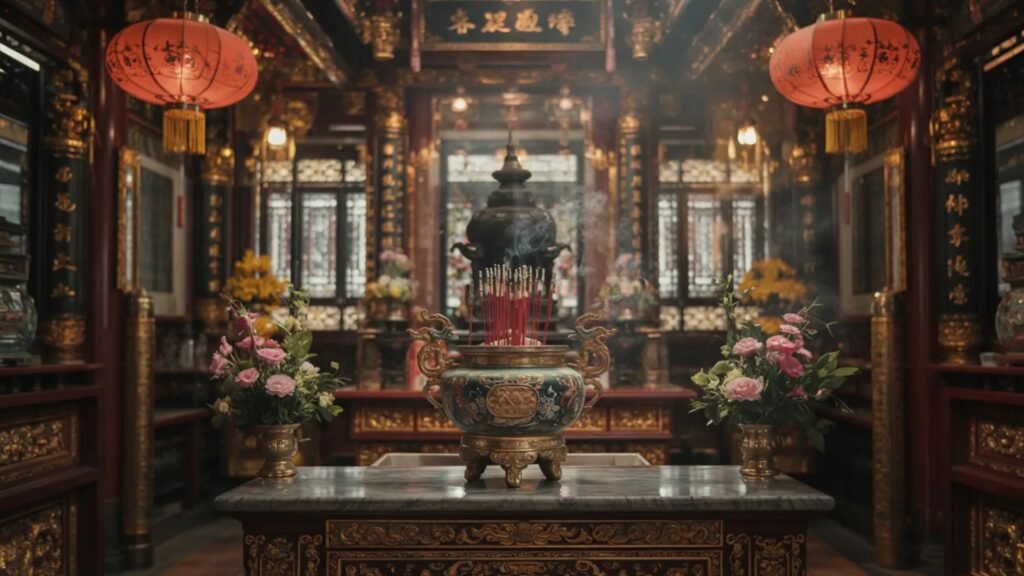
When you step into the main prayer hall of Thian Hock Keng Temple Singapore, you’re literally stepping into a space that’s been spiritually significant for nearly 200 years. The main hall is dominated by the central altar, and at the heart of that altar is the statue of Mazu. She’s typically depicted in traditional Chinese robes, sitting in a position of authority and compassion. The statue is usually gilded in gold, which makes it absolutely radiant in the incense-lit atmosphere.
Around Mazu, there are other deities arranged on the altar. Guan Yu, the god of righteousness and war, is usually there. And Guan Gong, another deity associated with loyalty and protection. Above the main altar, you’ll see intricate wooden carvings. The ceiling is painted in reds and golds. The entire aesthetic is designed to inspire awe and devotion. It’s incredibly ornate. Every surface seems to have meaning or decoration.
The wooden pillars in the main hall are massive and beautifully carved. These aren’t just functional supports. They’re works of art. Many have dragon carvings that spiral down the entire length. The detail is insane when you get close. You’ll see scales on the dragons, individual claws, expressions in their faces. These pillars were hand-carved, which means craftsmen spent literally months on individual pillars.
Photography in the main hall is sometimes restricted during active prayers or ceremonies. You should ask the temple staff before taking photos. Some areas might be off-limits. But generally, as long as you’re respectful and not disrupting anyone praying, a few photos are okay.
Intricate Roof Carvings
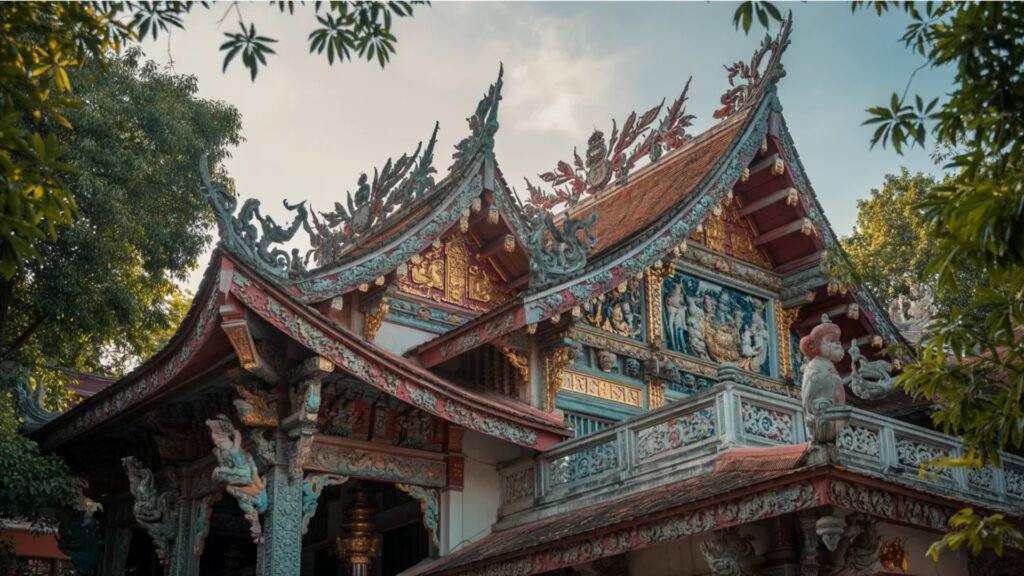
Here’s what’s absolutely stunning. The roof of Thian Hock Keng Temple is like a three-dimensional storybook written in ceramic and sculpture. You’ve got these elaborate ridge carvings running along the roof lines. These are called “roof ridges” or “roof crests,” and they’re seriously intricate.
The central ridge typically features a dragon in the middle, with smaller deities and mythical creatures flanking it on both sides. The dragon is usually depicted as if it’s ascending toward heaven, which ties into the temple’s spiritual purpose. Around the main dragon, you’ll see phoenixes, cranes, and other auspicious birds. Between these larger figures are smaller decorative elements – flowers, clouds, geometric patterns.
What makes these roof carvings special is that they’re three-dimensional. Not just painted on a flat surface. The sculptors actually built these as separate pieces and then affixed them to the roof structure. This means they catch light differently depending on the time of day and the angle you’re viewing from. Early morning or late afternoon, the shadows make the carvings look even more dramatic and detailed.
The tiles on the main roof sections are individually decorated. You’ve got glazed ceramic tiles in vibrant blues, greens, yellows, and creams. The glaze gives them this lustrous quality. They’ve weathered nearly 200 years of tropical Singapore weather and still look beautiful. The colors have faded slightly, which actually adds to the charm. You can see the history in the patina.
One thing to note: you can see the roof carvings really clearly from the courtyard or from the street outside. You don’t need to go into the main hall to appreciate them. In fact, sometimes stepping outside and looking up gives you a better perspective of the whole composition.
Courtyard and Shrines
The courtyard of Thian Hock Keng Temple Singapore is this open-air space that serves multiple purposes. It’s a gathering area. It’s a spiritual space. It is beautiful architecture. You’ve got the main temple buildings surrounding the courtyard on three sides, creating this enclosed, peaceful environment.
In the courtyard, you’ll find secondary shrines dedicated to different deities. There’s usually a shrine for Confucius, the great Chinese philosopher. This reflects the importance of Confucian teachings in Chinese folk religion Singapore. There might be shrines for other deities too, depending on the season or special occasions. These secondary shrines allow people to make specific prayers or offerings to deities other than the main Mazu.
The courtyard floor is paved with stone tiles in traditional patterns. You’ll see central designs, geometric patterns in the borders. It’s not just random. The patterns often have symbolic meanings. Some represent longevity, prosperity, or harmony.
There are typically incense burners in the courtyard. Large, ornamental urns where people stick incense. The smell of incense is one of the defining characteristics of the temple experience. Visitors light sticks of incense and stick them in these urns, offering prayers as the smoke rises. The amount of incense at any given time tells you something about how many people are actively praying.
The courtyard is also where you might see community activities. During festivals, temporary structures might be set up. During quiet times, locals sometimes just sit in the courtyard, finding peace in the spiritual atmosphere. It’s a legitimate public space, not just a tourist attraction.
Visitor Tips for Thian Hock Keng Temple
Thian Hock Keng Temple Singapore is a functioning religious site, not a museum. This is important. People come here to pray genuinely. They come seeking spiritual guidance. So your behavior matters. First off, dress respectfully. That means covered shoulders and knees. You don’t need formal clothing. Just modest. Think of it as visiting someone’s home where you want to show respect.
Shoes. Okay, there’s sometimes confusion about this. You don’t need to remove your shoes before entering the main hall or courtyard. You should if you’re entering specific inner sanctum areas or if there are clear signs saying to do so. Ask if you’re unsure. The staff is generally patient with respectful visitors who ask questions.
Photography is mostly okay, but be aware of context. Don’t photograph during active prayers or ceremonies. Don’t use flash (it’s disruptive and damages photographs anyway). If you’re photographing other visitors, ask permission first. It’s just common courtesy. Some visitors specifically come seeking spiritual guidance and might not want to appear in strangers’ photos.
Incense. The temple sells incense if you want to light some as a gesture of respect. It’s not expensive. If you do light incense, follow the example of other visitors. Usually, you light it at one of the burners, bow respectfully, and place it in the designated urn. There’s a quiet reverence to it. Don’t make it about the photo opportunity.
Respect the worshippers. Don’t ask them questions while they’re praying. Don’t touch altars or religious objects. Do not sit where devotees are trying to pray. Be mindful of the space. Early morning is actually a good time to visit because there are fewer tourists and you can observe actual worship practices without disrupting anything.
Nearby Attractions in Singapore
Chinatown Singapore
Okay, so you’re at Thian Hock Keng Temple Singapore, right? Well, you’re literally in one of the most vibrant neighborhoods in the whole island. Chinatown Singapore is this living, breathing community that’s been around for over 180 years. It’s way more than just a tourist area. Real people live here. Real businesses operate here. and Real culture happens here.
The architecture is what first catches your eye. You’ve got these traditional shophouses lining the streets. These are specific to Singapore and Southeast Asia. Ground floor is shops or businesses. Upper floors are residential. The facades are incredibly colorful in Chinatown. Yellows, pinks, blues, greens. Each building is slightly different from its neighbor. It’s like walking through a living rainbow.
Telok Ayer Street itself, where the temple is located, is lined with historic shophouses. Many of them have been restored and now house restaurants, bars, or art galleries. But you can still see the original architectural features – the ornate window frames, the decorative tiles, the worn marble stoops where merchants once sat. The street has this authentic feel that no amount of modern development can replicate.
Shopping is another big thing. You’ve got markets selling everything from fresh produce to dried herbs to jade figurines. People’s Park Complex is nearby – a massive shopping center with multiple floors of shops selling everything conceivable. There’s also Eu Yan Sang, a traditional Chinese medicine shop that’s been around since 1886. Walking through these shops, you get a sense of how Chinatown has functioned as a commercial hub for centuries.
Other Temples and Heritage Sites
So Thian Hock Keng Temple is the oldest Chinese temple, but it’s definitely not the only significant temple in the area. Right nearby, you’ve got Sri Mariamman Temple, which is Singapore’s oldest Hindu temple. It’s just a few minutes walk away. The architecture is completely different – elaborate painted sculptures, vibrant colors. It’s a fascinating contrast to Thian Hock Keng Temple. The fact that these temples exist right next to each other tells you something beautiful about Singapore’s Singapore multicultural harmony history. Different religions, different communities, coexisting respectfully.
Then there’s Jamae Mosque, which is also in the Chinatown area. It’s an absolutely stunning Islamic building. Singapore has this incredible history of religious coexistence, and the Chinatown area perfectly demonstrates that. You can literally walk from a Chinese temple to a Hindu temple to a Mosque within minutes.
The Chinese Heritage Centre is nearby too. If you want deep historical context about Chinese culture in Singapore, this museum is invaluable. They’ve got artifacts, photographs, personal histories. It really brings to life the stories of Fujian Chinese immigrants Singapore and other Chinese communities who built Singapore.
There’s also Singapore’s National Museum if you’re interested in broader history. And Art Gallery, which sometimes features exhibitions related to heritage and culture. If you’re doing a full cultural day in the area, you could easily spend 8-10 hours and not run out of interesting things to see.
| Nearby Heritage Sites | Distance from Thian Hock Keng | What to See |
|---|---|---|
| Sri Mariamman Temple | 0.3 km | Hindu temple architecture and spiritual practices |
| Jamae Mosque | 0.4 km | Islamic architecture in Singapore |
| Chinese Heritage Centre | 0.5 km | Exhibits on Chinese-Singaporean history |
| People’s Park Complex | 0.2 km | Shopping and modern Chinatown energy |
| Singapore National Museum | 1 km | Comprehensive Singapore history |
Why Thian Hock Keng Temple is a Must-Visit
Alright, honestly, I could give you a whole bunch of reasons why Thian Hock Keng Temple Singapore deserves your time. But let me be real with you. This place is irreplaceable. And I mean that literally.
First, historically speaking, this is ground zero for understanding early Chinese settlers Singapore. You can read about immigration history in textbooks. That’s fine. But standing inside Thian Hock Keng Temple, breathing in the incense, looking at the carvings that craftsmen spent months creating, seeing the wear patterns on the stone from centuries of footsteps – that brings history alive in a way nothing else can. You’re not learning about history. You’re experiencing it.
Second, architecturally, this is seriously special. Traditional Chinese temple architecture Singapore is rare. Most temples have been rebuilt or significantly modernized. But Thian Hock Keng has maintained its authenticity while still being functional. The carvings, the proportions, the materials – everything demonstrates principles of Southern China temple design that aren’t commonly seen anymore, even in China itself. Architecture students, historians, and design enthusiasts come here specifically to study these principles.
Third, spiritually, there’s something about the atmosphere. I’m not trying to get too mystical here, but it’s undeniable. Walking through Thian Hock Keng Temple, surrounded by devotees in prayer, breathing in incense, hearing the temple bells – it creates a meditative state. Even if you’re not religious or not specifically praying, the space has a peaceful, elevating quality. That’s not an accident. That’s intentional design and a century-plus of spiritual practice.
Final Thoughts: Making the Most of Your Visit
Alright, so here’s what I want you to do. Don’t treat Thian Hock Keng Temple Singapore as another checkbox on your Singapore tourist list. That would be missing the point entirely. Instead, approach it with genuine curiosity and respect. Read about the history before you go. That context makes the experience richer. When you’re standing in front of those roof carvings, if you understand the symbolism, you’ll see them completely differently.
Go at an off-peak time if you can. Morning, before the tour groups arrive. Or late afternoon. You’ll have a completely different experience than if you go at noon with hundreds of other tourists. Talk to the people there if you get the chance. Ask questions respectfully. Many staff members and volunteers have incredible knowledge and are genuinely happy to share it.
Take your time. Seriously. Don’t rush through. Spend time in the courtyard. Look at the details in the carvings. Listen to the sounds – the bell ringing, the chanting, the murmur of prayers, the crackling incense. These sensory elements are part of the experience. You can’t get that from a photo.
And remember, Thian Hock Keng Temple Singapore has survived nearly 200 years. Colonialism. Wars. Urban development. Modernization. It’s still here. Still functioning. Still inspiring people spiritually. That’s not ordinary. That’s remarkable. Respect that when you visit.
Whether you’re interested in thian hock keng temple history, heritage temples in singapore, Mazu temple singapore, or you’re just curious about a unique cultural experience, this temple delivers. It’s genuinely one of the most important historic religious sites singapore. And now that you’ve got this comprehensive guide, you’re ready to experience it properly.
Quick Reference Table: Essential Information
| Information | Details |
|---|---|
| Official Name | Thian Hock Keng Temple |
| Full Address | 158 Telok Ayer Street, Singapore 068613 |
| Founded | 1839 |
| Restoration | 2000-2002 (UNESCO Award 2001) |
| Main Deity | Mazu (Sea Goddess) |
| Nearest MRT | Tanjong Pagar (5 mins walk) |
| Opening Hours | 8:00 AM – 5:00 PM Daily |
| Admission | Free (donations welcome) |
| Heritage Status | Singapore National Monument |
| Best Visit Time | Mornings (8-11 AM) or late afternoons |
Key Takeaways for Planning Your Visit
If you want a spiritual experience – arrive early morning when devotees are praying. If you want photographs – late afternoon light is beautiful. you want to understand the community aspect – visit during a festival like Chinese New Year. if you want to learn detailed history – visit the nearby Chinese Heritage Centre first, then come to the temple with context. Most importantly though? Visit with respect and genuine interest. Thian Hock Keng Temple Singapore isn’t about ticking boxes. It’s about connecting with history, culture, and spirituality.
References & Further Reading:
For more detailed information about Singapore’s heritage sites, visit the National Heritage Board Singapore official website. Learn more about Mazu worship at the International Mazu Association. For Chinatown exploration guides, check out Singapore Tourism Board’s Chinatown Guide. To understand Chinese diaspora history better, the Chinese Heritage Centre at NUS provides excellent resources.
Final Note for Visitors:
Singapore’s multicultural heritage is one of its defining characteristics. Thian Hock Keng Temple Singapore is a perfect starting point for understanding how different communities have coexisted, contributing to making Singapore what it is today. Whether you’re a history enthusiast, spiritual seeker, architecture lover, or cultural explorer, this temple has something meaningful to offer. Plan your visit thoughtfully. Respect the space. And you’ll walk away with memories and understanding that goes way beyond a typical tourist experience.