
Singapore Botanic Gardens Bandstand: A Complete Visitor’s Guide (2025 Edition)
you’re planning a trip to the Singapore Botanic Gardens and you keep hearing about this Bandstand. Maybe a friend mentioned it. Maybe you stumbled on a photo online and thought, what IS that gorgeous little gazebo sitting on that green hill? Well, you’ve landed in the right place. The Singapore Botanic Gardens Bandstand is one of those spots that doesn’t scream for attention — but once you see it? You get it immediately. This guide covers everything, the history, the best time to visit, how to get there, what to do, and why this one heritage landmark Singapore actually deserves a full spot on your itinerary. Let’s go.
What Is the Singapore Botanic Gardens Bandstand?
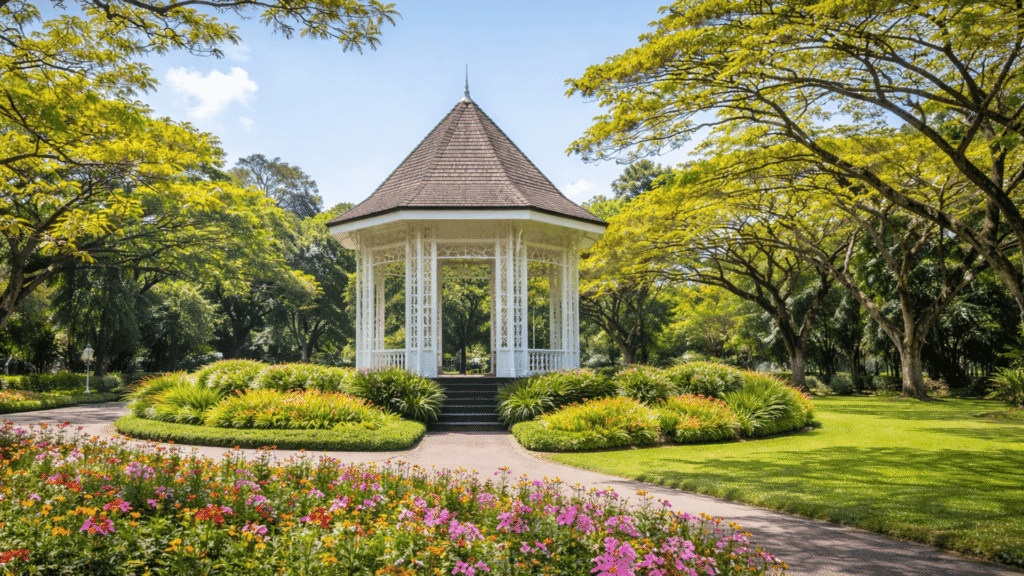
Nestled within the sprawling grounds of the Singapore Botanic Gardens, the garden bandstand pavilion is a charming structure surrounded by lush greenery Singapore wouldn’t let you forget in a hurry. Archsingapore It sits quietly on a small hill called Bandstand Hill — and honestly, the first time you see it framed by golden-leafed trees, it feels like you’ve stepped into a different era. It’s free to visit. It’s genuinely beautiful. And it doesn’t get nearly enough credit.
What makes it interesting isn’t just how it looks. It’s the layers underneath. This structure is a historic bandstand Singapore has protected under UNESCO designation, meaning it’s not just a pretty photo backdrop — it’s a living piece of the island’s colonial and cultural memory. Think of it as a quiet archive that you can actually stand inside. Pretty wild, right?
A Brief Introduction to the Bandstand
The Singapore Botanic Gardens Bandstand is an octagonal gazebo erected in 1930 — and remarkably, it has retained its original form across all those decades. NParks Eight equal sides, a tiered roof, clean white paintwork, and classic ironwork details that could make an architect genuinely emotional. It crowns Bandstand Hill — once the highest point in the Tanglin Core at 33 metres above sea level. The Victorian-style gazebo isn’t massive. But it carries tremendous presence.
Why It’s One of the Garden’s Most Iconic Spots
Although no longer regularly used for music performances, the Singapore Botanic Gardens Bandstand is a favourite wedding photoshoot Singapore location and an iconic landmark of the Gardens. Wikipedia Couples, families, graduation groups, travel photographers — they all make a pilgrimage to this knoll. And you only need to stand there for five minutes to understand why. The framing is almost unfair in how beautiful it is. It’s one of the most beloved Singapore photography spots in the whole country, and it costs absolutely nothing to visit.
The History Behind the Bandstand
History here isn’t dry or dusty — it’s actually fascinating. The Tanglin Core remains the historic heart of the Singapore Botanic Gardens, housing some of its oldest landmarks including Swan Lake from 1866 and Bandstand Hill from around 1860–61, which is famed for its white-painted gazebo known as the Bandstand, constructed in 1930. Travelling Han That means the hill itself predates the structure by nearly 70 years. Which, when you think about it, makes the whole place feel even more layered and interesting.
The Singapore Botanic Gardens didn’t just happen overnight. The new gardens started off primarily as a “pleasure park” for society members, with superintendent Lawrence Niven hired to develop the grounds — creating interconnected pathways, a levelled parade area for military bands to play, and ornamental planting. Wikipedia And that parade area? That’s where the Bandstand Singapore location story begins.
Origins and Early Use
The Bandstand site was initially a small hill standing at 33 metres above sea level — the highest point in the Tanglin Core. This hill was levelled off around the 1860s to serve as a site for regimental bands to perform, surrounded by terraced flower beds and palms. NParks Imagine it — British military bands playing in the Singapore evening heat, surrounded by colonial gardens and an audience of society members in their finest dress. That’s what this knoll once was. A genuinely busy, lively social venue.
Its Role in Singapore’s Heritage
The Singapore Botanic Gardens is protected primarily through Singapore’s Planning Act, and a number of protected buildings and structures exist within the property — including the Bandstand itself, listed alongside other significant colonial-era structures. Dashing Heights So when you walk up that grassy knoll, you’re walking on protected ground. Historically, the Bandstand was also a prestigious venue for school brass band performances Archsingapore — generations of Singapore students once performed here. That’s a community connection that can’t be manufactured.
| Key Historical Date | Event |
|---|---|
| 1860s | Bandstand Hill levelled for military band performances |
| 1866 | Swan Lake excavated nearby |
| 1930 | Octagonal Bandstand gazebo erected |
| 1995 | National Orchid Garden opened in same grounds |
| 2015 | Singapore Botanic Gardens designated UNESCO World Heritage Site |
| 2025 | Decade of UNESCO recognition celebrated with special programming |
Where to Find the Bandstand in the Botanic Gardens
Alright, practical stuff. The gardens cover over 82 hectares — which sounds manageable until you’re actually in there and suddenly you’ve been walking for 20 minutes and you’re not sure where you are. It happens. Knowing exactly where to enter and where to head saves real time, especially on a hot afternoon.
The good news? The Bandstand Singapore location is actually one of the easier landmarks to reach. It sits in the Tanglin Core, which is the oldest section of the gardens — and it’s one of the first major attractions you’ll encounter if you use the right entrance. More on that below.
Exact Location Inside the Gardens
The Singapore Botanic Gardens Bandstand is a serene rest stop and photo spot at the top of a knoll, located close to the Sundial Garden in the Tanglin section, which is the oldest part of the gardens. Little Day Out Between the Bandstand and the Sundial Garden, you’ll also find Hoya House — a lovely little structure housing dozens of waxy Hoya plant species. The knoll itself is easy to spot: it rises gently from the surrounding flat lawns, and the white gazebo is visible from a good distance.
How to Get There Easily
There are two main entrances to the Singapore Botanic Gardens, both served by MRT stations. For the Tanglin Entrance — closest to the Bandstand — arrive at Napier MRT Station on the Thomson-East Coast Line. UNESCO From Napier Station, the walk to the Bandstand takes roughly 10 to 15 minutes at a relaxed pace. Alternatively, grab a Grab or taxi directly to Tanglin Gate on Cluny Road. Bus routes 7, 75, 77, 105, 106, 174, and 174E also stop near the Tanglin Entrance. UNESCO Honestly, MRT is the easiest. Parking can get frustrating on weekends.
What Makes the Bandstand So Special
So why does this particular structure command such loyalty from locals and visitors alike? There are gazebos across Singapore — plenty of them. But this one feels different. It’s the combination of things that all happen at once: the colonial architecture Singapore design of the gazebo, the rare golden canopy of mutated rain trees, the open lawn inviting you to just… stop for a while. It’s genuinely rare to find an outdoor photography location that also functions as a fully peaceful, people-free retreat — at least in the early morning hours.
Surrounded by sprawling lawns and mature trees, the Bandstand provides a peaceful, nostalgic ambiance that reflects the gardens’ colonial-era charm. Though it no longer hosts concerts, its historical significance remains a testament to the gardens’ long-standing role as a cultural and social gathering place for both locals and visitors. Facebook That dual identity — visitor attraction Singapore and quiet personal retreat — is something very few landmarks manage to pull off.
Unique Architecture and Design
The Singapore Botanic Gardens Bandstand embodies the colonial architecture Singapore style — an elegant Victorian-style gazebo that provides a charming atmosphere for leisurely strolls and quiet reflection. Archsingapore Eight symmetrical sides. A layered, tiered roof. Slender decorative columns. The whole structure is painted a crisp white that pops dramatically against the surrounding greenery. It’s compact — not imposing — which somehow makes it feel even more inviting. You can walk around the entire gazebo in about 30 seconds. But most people linger for much, much longer.
Surrounded by Lush Tropical Gardens
One of the most notable landscape features of the Bandstand today is the ring of Yellow Rain Trees (Samanea saman) surrounding it. The Rain Tree usually produces light green foliage but due to a mutation, some trees produce yellow leaves — and these plants have been reproduced by cloning for visitors to enjoy. NParks This golden canopy is genuinely extraordinary. It transforms the entire hill into something otherworldly on clear mornings. This is lush greenery Singapore at its most dramatic — and you really can’t fully appreciate it from a photo. You have to stand inside it.
Best Things to Do at the Bandstand
You could spend anywhere from 20 minutes to two hours around the Bandstand area, depending on your pace and your purpose. There’s a surprising amount to experience in a relatively small radius. Photography, picnicking, gentle walks, even occasional live performances — the space is flexible in the best way. These are the Singapore Botanic Gardens attractions that cluster around Bandstand Hill and make this corner of the gardens consistently worth your time.
The open lawn around the Singapore Botanic Gardens Bandstand provides a relaxing atmosphere ideal for enjoying nature and escaping the city’s hustle and bustle. Archsingapore And honestly? For a city that moves as fast as Singapore does, having a completely free space to just sit on a lawn and do absolutely nothing is… kind of remarkable. People genuinely appreciate this. You’ll see it on faces when you visit.
Photography and Instagram Spots
This is easily one of the top Singapore photography spots in the country — and it’s not just the gazebo itself. It’s the whole scene. The octagonal gazebo is beautifully framed by Yellow Rain Trees in the backdrop, which is what makes it so peaceful and photogenic. NParks For the best shots, try shooting from the base of the hill looking upward — you get a dramatic low-angle perspective with the canopy framing the white gazebo against the sky. The golden hour window (roughly 6:30 PM to 7:15 PM) produces light that serious photographers travel specifically to capture.
Relaxing Walks and Picnics
Pack a mat, a thermos of coffee, and something good to read. The open lawn surrounding the Bandstand is one of the genuinely nicest picnic spots in Singapore — flat, wide, shaded in patches, and usually calm on weekday mornings. Between the Bandstand and the Sundial Garden lies Hoya House, which houses many species of Hoya plants identifiable by their waxy star-shaped flowers. Little Day Out A slow loop through the Bandstand, Hoya House, and Sundial Garden covers some of the most beautiful scenic walking trails in the entire tropical gardens Singapore network — and the whole circuit takes less than an hour.
Enjoying Live Performances (If Available)
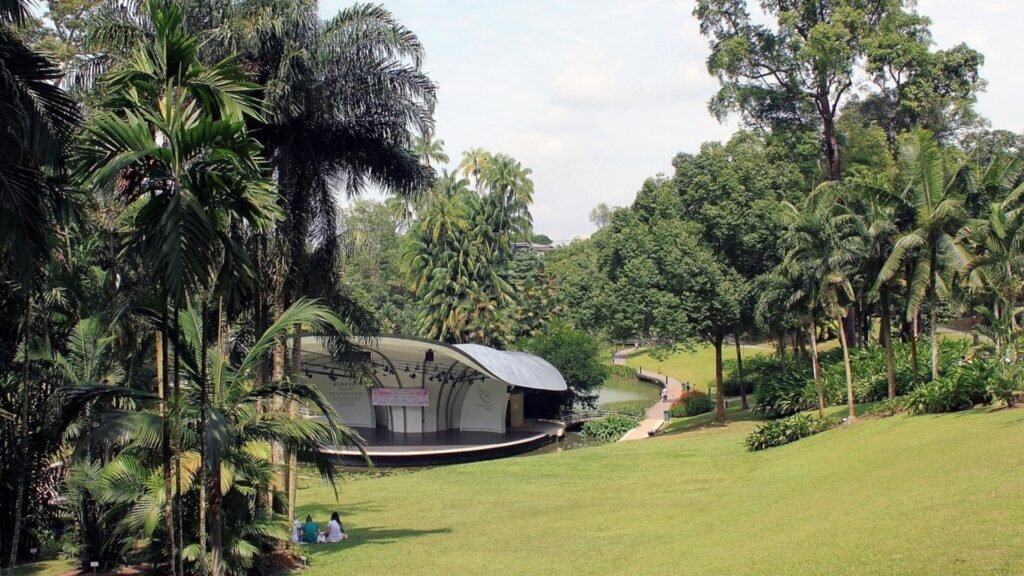
The Shaw Foundation Symphony Stage on Symphony Lake occasionally hosts free concerts on weekends, with notable performers including the Singapore Symphony Orchestra and Singapore Chinese Orchestra. Mindtrip The Bandstand itself no longer hosts regular concerts — but the gardens around it absolutely still do. Check the NParks official events calendar at www.nparks.gov.sg before your visit. You might just stumble into a free outdoor concert as part of your places to visit in Singapore Botanic Gardens itinerary. That’s happened to plenty of people. It’s a genuinely wonderful surprise.
Best Time to Visit the Bandstand
Timing matters more at the Singapore Botanic Gardens Bandstand than at most other Singapore park attractions — simply because it’s elevated and exposed. There’s less shade up on that knoll than you might expect, and Singapore’s midday heat is no joke. The difference between a 7 AM visit and a 1 PM visit here is significant. Like, pack-an-extra-water-bottle significant.
The Bandstand can get crowded on weekends, which may impact those seeking tranquility or good photo opportunities. Archsingapore If quiet is what you want — and the best photos are almost always taken in quiet — a Tuesday or Wednesday morning between 7 and 9 AM is close to perfect. The light is soft, the crowds are thin, and the famous spots in Singapore Botanic Gardens feel almost privately yours for that brief window.
Morning vs Evening Experience
Morning visits have a specific magic. The air is cooler, the birds are loudest, and the soft diffused light through the Yellow Rain Tree canopy creates a golden-green glow that’s almost impossible to replicate later in the day. Evening visits, though — they’re special in a different way. The shadows grow long, the heat drops, and the lawn fills up with locals on evening walks. The main grounds are free and open from 5 AM to midnight, so you can come early for sunrise or enjoy a twilight stroll under the rain trees. UNESCO Both experiences are worth having, honestly. But if you can only pick one? Morning wins.
Weather and Seasonal Tips
Singapore’s weather is tropical year-round — which means beautiful greenery but also unpredictable afternoon showers. The northeast monsoon season runs from November through January and brings heavier rainfall in the afternoons. The southwest monsoon (June to September) is drier but still unpredictable. Due to Singapore’s heat, visitors are advised to bring water, a hat, and an umbrella at all times. Archsingapore A compact fold-flat umbrella handles both sun and rain — it’s genuinely the most practical thing you can carry in tropical gardens Singapore.
| Season | Rainfall Level | Best Visit Time | Notes |
|---|---|---|---|
| Nov – Jan (NE Monsoon) | Heavy afternoons | 7 AM – 11 AM | Rain after 2 PM likely |
| Feb – Mar | Transitional, drier | Any morning | Comfortable conditions |
| Jun – Sep (SW Monsoon) | Moderate | 7 AM – 10 AM | Haze possible in some years |
| Apr – May / Oct | Inter-monsoon | Early morning | Short heavy showers possible |
Tips for Visiting Singapore Botanic Gardens Bandstand
Let’s be practical for a moment. The Singapore Botanic Gardens is a magnificent space — but it rewards preparation. Some parts of the Botanic Gardens may be closed for maintenance, but there’s still plenty to see and enjoy. Archsingapore Always check the NParks official website before heading out. Things shift occasionally — especially after heavy rain. A little homework saves a lot of frustration.
One thing many first-time visitors don’t realise: the gardens are genuinely large. Not “bigger than I expected” large — more like “I walked for 40 minutes and I’ve only covered half of it” large. Build rest time into your plan. There are benches, water fountains, and shaded spots throughout. Use them. Rushing through a UNESCO garden Singapore of this calibre is a genuine waste.
What to Bring
Comfortable, closed-toe walking shoes are non-negotiable — the grass slopes around the Bandstand can get slippery after rain. Sunscreen SPF 50 or above, a refillable water bottle, a compact umbrella, and a small snack if you plan to picnic. If photography is your goal, a wide-angle lens on your camera or phone captures the full scale of the Victorian-style gazebo and its surrounding canopy brilliantly. Bring a camera to capture the beautiful architecture of the Bandstand and the vibrant flora of the botanical collection Singapore around it. National Library Board A fully charged phone is also helpful — the NParks app includes an interactive garden map that’s more useful than any printed guide.
Visitor Etiquette and Rules
Keep the grounds clean — bins are available throughout the gardens and the Bandstand area. Respect any ongoing photoshoots; wedding photoshoot Singapore couples frequently use this knoll and a little patience goes a very long way. Avoid playing loud music on the hill, as many people come specifically for the quiet. Bicycles and motorised vehicles are not allowed inside the gardens at all. Spend at least 3 hours in the gardens — this allows you to see a decent portion and plan a route that covers what you most want to see without doubling back unnecessarily. UNESCO
Nearby Attractions You Shouldn’t Miss
Here’s the thing about visiting the Singapore Botanic Gardens Bandstand — it would be genuinely wasteful to only visit the Bandstand and leave. The surrounding attractions are some of the best Singapore nature attractions anywhere on the island. And most of them are free. The density of remarkable things to see within walking distance of the Bandstand is honestly absurd in the best possible way.
A suggested morning itinerary at the Singapore Botanic Gardens typically includes the Bandstand, Swan Lake, and the National Orchid Garden as core highlights UNESCO — and that trio alone justifies a full half-day visit. Add the Sundial Garden, Hoya House, and a stroll along the Saraca Stream and you’ve got yourself a genuinely complete eco-tourism Singapore experience at zero cost (except for the Orchid Garden entry fee).
National Orchid Garden
The National Orchid Garden covers 3 hectares within the Singapore Botanic Gardens and is purported to have the biggest and most comprehensive orchid display in Asia, built at a cost of S$5 million and opened on 20 October 1995. Mindtrip It houses over 1,000 orchid species and more than 2,000 hybrids. Singapore’s “orchid diplomacy” tradition honours visiting heads of state and dignitaries by naming the finest hybrids after them — these are displayed at the popular VIP Orchid Gardens section. Wikipedia Entry is S$15 for adults, free for children under 12, and S$3 for seniors and students. Hours run 8:30 AM to 7:00 PM daily (last entry 6:00 PM). Worth every cent.
Swan Lake and Other Highlights
Swan Lake was built in 1866, making it the oldest visiting waterscape in Singapore. It covers 1.5 hectares and gets its name from a pair of graceful swans — originally from Amsterdam — that glided on its waters. Facebook Today, elegant swans still drift across its surface alongside koi fish and other wildlife. The centrepiece sculpture of swans rising from the water is genuinely striking. The famous Tembusu tree — featured on Singapore’s $5 note — also stands close to this part of the gardens, overlooking the surrounding lawns. Little Day Out Other must-see Singapore Botanic Gardens attractions in the vicinity include the Sundial Garden, Hoya House, the Sun Garden, and the Prisoner of War Steps — a deeply moving historical site within the landscaped gardens.
How to Plan Your Visit to Singapore Botanic Gardens
Planning is simple — the gardens are incredibly well-organised and signposted. But a little strategy makes the experience significantly better. 2025 is a milestone year for the Singapore Botanic Gardens, marking a decade since its UNESCO recognition, bringing refreshed exhibits, new trails, and special programming. UNESCO That means there may be events, temporary exhibitions, or heritage walks happening during your visit that are worth catching.
The Singapore Botanic Gardens is open from 5 AM to 12 midnight daily, and entry is free except for the National Orchid Garden. Wikipedia That’s an extraordinary window of access. Early risers get the golden morning light and empty paths. Night owls get the cool air and the experience of a UNESCO garden Singapore after dark — which is surprisingly lovely.
Opening Hours and Entry Information
| Area | Opening Hours | Entry Fee |
|---|---|---|
| Main Gardens (inc. Bandstand) | 5:00 AM – 11:59 PM daily | FREE |
| National Orchid Garden | 8:30 AM – 7:00 PM (last entry 6:00 PM) | S$15 adults / S$3 seniors & students / Free for children under 12 |
| Jacob Ballas Children’s Garden | 8:00 AM – 7:00 PM (closed Mondays) | FREE |
| Visitor Services Counters | 8:30 AM – 6:30 PM | — |
Full details, garden maps, and event calendars are available at www.nparks.gov.sg/sbg.
Getting There by MRT or Taxi
For the Tanglin Entrance — which is the closest to the Singapore Botanic Gardens Bandstand — take the MRT to Napier Station on the Thomson-East Coast Line (Brown Line). For the Bukit Timah Entrance, take the MRT to Botanic Gardens Station on the Circle Line (Yellow) or Downtown Line (Blue). UNESCO From Napier Station, it’s roughly a 10 to 15-minute walk to the Bandstand. From Botanic Gardens Station, the walk is longer — around 20 to 25 minutes — but it takes you through more of the grounds, which some visitors actually prefer. Grab and taxi rides can drop you directly at the Tanglin Gate entrance on Cluny Road.
Final Thoughts on Visiting the Bandstand
Well… here we are at the end. And if you’ve made it this far, you probably already know you’re going to visit the Singapore Botanic Gardens Bandstand at some point soon. Good. Because it genuinely deserves to be on your radar. It’s not the flashiest attraction in Singapore — no light shows, no ticketed experiences, no queues. Just a beautiful white gazebo on a grassy hill, ringed by golden-leafed rain trees, inside one of the greatest UNESCO garden Singapore properties in the world.
The Singapore Botanic Gardens Bandstand is an iconic heritage landmark Singapore that has stood since the 1930s — now serving as a beloved landmark and one of the most popular outdoor photography location destinations in the city Facebook — and yet somehow it still feels uncrowded and personal when you visit at the right time. That balance is rare. That balance is worth protecting by visiting thoughtfully and respectfully.
Why It’s Worth Adding to Your Itinerary
The Singapore Botanic Gardens Bandstand asks nothing of you except your presence. No entry fee. no booking required. and No dress code. And in return, it gives you one of the most atmospheric, historically layered, and genuinely beautiful peaceful nature spot experiences that this city has to offer. Whether you’re a photographer hunting the perfect frame, a couple planning a wedding photoshoot Singapore backdrop, or just someone who wants to sit on a hill and breathe for a while — this spot delivers every single time. Add it. You won’t regret it.
Quick Travel Tips for First-Time Visitors
First-time visitor? Totally fine — here’s the quick version. Enter via Tanglin Gate off Napier Road. Take the MRT to Napier Station and follow the signs. Arrive before 9 AM if you want quiet and great light for Singapore photography spots. Bring water, sunscreen, and comfortable shoes. Download the NParks SG app for real-time maps and garden information. Budget at least three hours for the Singapore Botanic Gardens if you want to combine the Bandstand, Swan Lake, and the National Orchid Garden in one visit. And check www.nparks.gov.sg/sbg for any current events, closures, or special programming before you go. That’s it. Simple as that. Go have a great time.